
Dębowa Kłoda: Cultural History and Jezioro Bialskie
Accommodation in Dębowa Kłoda
Dębowa Kłoda can be explored on two geographical levels: the town itself offers cultural and architectural points of interest; within the municipality, Jezioro Bialskie lies near Białka, with its lakeshore landscape. This distinction is important when planning your trip. Local history and the lakeshore are different points of interest, which you can weigh differently when choosing a holiday apartment. So consider whether you are more interested in Dębowa Kłoda itself or the lake near Białka, and focus your accommodation search on that point of interest.
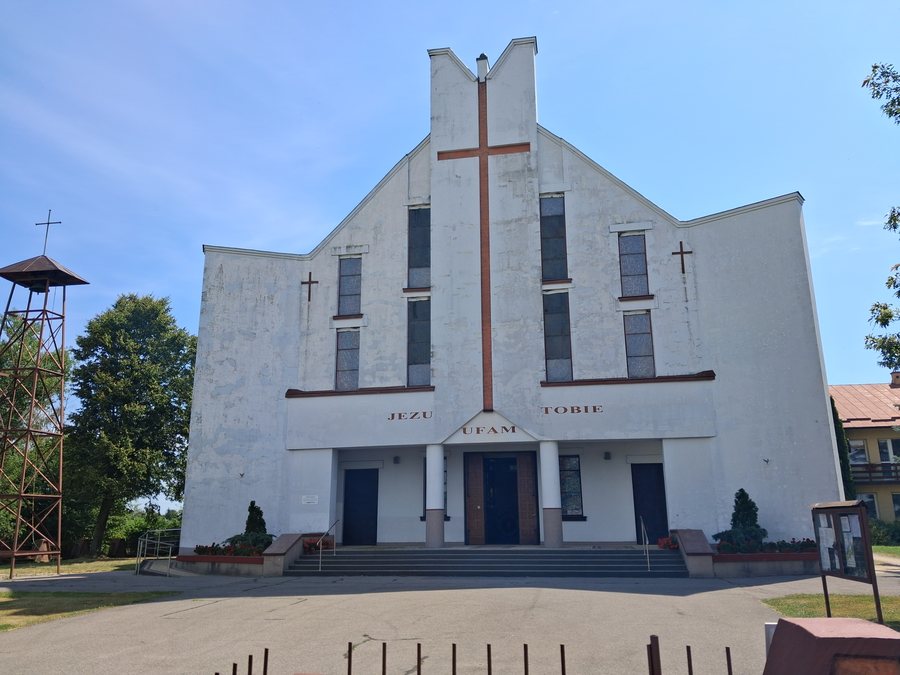
Cultural History in Dębowa Kłoda
The Gminny Ośrodek Kultury is based in Dębowa Kłoda and was founded in 1988. The parish church of Najświętszego Serca Pana Jezusa in the town is built of brick and was constructed between 1981 and 1983. These two details anchor the town's history in specific dates, but refer to different things: the founding of a cultural institution and the construction period of a church building. Anyone interested in the town's development will find two distinct perspectives here, rather than a single continuous chronology.
Jezioro Bialskie in the Municipality
Jezioro Bialskie is in the village of Białka in the Dębowa Kłoda municipality. It belongs to the Łęczyńsko-Włodawskie Lake District and the Konotopa River catchment area. This places the lake both in the specific locality of Białka and within a broader landscape and water system. It is oval and covers 31.7 hectares. Its shape and area describe the lake on two different levels: its form and its extent. During the summer season, it is used for recreation. For travellers looking for lakeside relaxation, this summer connection is relevant to planning when to visit.
The lakeshore is also described in specific terms: the beach extends along about 60 percent of the shoreline. It is sandy in the south and northeast; on the eastern shore, the forest reaches the water. Sandy beach sections and a wooded shoreline thus stand alongside each other as distinct landscape features.
Historical Connections in Białka
In Białka, you will also encounter another aspect of the municipality's history. The former Uniate church in Horodyszcze, now the Chapel of St. Ursula Ledóchowska (pw. św. Urszuli Ledóchowskiej), is recorded in Białka with the year 1760. A memorial there commemorates local residents who were murdered on 7 December 1942 during the German occupation for helping Jews. The two points differ considerably: the chapel is associated with a historical designation for a church and a year, while the memorial keeps the history of those murdered in memory. Together, they form part of the historical context of the area around Białka in the municipality.
Choose a Location to Match Your Travel Interests
The geographical distinction can help you choose a holiday apartment: the parish church and the Gminny Ośrodek Kultury are in Dębowa Kłoda; the lake, beach and historical sites mentioned above are in the area around Białka within the municipality. If local history is your main interest, base your search in the town; if you are primarily looking for the lakeshore landscape described here, Białka is the more precise location. This makes choosing between the town and the lake area a clear and practical planning criterion.
Discover More Destinations
Discover more destinations: Opole, Babianka, Parczew, Leitnie.
Return to the main travel overview: Parczew.

