
Bychawa: Nature and Historical Traces
Accommodation in Bychawa
Bychawa combines a natural landscape with steppe characteristics and various traces of the town’s history. These include the “Podzamcze” nature reserve, an old Jewish cemetery, a 17th-century church complex, palace ruins above the reservoir and the building of a former synagogue. The Bychawska Izba Regionalna also offers a distinct perspective on historical objects from farm households. When planning a trip, you can choose from a range of themes spanning nature, architectural history and everyday culture.
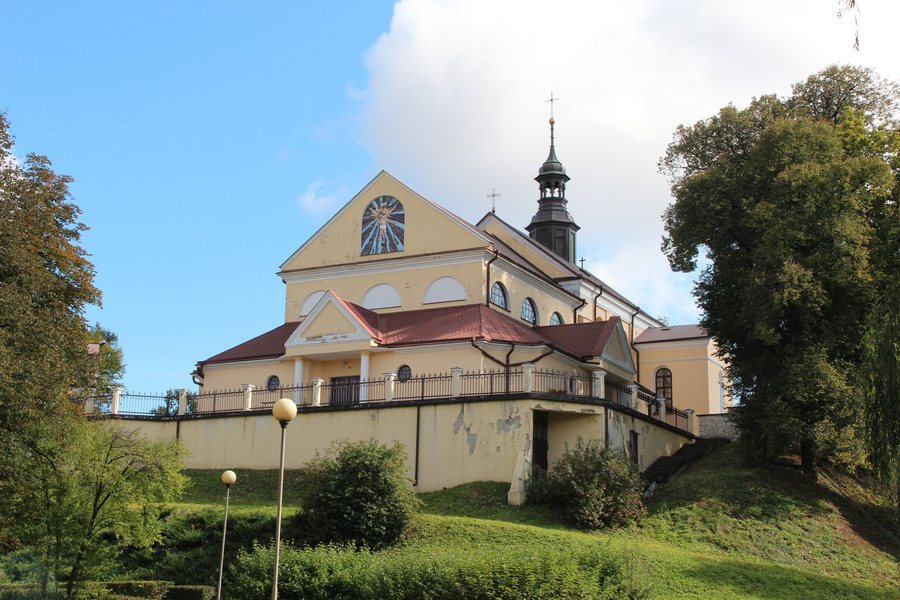 File:Bychawa, Zespół Kościoła par. p.w. św. Jana Chrzciciela.JPG
Photo: Ania Poleszak via Source, CC BY-SA 3.0 PL
File:Bychawa, Zespół Kościoła par. p.w. św. Jana Chrzciciela.JPG
Photo: Ania Poleszak via Source, CC BY-SA 3.0 PL
Steppe Characteristics and Rare Plants
The “Podzamcze” nature reserve lies within the town of Bychawa. It is characterised by steppe vegetation and is home to rare plants such as elecampane and the Pannonian thistle. This gives the natural landscape around the town a distinctive profile: a particular landscape character and two named species are at its heart. If you are interested in plants, these names can provide a specific starting point for exploring Bychawa.
The landscape and historic buildings appeal to different interests. When planning your trip, you can consider whether you would like to focus more on nature or on the town’s history. Bychawa offers both perspectives, without combining them into a single attraction.
Cemetery and Architectural History
Bychawa’s old Jewish cemetery covers around 0.6 hectares. Fragments of about eight grave steles have survived; they were probably re-erected at a later date. The site is open around the clock.
The town’s architectural history also spans different periods. Bychawa’s urban layout includes a 17th-century church complex that was later extended. Above the Bychawa reservoir are the ruins of a Neo-Gothic palace, which developed from a former 16th-century fortified castle. Thus, a former fortified castle and the palace’s later Neo-Gothic form sit side by side in the history of the same building. The ruins offer a different way to explore the town’s history than the church complex and its extensions.
Bychawa is also home to the building of a former synagogue. Its former use adds another link to the town’s Jewish history alongside the Jewish cemetery. Together with the church complex and palace ruins, these sites do not represent a single architectural style, but rather a range of different historical traces. This is useful if you are more interested in religious architecture, former fortifications or the development of individual buildings during your trip.
A Glimpse into Farm Life
The Bychawska Izba Regionalna grew out of an exhibition featuring around 300 items of historical household equipment from farm households. Unlike the buildings and ruins, this exhibition focused on historical household items from farm households. Visits must be arranged by telephone in advance. If you would like to include this part of the town’s history in your plans, remember to make arrangements beforehand.
When looking for a holiday rental in Bychawa, it can help to first decide what you would like to focus on during your trip: are you mainly interested in the natural landscape, architectural history or historical objects from farm households? For a family trip in particular, this question provides an easy way to weigh up different interests together.
Discover more travel destinations: Garbów, Bystrzyca Nowa, Niemce, Jastków, Lublin, Krężnica Jara.
Return to the main travel overview: Lublin.

