
Discover architecture in Rejowiec
Accommodation in Rejowiec
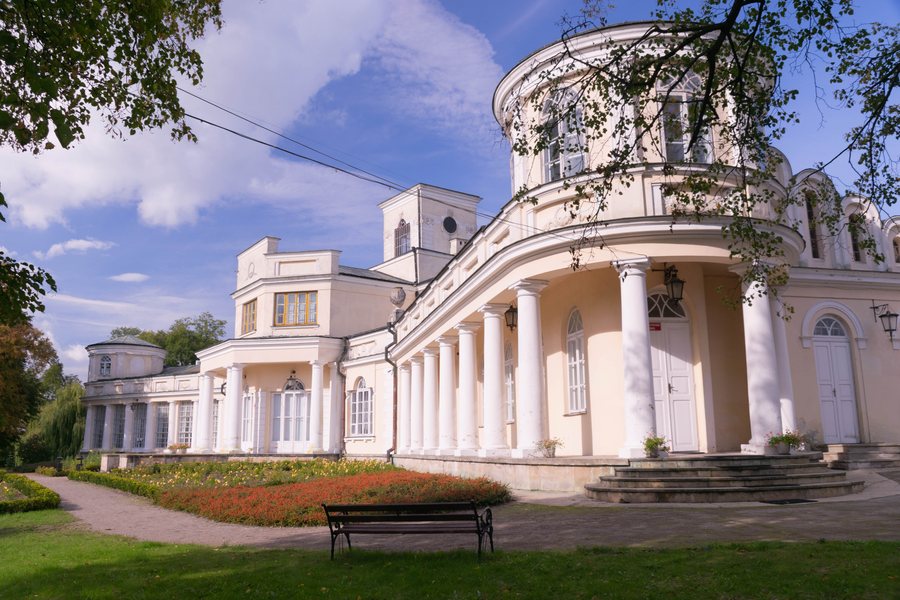
One way to explore the architecture of Rejowiec is to look at everything from the floor plan and vaults of a house to a palace and churches. At the house at Rynek 1, the features noted are opoka-stone masonry, a central hallway running through the building and barrel vaults. The palace is Neoclassical; two churches add Neoclassical and Neo-Gothic forms to the picture. For travellers interested in culture, this offers a distinct focus that brings together different architectural forms and historical contexts.
House at Rynek 1: Floor Plan and Vaults
The house at Rynek 1 in Rejowiec is single-storey and built of opoka stone. Its hallway runs along the central axis from end to end. This makes it possible to distinguish between height, building material and spatial layout: the number of storeys describes the building’s form, the stone its masonry, and the central hallway the house’s arrangement.
Barrel vaults are found in the hallway and in the cellars. Thus, alongside the continuous passage through the house, two areas featuring the same named type of vault also come into view. Those interested in construction can read these details as specific points of reference, from the central layout of the hallway to the design of the vaults. The house is therefore described not only by a style label, but also by its structural features and materials.
Neoclassical and Neo-Gothic Architecture
The palace in Rejowiec is in the Neoclassical style. The same style is attributed to the former Greek Catholic Church of St. Michael the Archangel. It was built at the end of the 18th century. The palace and the former church thus share a stylistic point of reference, while the construction date of St. Michael’s provides additional historical context.
The Roman Catholic Church of St. Josaphat represents a different style: it was built in 1907 in the Neo-Gothic style. Comparing the two churches brings together different denominations, styles and construction dates. St. Michael’s is also identified as a former Greek Catholic church; for St. Josaphat, the Roman Catholic designation, the year of construction—1907—and the Neo-Gothic design are specified.
The architectural highlights of Rejowiec can thus be explored through several questions: What does the house’s form tell us? Where can the Neoclassical style be seen? How do the two churches differ in style and historical context? This perspective connects specific building details with comparison, without reducing all the buildings to the same period or form.
Architecture as a Theme for Planning Your Trip
If you are considering Rejowiec as a travel destination, you can treat architecture and building history as a clearly defined area of interest. The house at Rynek 1 draws attention to materials, the hallway and the vaults; the palace and churches add different styles to the picture. Looking for a holiday apartment in Rejowiec can therefore begin with the question of whether these cultural themes fit your travel plans. This lets you assess the town through its specifically noted architecture rather than relying only on a general impression.
Discover more destinations: Stołpie, Dorohusk, Brzeźno, Stańków, Romanówka, Czarnołozy, Nowosiółki-Kolonia, Gotówka.
For the wider travel overview: Chełmski.

