
Obsza: Cycling Route, History and Rural Traditions
Accommodation in Obsza
Discover Obsza by bike, through its history and by exploring its rural architecture. The red-marked “Doliny Tanwi i Wirowej” cycling route is 27 km long and leads from Obsza through several places before returning to Obsza. At Zagroda Roztocze, traditional rural buildings are the main attraction. These different themes give you concrete starting points for planning your trip.
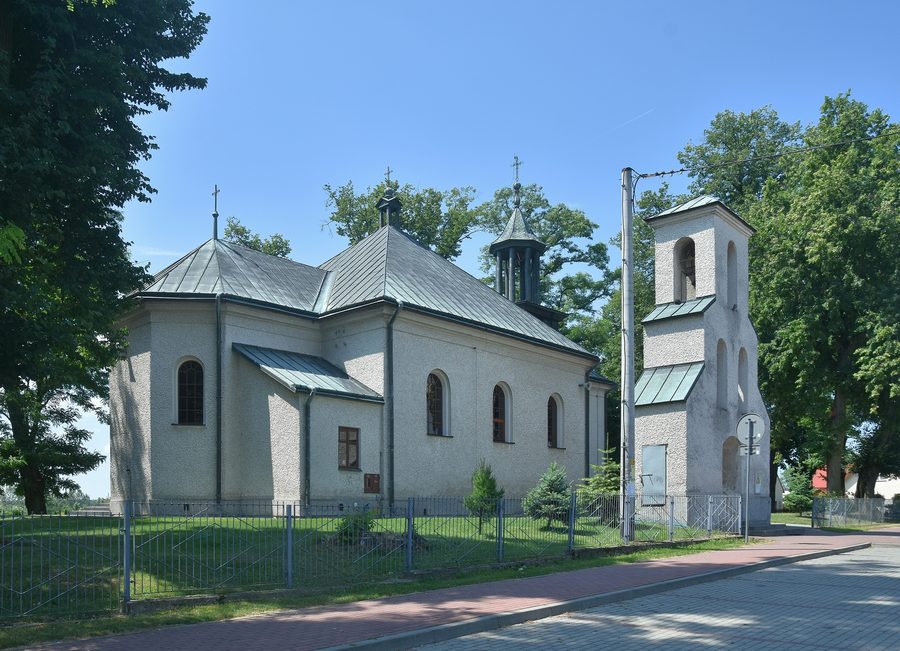 Die Kirche Mariä Himmelfahrt ist ein örtlicher Orientierungspunkt in Obsza.
Photo: Henryk Bielamowicz via Wikimedia Commons, CC BY-SA 4.0
Die Kirche Mariä Himmelfahrt ist ein örtlicher Orientierungspunkt in Obsza.
Photo: Henryk Bielamowicz via Wikimedia Commons, CC BY-SA 4.0
Cycling through the Wirowa and Tanew valleys
The “Doliny Tanwi i Wirowej” route runs through the river valleys of the Wirowa and the Tanew, through the municipalities of Obsza and Łukowa. It leads from Obsza via Zamch, Głuchy (Borowe Młyny), Borowiec, Olchowiec and Dorbozy, before returning to Obsza. Its 27 km length is a clear reference point if you are considering a cycling trip. The sequence of places also shows that the route does not pass through Obsza alone, but connects several other named places as well.
The cycling route connects with the green Ziemi Józefowskiej cycling route and the black Partisan Trail. The latter leads to the “Nad Tanwią” nature reserve in Rebizanty. So when considering the routes, you can take into account not only the red-marked circuit, but also two other named routes and the destination of the Partisan Trail. The details about the distance, route and connections give you a concrete basis for considering cycling as one possible focus of your stay, without inferring a walking or riding time from the distance.
Cemeteries from different historical periods
The Roman Catholic cemetery in Obsza was established in 1919. The history of the village also recalls an old Orthodox cemetery, formerly Greek Catholic. It was established around the turn of the 19th century, but no longer exists.
This distinction matters when planning a cultural history trip: the former cemetery’s history can be considered a historical trace, not an existing site. Together with the Roman Catholic cemetery established in 1919, these details reflect different periods in the history of the village. If you are interested in history and religious traditions, you can explore these themes as another way of discovering Obsza, alongside the routes and rural buildings.
Rural buildings and harvest festival
Zagroda Roztocze in Obsza showcases traditional rural buildings, including an old smithy, a barn and a bee skep. These examples give you a sense of the place in a different way than a cycling route: the focus is on specific forms of rural architecture. If you would like to explore more than just a route during your stay, you can also include these buildings among your interests.
The annual harvest festival held in the municipality of Obsza offers another glimpse into local traditions. At one edition, representatives of the village communities, members of the harvest wreath groups and local government officials gathered in Obsza. The procession passed through Dorbozy and Olchowiec before reaching Zamch; at that edition, Zamch was the host village.
When choosing a holiday apartment, you can first decide whether the 27 km cycling route, the cultural history or the rural buildings will shape your stay. This lets you tailor your accommodation search to your own travel interests without combining these different themes into a single activity.
If you would like to include other places in your travel plans, you can also find Biłgoraj, Podsośnina, Lipowiec, Tereszpol-Kukiełki, Aleksandrów, Borowina and Tarnogród here.
Back to the main travel overview: Biłgoraj.

.jpg)