
Horbów: Church, Chapel, and Local History
Accommodation in Horbów
Horbów focuses on church and local history that can be traced through specific places and dates. The present-day church was built from 1904 to 1908 as an Orthodox place of worship on the site of an earlier Uniate church. A cemetery dating from the First World War and a chapel from 1934 add to the historical landmarks. This offers a clearly defined cultural theme for travelers who enjoy exploring religious history and individual life stories.
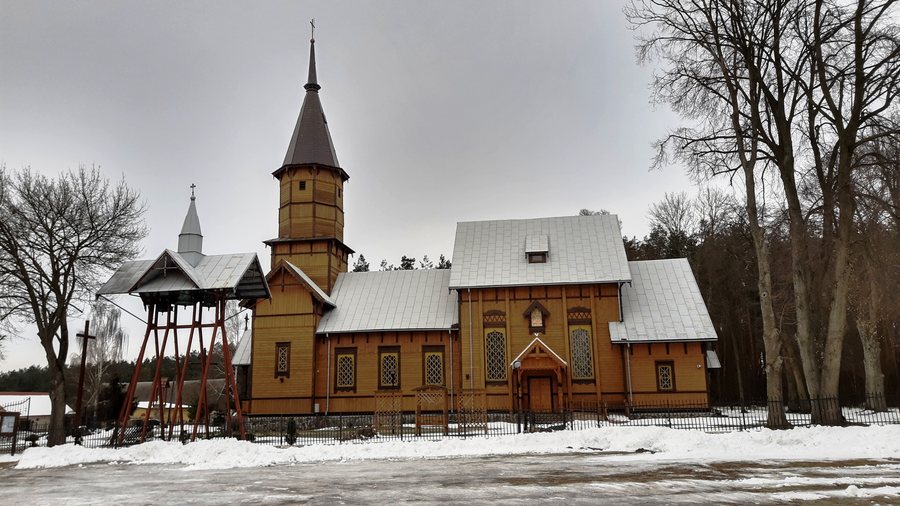
The Church and Its Historical Milestones
The present-day church was built between 1904 and 1908 as an Orthodox church. Its location on the site of an earlier Uniate church connects the new building with the area’s older history without conflating the construction phases. On August 17, 1908, the Orthodox Bishop of Chełm, Eulogiusz, consecrated the church. The construction period and the consecration are two different time references: the first spans several years, while the second marks a specific day.
On June 26, 1923, the Ministry of Religious Denominations and Public Education approved the transfer of the former Orthodox church to the Catholics. On September 23, 1923, the church was consecrated and given the canonical title “Przemienienia Pańskiego” (“Transfiguration of the Lord”). Thus, alongside the construction and first consecration, there are two clearly dated events in 1923: approval of the transfer and the later consecration with its title. The canonical title names the church’s dedication; the sequence of dates also makes clear that approval and consecration were not the same event.
The Cemetery and a Life Story
In Horbów, a cemetery dating from the First World War lies on the road to the church. Another historical reference is a burial in 1794: 24-year-old Stanisław Borkowski, who had been killed in combat, was buried on December 23 in the old cemetery in Horbów. His age and the exact date give this individual story a tangible human dimension.
The Chapel on the Road to the Church
The Chapel of the Immaculate Conception of Mary was built in 1934 to mark the parish’s tenth anniversary. It is located at the bend in the road from Horbów to the church. On May 13, 1934, Bishop Czesław Sokołowski solemnly consecrated it. The reason for its construction, its location, and its consecration date give the chapel a distinct place in local history: it is associated with a parish anniversary and with a precise date. By comparison, the church tells the story of a longer construction process and several church milestones; the chapel and the church thus represent different forms of historical memory.
Choose Horbów as a Travel Destination
If you enjoy choosing historical places and individual life stories as a theme for your trip, Horbów may be a good fit for your shortlist. When choosing a holiday apartment, it makes sense to first decide on the focus of your stay and then select accommodation based on your other needs. The local history gives the destination a clear cultural and historical character, but it does not prescribe a particular style of travel.
Discover More Destinations
Discover more destinations: Terespol, Małaszewicze Duże, Kukuryki, Pratulin, Bubel-Łukowiska, Biała Podlaska, Woskrzenice Małe, Mokrany Nowe.
Go to the broader travel guide: Bialski.

