
Cieleśnica: Park History and Cultural Heritage
Accommodation in Cieleśnica
Cieleśnica is made interesting by its historic landscape design and varied cultural connections. Close to the destination is the landscape park of the palace complex; south of the park is a former manor farm. Cieleśnica is also home to the Muzeum Fabryka Wódek i Likierów Cieleśnica. These three points of interest differ in period, function and theme. Together, they give travellers concrete starting points for considering which aspect of the place they want to shape their stay.
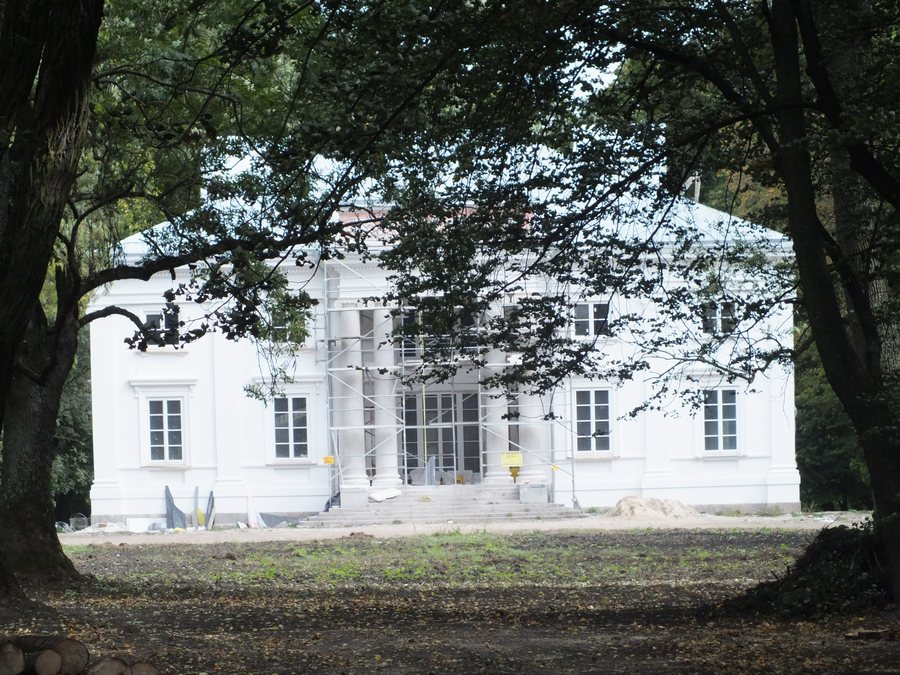
Park design and surviving trees
The landscape park of the Cieleśnica palace complex dates from the early 19th century. Its original design included large lawn parterres in front of the palace’s front and garden façades, as well as a system of ponds. Lawn parterres are landscaped lawns; the term refers to a park whose open spaces were deliberately arranged. The historic grounds can thus be imagined through three elements: the two areas associated with the palace, the expansive lawns and the water. The landscape park retains old ash trees, Austrian pines and oaks, as well as an acacia avenue. This brings together the original design from the early 19th century and the specific surviving trees and avenue. It offers a different perspective on the complex from looking at individual buildings: here, the focus is on the historic design of a park and the trees and avenue that have survived there.
A former manor farm with buildings from two periods
South of the palace complex park, close to the destination, is the former manor farm. A distillery from the third quarter of the 19th century and a granary from the early 20th century have been preserved there. The names of the buildings reveal their different functions: a distillery is associated with the production of distilled drinks, while a granary is used for storage. The two buildings also offer a clear contrast in terms of period, as they date from different parts of the 19th and 20th centuries. This adds another perspective to the history of the park: that of a manor farm with buildings from different historical periods. Those interested in architecture and historic uses can distinguish these buildings in their minds from the original grounds with their lawns and ponds.
A museum as a distinct cultural highlight
Cieleśnica is home to the Muzeum Fabryka Wódek i Likierów Cieleśnica. The Polish name can be understood as “Cieleśnica Vodka and Liqueur Factory Museum”, marking a different theme from the park and manor farm buildings. Three distinct perspectives therefore come together: the design of a historic landscape, the different functions of the surviving buildings, and a cultural theme named in the museum’s title. If you are planning a museum visit, check current visiting arrangements in advance.
Which story will shape your stay?
The sequence of periods also provides a point of reference: the park dates from the early 19th century, the distillery from the third quarter of the 19th century, and the granary from the early 20th century. This makes it possible to distinguish several historical periods without treating the park design and manor farm buildings as one and the same. When choosing a holiday apartment, you can use this to decide on a focus: are you most interested in the design of a park, the different functions of the distillery and granary, or the theme named in the museum’s title? This priority helps describe the kind of stay you are looking for; afterwards, you can compare specific accommodation options according to your personal requirements. You can also base conversations with children on concrete questions: What was a lawn parterre? How did a distillery differ from a granary? Which of the construction periods mentioned is the earliest? In this way, landscape, architecture and history are connected through individual, easy-to-understand details.
Discover more destinations: Gnojno, Bubel-Łukowiska, Kodeń, Konstantynów, Czosnówka, Małaszewicze Duże, Janów Podlaski, Leśna Podlaska
Back to the broader travel overview: Bialski.

