
Sobótka at the foot of the Ślęża Massif
Accommodation in Sobótka
Sobótka lies at the foot of the Ślęża Massif. Hiking trails, a museum dedicated to the history and nature of Ślęża, and historic churches give the town several different facets: you can focus your trip more on outdoor activities or on culture and local history. If you are looking for a holiday apartment in Sobótka, you can first consider which experiences you want to shape your stay.
 File:Sobótka, ul. Zamkowa 12 zamek Sobótka-Górka nr 599810 (11).JPG
Photo: Zanfra via Wikimedia Commons, CC BY-SA 3.0
File:Sobótka, ul. Zamkowa 12 zamek Sobótka-Górka nr 599810 (11).JPG
Photo: Zanfra via Wikimedia Commons, CC BY-SA 3.0
Hiking trails with different waypoints
The yellow hiking trail to Ślęża runs from Sobótka railway station via Przełęcz pod Wieżycą to the summit. The red hiking trail to Ślęża also starts at the station. This gives you specific reference points for planning your outings: the station as the starting point for the red trail and, for the yellow trail, the additional route via Przełęcz pod Wieżycą.
The Wieżyca climbing park is located at Przełęcz pod Wieżycą, next to the Dom Turysty PTTK „Pod Wieżycą“. A marked mountain bike route to Sobótka-Górka Castle also starts at Przełęcz pod Wieżycą. So, in addition to hiking trails, a climbing park and a mountain biking route are also options to consider when planning your trip. If you are travelling with children, these different activities can be a reason to decide in advance whether hiking, climbing or cycling should be the main focus.
Museum and local history
The Muzeum Ślężańskie im. Stanisława Dunajewskiego is located at ul. św. Jakuba 18. It is housed in a Renaissance building constructed around 1568. Its permanent exhibitions cover the property of the canons of Ślęża, ancient beliefs, and Sobótka’s development from a market settlement into a modern-era town. Other exhibition topics include the people and nature of Ślęża. The museum thus combines local history with topics that broaden the perspective beyond the town to the massif.
The museum may therefore be particularly relevant to your trip planning if you want to get to know the landscape not only through hiking trails, but also through its history and inhabitants.
Churches and a pilgrimage site
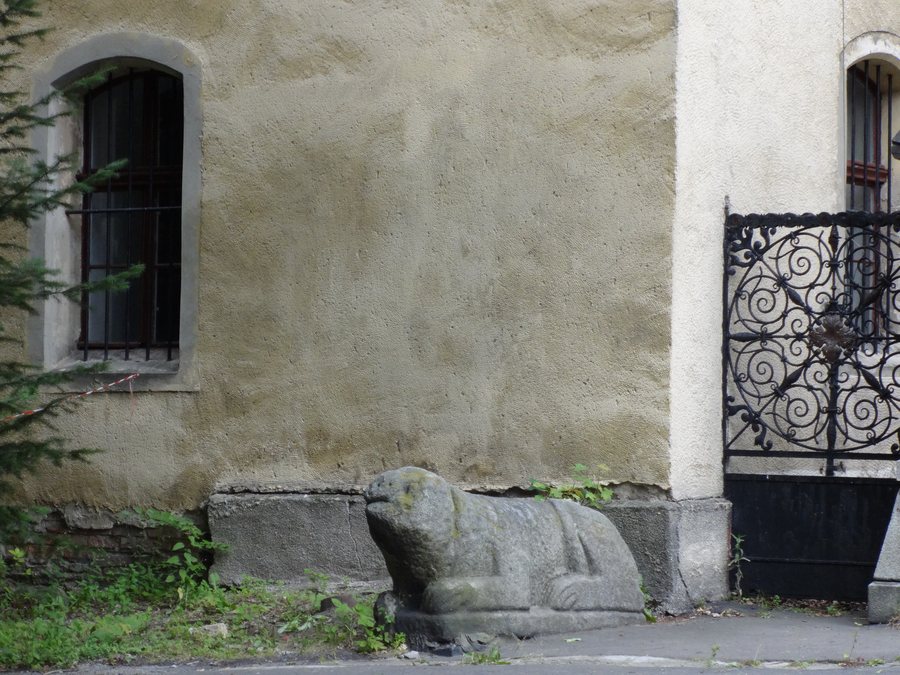
The Gothic Church of St James the Greater stands in the upper part of the market square. The present-day church dates from the mid-15th century. A Romanesque lion sculpture has been reused at the base of its tower. This detail in particular draws attention to the different historical layers: the building is Gothic, while the sculpture is Romanesque. The church therefore offers a specific reason to look more closely at its architectural history and individual features during a stay focused on cultural history.
Another place with a religious history is the Sanctuary of St Anne. It originated as a late Gothic chapel in the 14th century for pilgrims who came to the miraculous figure of St Anne Samotrzeć. Together with the Church of St James, the sanctuary represents two different historical contexts: the church on the market square and the chapel intended for pilgrims.
Plan your stay around your interests
This lets you choose a holiday apartment based on the experiences that matter to your trip, rather than trying to fit every option into a single day’s itinerary.
More local pages: Ozorzyce, Smolec, Sulistrowiczki, Długołęka, Karwiany, Skałka, Wrocław and Kamieniec Wrocławski.
For the broader travel overview: Wrocław.

.JPG)