
Gajków: Baroque Church, Motte and Cycle Route
Accommodation in Gajków
In Gajków, historical traces range from early settlement finds to the rural Baroque Church of St Margaret. Nearby, there is also a motte; in addition, a described cycle route starts on Główna Street and leads through canals and along embankments to the Oder landscape. History and outdoor activity thus offer different focal points for planning your trip. If your family is interested in both historical subjects and an active route, both interests can shape your stay.
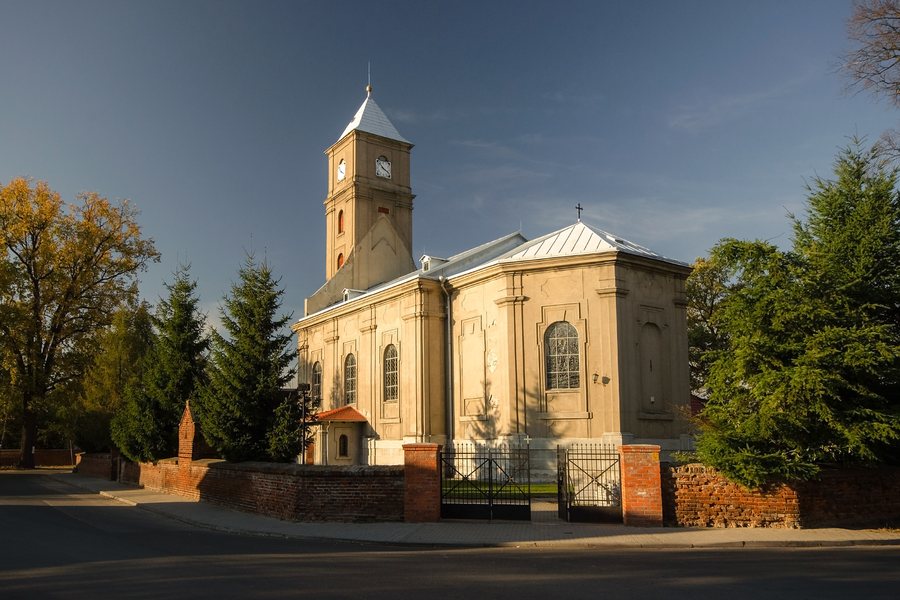 File:SM Gajków Kościół św Małgorzaty (2) ID 599531.jpg
Photo: Sławomir Milejski via Source, CC BY-SA 3.0 pl
File:SM Gajków Kościół św Małgorzaty (2) ID 599531.jpg
Photo: Sławomir Milejski via Source, CC BY-SA 3.0 pl
St Margaret’s and its Baroque furnishings
The parish church of St Margaret is a rural Baroque church. Master mason Jacob Straube built it at the instigation of Ignatius Magnet, a master of the Breslau Knights of the Cross with the Red Star. The furnishings are also predominantly Baroque and date from around 1716; they include side altars, a pulpit and a baptismal font. Anyone interested in Baroque religious architecture will find concrete points of interest in the building’s history and furnishings.
Early settlement traces and the motte
The oldest settlement traces in the Gajków area date back more than 6,000 years and are attributed to the Komornica hunter-gatherer culture. Sharp-edged tools found by the Oder near Gajków were used for hunting in the surrounding forests and for fishing. Together, these clues offer insight into early activities between forest and river.
The Gajków motte lies nearby. What remains is a rectangular mound surrounded by a ditch and rampart, interpreted as the remains of a late-medieval fortified manor with timber-and-clay buildings. The motte lies at the foot of a plateau descending into the Oder valley, between the Oder’s right bank and a canal. Its form, location and interpretation offer different ways of exploring the history of this archaeological site.
A walk with views of the Oder and its surroundings
During a walk in the area around Gajków in 2023, participants saw the remains of a stage at the site of a former boat landing. A guide introduced them to the history of the motte and read legends about the site that he had translated. The tree-lined avenue and its significance were also discussed. The history of the Oder’s meanders and the fish and plants found there were also a focus; participants also noticed visible beaver activity. These individual observations and topics show the variety of ways the landscape was explored in conversations about the area.
Cycling towards the Oder
The described cycle route leads from Główna Street in Gajków via Kanałowa Street and along the embankments beside Kanał Janowicki to the bridge in Kamieniec Wrocławski. Further on, a field path behind the bridge turns gently to the right towards the Oder and then follows the river to Lake Bajkał. The route therefore alternates between road sections and embankments, with a stretch alongside the river. When planning your holiday, you can weigh up this active option alongside the historical sites of the church and motte.
Discover more destinations: Biskupice Podgórne, Sobótka, Sulistrowiczki, Święta Katarzyna, Skałka, Wrocław, Smolec, Chrząstawa Mała.
Return to the main travel overview: Wrocław.

_ID_599531.jpg)