
Żmigród: Castle Park and City History
Accommodation in Żmigród
Żmigród combines preserved castle ruins and a historic tower with a restored park and a medieval town layout. There is also a water tower dating from 1906 and four dragon figures with Polish names. These different themes offer points of reference for getting to know the character of the place and deciding what to focus on during your stay.
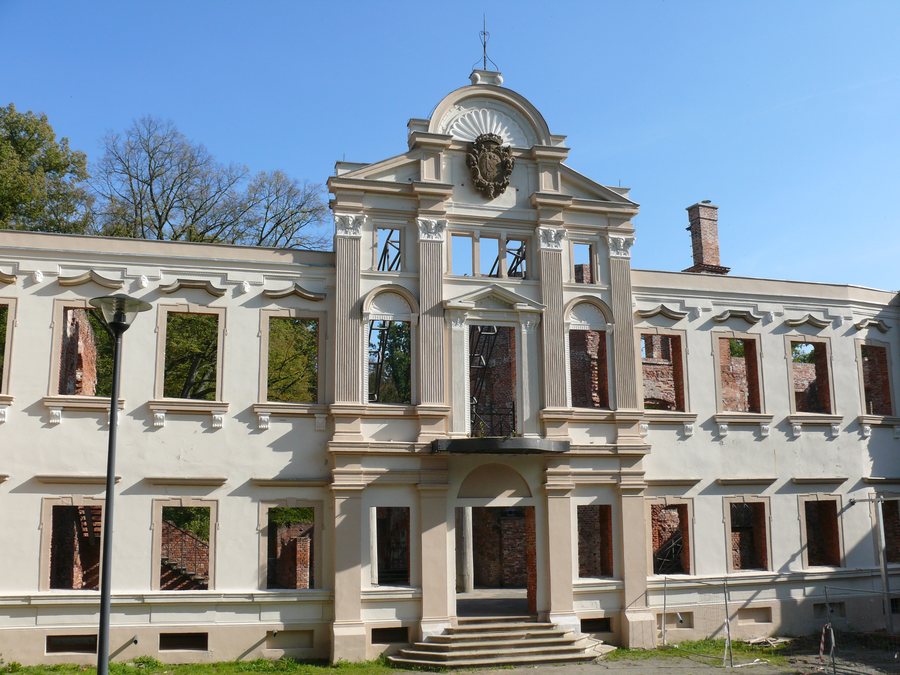 File:Pałac Hatzfeldów, ruina po rewitalizacji Żmigród 170.jpg
Photo: Basik07- Barbara Wrzesińska via Source, CC BY-SA 3.0 pl
File:Pałac Hatzfeldów, ruina po rewitalizacji Żmigród 170.jpg
Photo: Basik07- Barbara Wrzesińska via Source, CC BY-SA 3.0 pl
Castle Ruins and Historic Park
The castle and park complex in Żmigród includes preserved castle ruins and a historic tower. These two structures are prominent features of the complex and offer different perspectives on its history: the castle ruins and the historic tower. The park complements these architectural features with an extensive green space.
The restored historic park covers more than 14 hectares. Its amenities include numerous paths and benches, as well as ponds and a children’s playground. The park description therefore includes both features for a walk and a designated place to play. The ponds and paths also give the park distinctive landscape features alongside the complex’s historic buildings.
The Medieval Layout in the Town Centre
An almost oval medieval town layout has been preserved in the centre of Żmigród. It contains a rectangular market square, with streets leading to the sites where the town gates stood until 1819. The oval layout, rectangular square and streets leading to the former gate sites describe different parts of the same historic urban structure. The shape of the centre thus offers a distinct way to explore Żmigród’s history, separate from the individual buildings in the castle and park complex.
Another historic landmark is the water tower. Built in 1906, it stands at the highest point in the town and is considered one of Żmigród’s landmarks. Its year of construction provides a specific date alongside the medieval structures in the town centre. When finding your bearings in the town’s history, you can therefore distinguish two aspects that are easy to date or place in time: the medieval layout and the water tower from the early 20th century.
Tourist Information and Dragon Figures
The “Baszta” Tourist Information Office is located in a historic tower within the grounds of the castle and park complex. It houses a tourist information centre with information materials about the region, promotional items and publications. If you plan to visit this information point during your stay, check the latest details about the tourist information office beforehand.
Four dragon figures are another of Żmigród’s distinctive features. They were created within the town and are called Rowerzysta, Przyrodnik, Podróżnik and Urzędnik. The Polish names mean a cyclist, a naturalist, a traveller and an official. Thus, alongside the historic buildings and park, there are also figures with different themes that you can include in your exploration of the place.
Focus Areas for Your Stay
Whether you are mainly interested in the park, the shape of the medieval town centre, the water tower or the dragon figures, Żmigród offers several specific themes to consider when planning your trip. Think about which ones you would like to shape your stay when looking for a holiday apartment in Żmigród. Focusing on the park and ponds, local history or the named figures can help you organise your personal interests in exploring the area without reducing the place to a single attraction.
Discover more destinations:
Pierwoszów, Psary, Świątniki, Osolin, Oborniki Śląskie, Kotowice, Cielętniki, Trzebnica
For the overview of the wider area: Trzebnicki.

