
Dobrzeń: Palace and Park
Accommodation in Dobrzeń
In the central part of Dobrzeń lies a palace and park complex that brings together architecture and historic traces of the estate. The palace was created in 1891 by adapting an earlier building for Rudolf von Kulmitz in a Neo-Renaissance style. For travellers who choose a holiday destination partly for its cultural character, Dobrzeń offers a clear focus: a striking palace, a park, and other parts of the complex take centre stage. The different architectural forms and historic traces make the place especially interesting for anyone wishing to include cultural history in their trip.
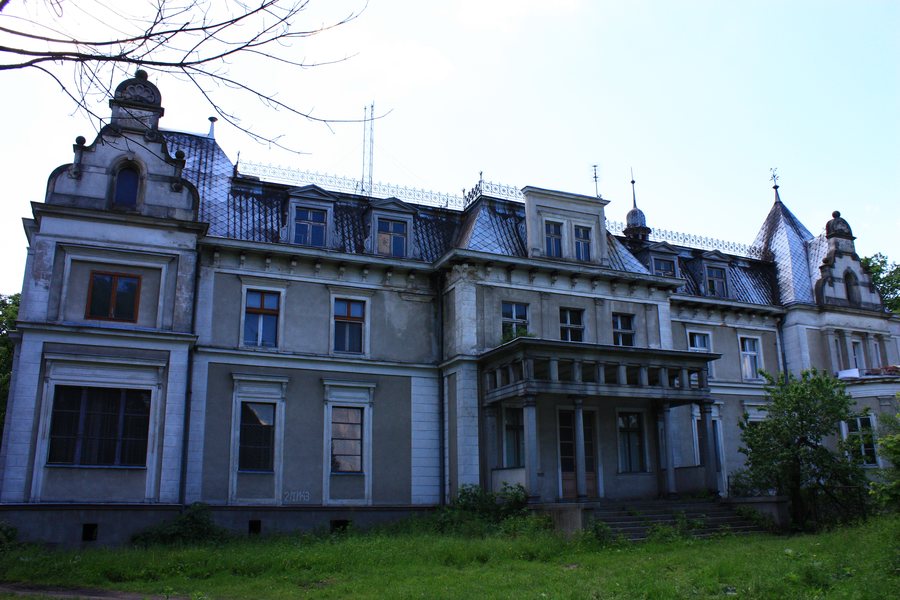
Palace architecture with contrasting features
Several striking forms come together in the palace. A mansard roof crowns the building, while a tower, polygonal projections, and terraces add further accents. Projections are sections of a façade that extend outward, and their polygonal shape creates a clear geometric structure in the exterior. The Neo-Renaissance character dates to the 1891 adaptation. The interior rooms also retain stucco decoration, with Neo-Renaissance and Neo-Baroque forms appearing side by side as distinct styles. This makes it possible to view the building from several angles—from its roof and façade composition to the design of its interiors. For families who would like to explore architecture together, the different forms can provide a concrete starting point for conversation.
The park and historic traces of the estate
A formal park extends to the north-east of the palace. An orangery is attached to the palace’s northern corner, and the remains of a greenhouse pavilion have been preserved nearby. These features add further architectural forms to the picture of the complex. The former estate complex also contains visible traces of a former swimming pool and fountain, as well as an aviary. Those interested in the development of historic estates will find not only representative architecture here, but also indications of former parts of the estate. The different states of preservation offer an additional perspective on the property: alongside preserved buildings are features that remain visible only as traces. In this way, the estate complex’s transformation over time also becomes a point of interest.
Other buildings and a starting point for a route
A brick pavilion dating from the 19th century stands north of the palace. Its pseudo-basilican design is complemented by clock faces on the façades. Farther away within the palace complex are a granary and a stable. Together with the palace, orangery, and preserved traces, these buildings create a varied architectural theme, with each element differing in form and location. If you are considering Dobrzeń as a holiday destination, you can decide whether palace architecture, the park, and the history of the estate suit your preferred cultural focus. Another point of interest for planning your trip is the Dobrzeń–Dobra route, which starts behind the primary school in Dobrzeń.
If you would like to include more places in your search: Domasławice, Sosnowka, Zawidowice, Oleśnica, Dobroszyce, Jenkowice, Olszówka, Twardogóra.
For the broader travel overview: Oleśnicki.

