
Marklissa: River Landscape and Architectural History
Accommodation in Marklissa
Marklissa combines a distinctive river landscape with architectural history in the town and destinations in the surrounding area. In the eastern part of the town, the Kwisa forms a picturesque gorge. Two churches dating from different periods add to the townscape; nearby, Czocha Castle makes its own mark with its setting shaped by water and a moat. You can tailor this mix to the interests of your stay: river scenery, architecture, or longer routes through the region.
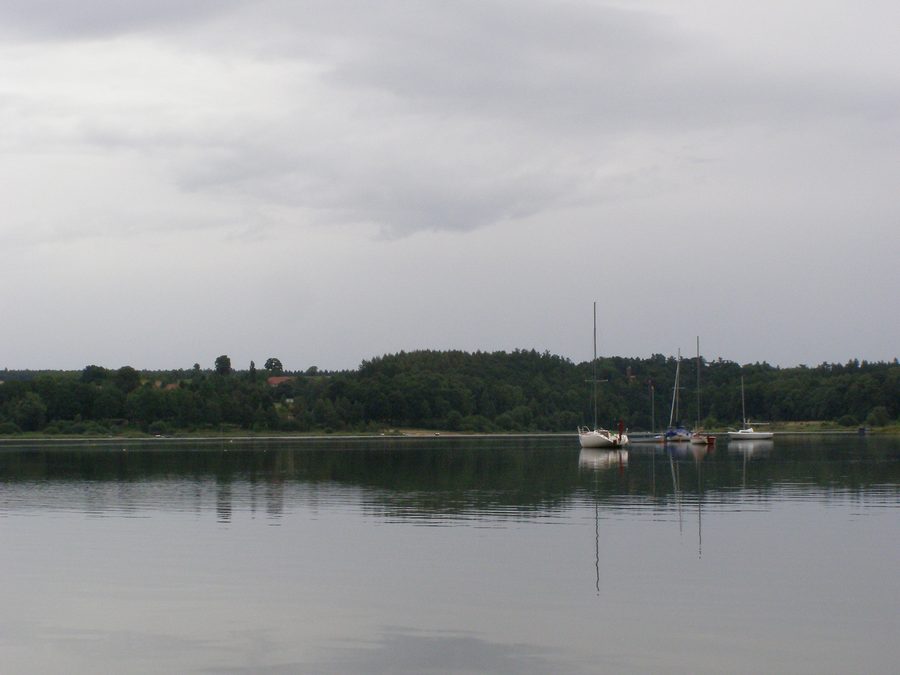 Leśniańskie Lake near Leśna illustrates the water-and-landscape character of the wider area.
Photo: Andrzej Otrębski via Wikimedia Commons, CC BY-SA 3.0
Leśniańskie Lake near Leśna illustrates the water-and-landscape character of the wider area.
Photo: Andrzej Otrębski via Wikimedia Commons, CC BY-SA 3.0
River Landscape and Architectural History
The gorge is located in the eastern part of the town. This makes a clear distinction useful for planning: the river landscape and churches are local attractions in Marklissa, while the hiking and cycling routes cover greater distances or extend across the municipality. The Church of Christ the King acquired its present form between 1709 and 1719. The parish church of St. John the Baptist was built on a hill beside the cemetery in 1852–1853. This places a structure from the early 18th century alongside one from the mid-19th century. For those interested in architecture, the different dates provide specific historical reference points, while the parish church’s location adds a precise geographical detail to the architectural history.
Czocha Castle Nearby
Czocha Castle is near Marklissa. It is surrounded by water on three sides and by a dry moat on the fourth. A large cylindrical tower dating from the 13th century rises above the castle. There are also three courtyards surrounded by bastions. The interiors described are equally varied: the castle contains a large hall, a knights’ hall, a museum room, and a princely chamber. Together, these features give a concrete picture of the complex: the water and moat, tower, courtyards, and varied rooms each make their own architectural impression. Czocha Castle thus forms a distinct cultural and historical highlight near the town.
Hiking and Cycling Routes in the Region
In the wider region, a 36-kilometre, yellow-marked hiking trail runs from Zawidów via Leśna to Gryfów. The route climbs the extinct volcanoes Wysoka Stróża (427 m) and Kopki (400 m) and passes between the basalt formations Stożki Perkuna and Światowida. It is considered varied and not particularly difficult, and offers panoramic views. A marked cycle route from Zgorzelec to Świeradów-Zdrój is 16.5 kilometres long and runs through the town and municipality of Leśna. The routes therefore differ both in activity and in length: the hiking trail is more than twice as long as the cycle route and leads to the volcanoes and basalt formations mentioned above. Check the current markings and conditions on both routes before setting off.
Choose the Right Base
When looking for a holiday apartment in Marklissa, it helps to first decide what you would like to focus on during your stay. Would you like to centre your visit on the town’s river landscape and architectural history, or also include Czocha Castle and longer routes in the region? The Kwisa and the two churches are located in the town; the castle is near Marklissa, and the routes cover larger areas. Choose your accommodation location based on the destinations that matter to you, and take their respective locations into account when planning. This allows you to balance local history, castle architecture, and outdoor activities in the region according to your own interests.
Discover more destinations: Złoty Potok, Lauban, Olszyna, Jałowiec, Księginice, Wolimierz, Zapusta, Pobiedna
See the main travel overview: Lubański.

