
Discover Staniszów
Accommodation in Staniszów
Staniszów combines a hilly landscape shaped by granite rocks with a layered cultural history. The village lies in the Wzgórza Łomnickie hills, in the Kotliny Jeleniogórskiej region. One of its distinctive landscape features is Góra Witosza, 484 m high, known for its granite rocks and panoramic views of the Karkonosze Mountains. Nature and historic buildings give a trip here different focal points: you can get to know the village through its hills and viewpoints or explore its architecture.
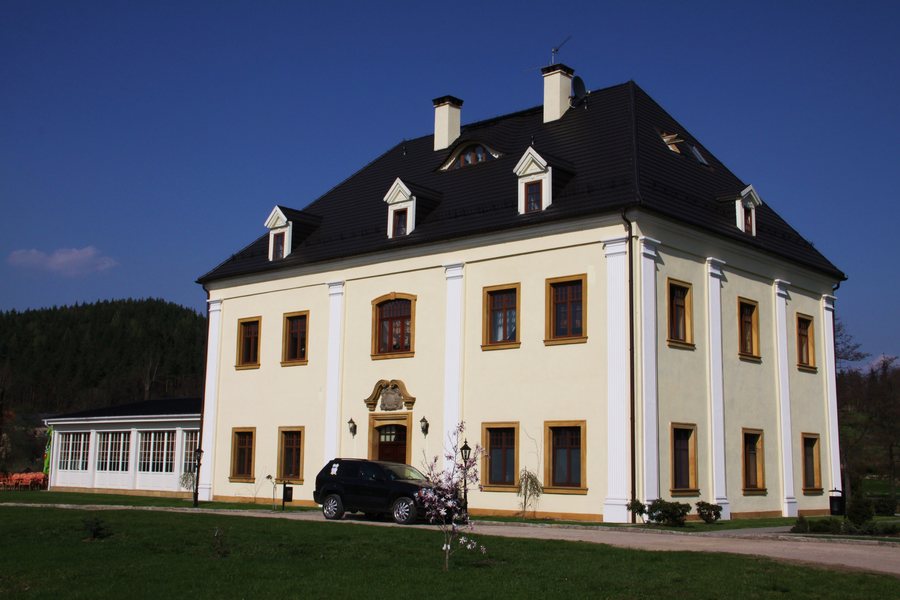 File:Dolina ogrodów i pałaców - Staniszów pałac na wodzie 01.JPG
Photo: Takasamarasa via Source, CC BY-SA 3.0 pl
File:Dolina ogrodów i pałaców - Staniszów pałac na wodzie 01.JPG
Photo: Takasamarasa via Source, CC BY-SA 3.0 pl
Hills, rocks and viewpoints
Easy hiking trails lead to Góra Witosza, including the yellow trail starting in Staniszów. The trails offer a practical way to include this distinctive hill in your trip; the yellow trail begins in the village. Its elevation and views also make Góra Witosza a clear destination for anyone especially interested in landscapes and panoramas. Travellers with different interests can treat nature and culture as separate focal points rather than limiting their stay to just one way of exploring.
Another viewpoint is located near the ruins of Zamku Księcia Henryka. The site can also be reached from Marczyce and Sosnówka. These ruins should not be confused with the artificial castle ruins on Góra Grodna: the names refer to different historic sites and different reasons to explore Staniszów’s landscape and history. The setting of the ruins of Zamku Księcia Henryka offers its own viewpoint, while Grodna is associated with its former function as a hunting lodge.
Church and residences
The Kościół Przemienienia Pańskiego church in Staniszów is Gothic and dates from around the turn of the 15th and 16th centuries. It therefore represents an earlier chapter in the village’s architectural history than the residences, which were built and renovated in the 16th and 18th centuries. For travellers interested in historic architecture, this timeline is a useful starting point for seeing the different buildings not as a unified ensemble, but as evidence of different periods.
Pałac Staniszów originated as a Renaissance manor house dating from the second half of the 16th century. In 1787, at the behest of Prince Henryk XXXVIII of Reuss, it underwent extensive conversion into a Baroque residence. The progression from Renaissance manor house to later renovation gives the building its own history. The landscape park around Pałac Staniszów includes the surrounding forests, the distinctive rock formations of Góra Witosza and the artificial castle ruins on Grodna hill. These features show how architectural history and landscape come together in the description of the park.
Another residence is Pałac na Wodzie in Staniszów Dolny. The building dates from the late 18th century and is set in picturesque surroundings with a pond and landscape park. According to chroniclers’ accounts, Pałac Na Wodzie, formerly Dwór Staniszów Dolny, was built in the second half of the 18th century; Heinrich XXXVIII of Reuss began construction in 1786. Pałac Na Wodzie is located in the Jelenia Góra Valley Cultural Park, also known as the Valley of Palaces and Gardens. Its historical context, former name and parkland offer a different perspective on Staniszów’s residential history.
Other places
If you would like to discover more destinations: Milków, Jeżów Sudecki, Podgorzyn, Borowice, Gruszków, Janowice Wielkie, Kowary and Sosnówka K Jeleniej Góry.
For the broader travel overview: Jeleniogórski.

