
Paszowice
Accommodation in Paszowice
Explore Paszowice through specific route descriptions and two churches whose construction dates are widely separated. To plan your visit, you could first consider which aspect interests you most: a route that explicitly passes through Paszowice, an approximate length, or a route with several named places. The churches’ histories offer a second perspective, with a very different focus.
Hiking routes with different points of reference
The “Widokowa” walking route passes through Paszowice, among other places. It is therefore the route with an explicitly stated connection to the village. If you want to prioritise the link to the village when planning, this is a clear starting point.
The “Turystyczna” walking route is about twelve kilometres long and runs through the municipality of Paszowice. The stated length can help you gauge the planned walk; it is approximate. Trail conditions may change, so it is advisable to check them before setting off.
The Szlak Salamandry hiking trail offers a different way to find your bearings: its route passes through Jakuszowa and Myślibórz and over Rataj Hill. Rather than an approximate total length, the focus here is on specific place names and a named hill. If you like to explore routes by looking at such names, you can compare this route with those described differently.
The three descriptions can be compared from different perspectives: Widokowa names Paszowice as part of its route, Turystyczna gives an approximate length and links the route to the municipality, while Szlak Salamandry passes through two named places and over Rataj. If you are looking for a holiday apartment in Paszowice, this distinction can help you decide what you would like to focus on during your stay.
Two churches and widely separated construction dates
The churches’ history provides another specific point of interest. The Church of the Holy Trinity in Paszowice was built in 1784 and altered in 1910. The two dates mark different periods in its history: its construction in the late 18th century and a later alteration at the beginning of the 20th century.
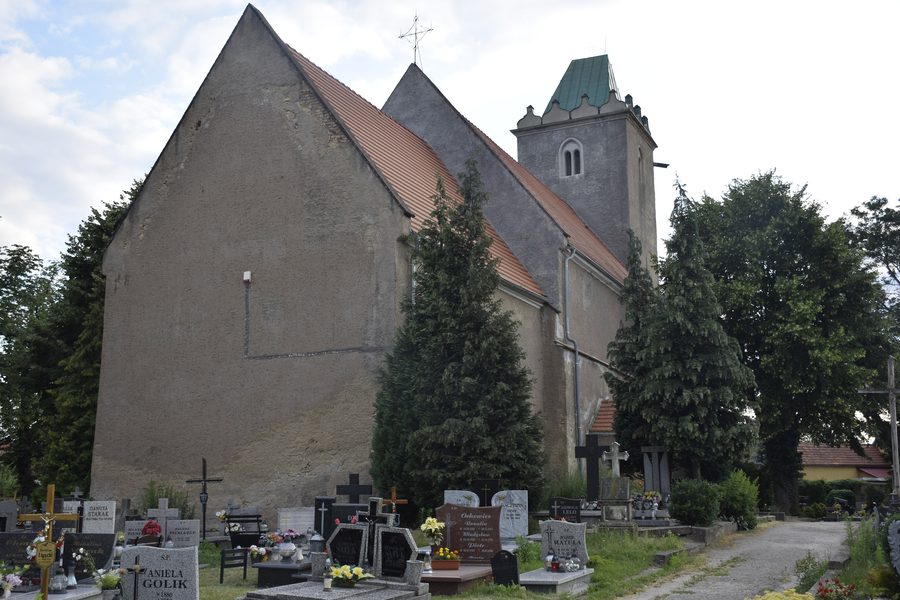
The Gothic cemetery church in Paszowice dates back much further: it was built in the first half of the 14th century and altered in the 17th century. The term “Gothic” places the church within an art-historical style, while the dates of its construction and alteration also show that its history is not limited to a single period.
The comparison reveals two distinct timelines: the dates given for the Church of the Holy Trinity fall in the 18th and early 20th centuries, while those for the cemetery church span the Middle Ages through to the 17th century. If you are interested in local history, these construction dates offer a clear framework for distinguishing between the two churches. Together with the route descriptions, they provide a choice between a walk connected to the village or municipality and a cultural-history focus.
Discover more destinations: Bolków, Chełmiec, Jastrowiec, Granowice, Kondratów, Męcinka
Go to the main travel overview: Jawor.

.jpg)