
Stryków
Accommodation in Stryków
Stryków combines waterside activities with trails and a rich urban history. The reservoir on the Moszczenica River is a focal point in its own right; the town hall, monuments and religious buildings tell stories of different eras. When planning your trip, you can choose between active days by the lake and discoveries around town.
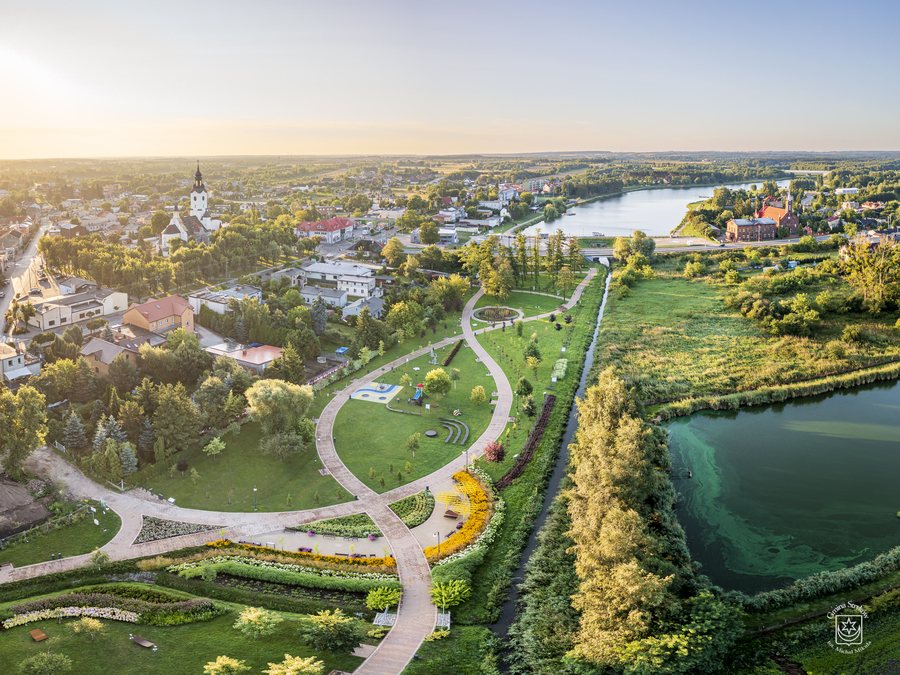
Reservoir, beach and boat rentals
The Stryków Reservoir was created in 1990 and has a surface area of 12.6 hectares. On the left bank, on Legionów Street, there is a free swimming area and a beach. In summer, boat rentals are also available at the lake, including pedal boats, boats and kayaks. This offers several ways to spend time by the water—from swimming at the beach to taking a trip on the lake. If you like to vary your days, the lake is a clear focal point for your stay.
Trails towards Warszewice
The Stryków–Warszewice connecting trail starts in Stryków at a road junction next to a Catholic church. From the starting point, it heads east towards Sierżnia and then towards Cesarka. The trail also leads towards Warszewice and connects to the green trail through the Łódź Heights Landscape Park. These places help you plan your route without requiring you to make any one destination its main focus. For travellers who want to spend time walking, this route offers a different side of Stryków from the reservoir: the trail and landscape park take centre stage here, while the swimming area and boat rentals are the focus there.
Townscape and places of remembrance
Stryków’s overall architectural townscape is considered historic. The town hall dates from the early 20th century and was rebuilt after the Second World War, between 1945 and 1951. In front of the town hall stands a distinctive monument from 1979, its base adorned with an open book. Another monument commemorates Poland’s regaining of independence: it was erected in 2018 to mark the centenary. Seven historical plaques were added there in 2021. Those interested in the town’s development will find different forms of remembrance here, from the town hall to monuments with specific historical associations.
Stryków’s religious buildings include the Roman Catholic Church of St Martin, dating from the early 20th century. It is among the religious buildings listed in the heritage register or in the records of the Voivodeship Heritage Conservator. The cemeteries also preserve memories of different events. At the Roman Catholic parish cemetery, a monument commemorates the heroes of the January Uprising; it was donated by school students on the uprising’s centenary. At the cemetery of the Old Catholic Mariavite community is a war grave of Polish soldiers who fell in September 1939. Commemorations of the Soviet invasion of Poland are held there every year on 17 September.
Plan your stay around your interests
Stryków also has a railway station dating from the early 20th century, which was renovated in 2014. When choosing a holiday apartment, you can first consider which part of the trip matters most to you: time by the water, the connecting trail towards Warszewice, or the town’s history, buildings and places of remembrance. These highlights offer different reasons to discover Stryków, without requiring you to limit your days to just one kind of experience.
More places to discover: Smardzew, Skórka, Leźnica Wielka, Sokolniki, Głowno, Sokolniki-Parcela, Zgierz and Ozorków.
Back to the parent travel overview: Zgierz.

