
Wieluń: City Walls, Collegiate Church and Museum
Accommodation in Wieluń
With its history of medieval fortifications, a collegiate church and archaeological collections, Wieluń offers several ways to explore local history. The walls tell the story of defence and urban development; at the Muzeum Ziemi Wieluńskiej, artefacts and reconstructions offer a glimpse into earlier ways of life. You can tailor your stay to your interest in architectural history, religious heritage or museum exhibits.
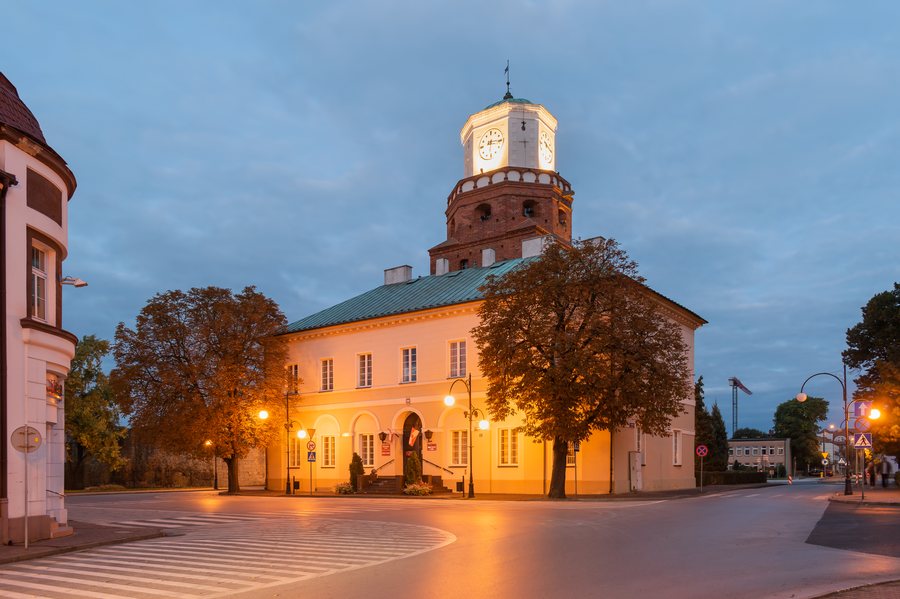
Wieluń’s city walls and gates
Wieluń’s defensive walls were about 1,200 to 1,300 metres long and enclosed the 12-hectare Old Town. During the reign of Casimir the Great, Wieluń was one of 25 cities surrounded by defensive walls. The fortifications were built after the city fire of 1335 and gradually replaced the wooden earthworks. Local sandstone was used for the construction, and the battlements were topped with brick.
Originally, the fortifications had no bastions, only two gates: the Kalisz Gate and the Kraków Gate. The city’s recorded history gives a clear picture of the layout: a long enclosure, two named entrances and the gradual transition from wooden to stone fortifications. This provides a concrete starting point for exploring Wieluń’s medieval urban development during a cultural stay.
Collegiate church and collections
The Kolegiata Bożego Ciała, Sanktuarium Najświętszej Maryi Panny Pocieszenia, is a church in Wieluń and the collegiate church of the canons’ chapter at the shrine. It adds a religious and ecclesiastical perspective to the history of the town’s fortifications.
One exhibition room at the Muzeum Ziemi Wieluńskiej displays finds from the period of Roman influence, associated with the Przeworsk culture from the 1st century BC to the 5th century AD. Examples include terra sigillata and Roman coins. These finds provide tangible points of reference for this long period, rather than relying on dates alone to understand it.
Another insight comes from the metalworking tools found in the grave of a blacksmith-goldsmith. The museum’s collection also includes numerous iron objects from everyday life and warfare. Reconstructions of weapons and dwellings from the respective periods complement these holdings. Different types of historical evidence are brought together here: objects, grave goods, and reconstructed weapons and living spaces.
Exhibitions at Baszta Męczarnia
The exhibition “W izbie wieluńskiego kata” explores the history of Wieluń’s executioners and their work. Items on display include executioners’ clothing, equipment and typical instruments of torture. A second exhibition, “Dzieje oręża w średniowieczu i w okresie staropolskim”, focuses on the town’s defensive role and the participation of Wieluń’s residents in armed conflicts—from the town’s beginnings through the 17th century.
A different format is offered by the multimedia section of the exhibition “Dotknij historii Wielunia”, where an animated legend about Prince Władysław Odonic’s hunt is also presented in 3D. If you are interested in this particular multimedia presentation, ask the museum whether it will be accessible during your visit.
Baszta Męczarnia can be visited Monday to Friday from 9:00 am to 3:00 pm after purchasing an admission ticket at the museum. Check these visiting hours before you travel.
Choose a holiday apartment to suit your cultural stay
When looking for a holiday apartment in Wieluń, let your preferred focus guide your plans: would you like to explore the history of medieval fortifications above all, are you especially interested in the collegiate church, or are the collections and exhibitions your main priority? These different themes give you a concrete basis for shaping your stay around your own interests.
Discover more destinations
Discover more destinations: Dzietrzniki, Konopnica, Zalecze Male, Osjaków, Janów.
Return to the main travel overview: Wieluń.

.jpg)