
Górka Pabianicka: Holiday Apartments and Holiday Homes
Accommodation in Górka Pabianicka
Górka Pabianicka was historically known as Górka Wielka; older and alternative forms of the name include Gorka Maior, Górka Cygańska, Górka Pabjańska and Górka Pabiańska. These forms of the name may interest travellers who are interested in the local past.
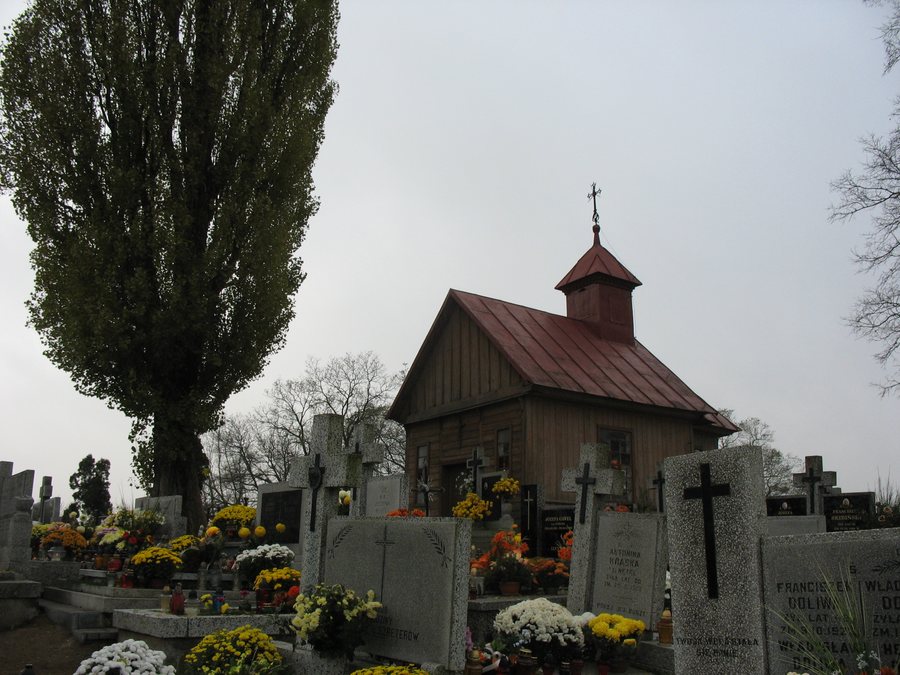 Cemetery in Górka Pabianicka
Photo: Mariusz Rzepkowski (MariuszR) via Wikimedia Commons, CC BY-SA 3.0
Cemetery in Górka Pabianicka
Photo: Mariusz Rzepkowski (MariuszR) via Wikimedia Commons, CC BY-SA 3.0
Travellers who would like to rent a holiday apartment in Górka Pabianicka can first familiarise themselves with the place here.
Culture and History
In 1827, Górka Pabianicka was described as the seat of a parish; a parish tradition in the place is documented at least as far back as 1827.
A local description from the late 19th century depicted Górka Pabianicka as a colony with 27 residential buildings, 40 farm buildings, 360 inhabitants, 542 morgi of arable land and 12 mórg of wasteland.
The surrounding area of Górka Pabianicka includes Łódź - Bałuty, Obóz romski Litzmannstadt and Łódź - Kościół Wniebowzięcia NMP.
In the wider regional surroundings of Górka Pabianicka lies Marzenin, Parafia Wniebowzięcia Najświętszej Maryj Panny.
On Wikimedia Commons, an image is directly identified as the cemetery in Górka Pabianicka.
The Parish of St. Martin and St. Mary Magdalene is located in Górka Pabianicka.
Until 1793, Górka Pabianicka belonged to the Kraków Chapter; in 1637, the chapter granted the church in Górka a plot of land called Gieraszowski.
If you would like to continue checking the place for your trip, proceed to the accommodation search for Górka Pabianicka.
To the overview of the higher-level destination: Lodz.
Other Destinations
Other places under the same destination:

