
Łęczycki: River Landscape, Castle and Routes
Accommodation in Łęczycki
In Łęczycki, river landscapes, medieval history and a variety of routes come together. Łęczyca offers a particularly tangible impression: the town lies in a bend of the Bzura, where the Bzura Valley opens onto the Warsaw–Berlin Urstromtal. Wetlands and marshy areas with reeds and rushes stretch along the river. If you want to take both culture and landscape into account when choosing a holiday destination, you will find a variety of themes here to help plan your trip.
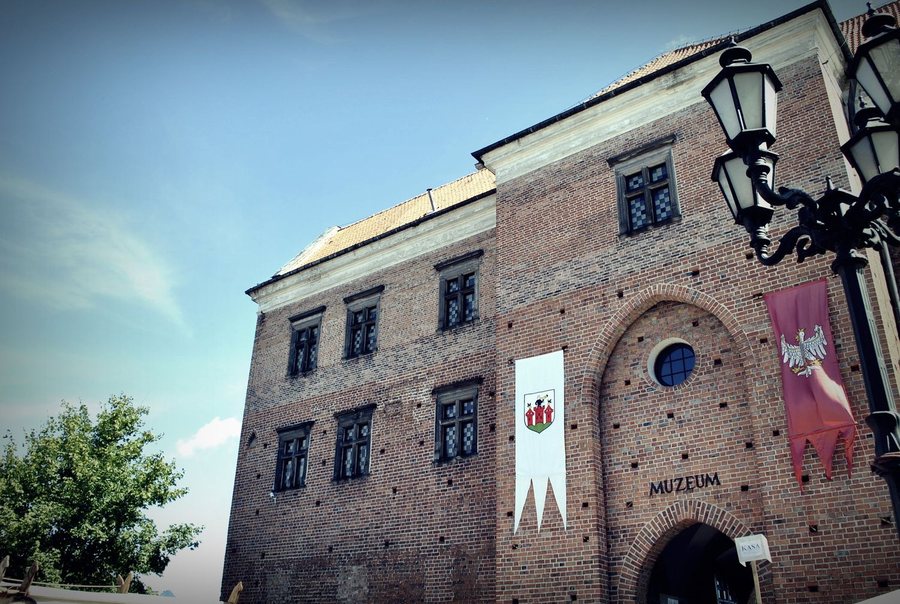
Castle, Town History and Museum
Łęczyca Royal Castle was built around 1350 by Casimir the Great. Today, it houses the Regional Museum, with permanent archaeological, art-historical and ethnographic exhibitions. Its notable collections include Poland’s largest museum collection of demon sculptures, with more than 400 exhibits. The museum also presents regional folk art and local crafts, including pottery, basketry and weaving, as well as traditional utilitarian objects and artistic metalwork. Museum lessons, art workshops and outdoor activities round out the offerings.
The fortifications also shape the castle’s history. The defensive walls were built together with the castle during the reign of Casimir the Great. They enclosed an area of about 9 hectares, were approximately 1,150 metres long and around 7 metres high. A surviving defensive tower on Kościelna Street was converted into the bell tower of St Andrew’s Church in the 18th century. The church preserves the Szczawiński family chapel and a large marble epitaph with a portrait commemorating Jakub Szczawiński.
Another historic landmark is Łęczyca Town Hall, built between 1788 and 1790 to a design by royal architect Jakub Kubicki. The Church of the Immaculate Conception is an early Baroque, single-nave building. Together, the castle, town hall and churches offer different points of interest for visitors drawn to architecture and regional history.
River Landscapes and Routes for Active Days
The green-marked long-distance hiking trail “Szlakiem Bitwy nad Bzurą” connects Łęczyca and Uniejów. A 40-kilometre section runs along the Warsaw–Berlin Urstromtal, designated here as a Natura 2000 site. The scenery along the route and the wetlands by the Bzura give the region a distinctive connection to nature alongside its historic buildings.
Cyclists will also find several different routes: the black “W krainie Diabła Boruty” cycle route, the red “Magistrala rowerowa Północ-Południe” cycle route and the yellow “Bursztynowy Nadburzański” cycle route pass through Łęczyca. The town is also a featured tourist stop on the more than 300-kilometre “Szlak W Centrum Polski” cycle route. You can factor the different routes into your trip planning according to the route colour and distance you prefer, without needing to combine them into a single circular tour.
Getting to Łęczyca and Finding Your Way Around
Łęczyca has a railway station on line 16, which connects Bydgoszcz, Aleksandrów Kujawski, Włocławek, Kutno, Łęczyca and Łódź Kaliska. Guides to exploring the town and region are available to help you find your way around. The tourist information centre in Łęczyca is open on weekdays from 10:00 to 14:30; from June to September, weekend opening hours are 11:00 to 17:00.
In the area around the destination, the country loaf Chleb wiejski łęczycki is made and baked using traditional methods of the rural population of Łęczyca. In previous years, the courtyard of the Royal Castle hosted knight tournaments in August for several years. These cultural and landscape themes may influence your choice of a holiday apartment in Łęczycki: the key question is whether you want to focus your trip more on Łęczyca’s historic sites, its routes or its river landscape.
For further orientation within Łęczycki, you can also explore the places Łęczyca and Błonie.
For the broader travel overview: Lodz.
More destinations
More places in the same destination:

