
Przebieczany: Salt History and Historical Traces
Accommodation in Przebieczany
Przebieczany brings together three distinct historical themes: salt extraction in the 12th century, a royal road that passed through the village in the 14th century, and a cross on a pedestal dating from 1870. The dates therefore range from the Middle Ages to the 19th century. You can explore the village through three questions: What was extracted, which road passed through, and which architectural detail bears a precise date? This makes the village’s history more than a simple sequence of years.
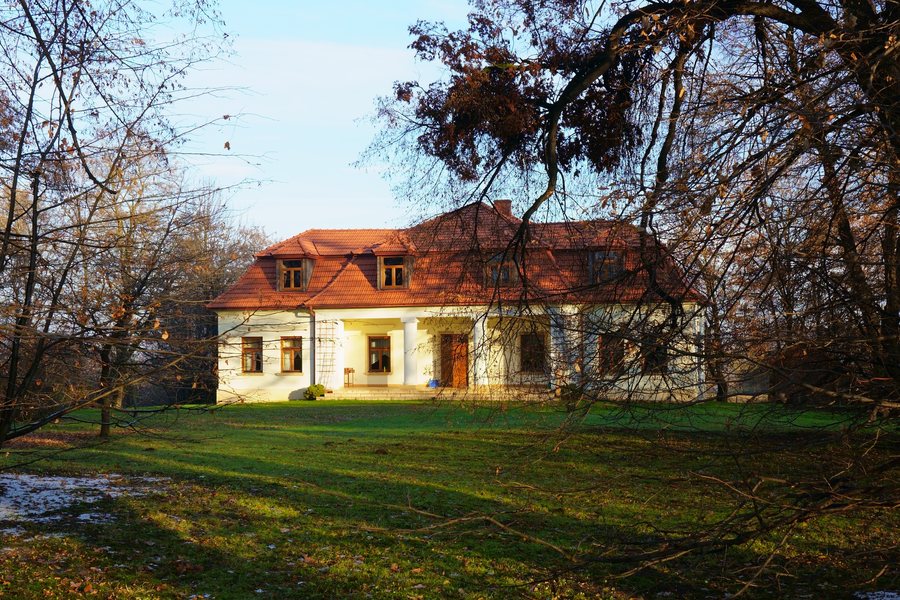 File:Przebieczany (Tomaszkowice) gm. Biskupice zespół dworski A 556 dwór.jpg
Photo: Januszk57 via Wikimedia Commons, CC BY-SA 4.0
File:Przebieczany (Tomaszkowice) gm. Biskupice zespół dworski A 556 dwór.jpg
Photo: Januszk57 via Wikimedia Commons, CC BY-SA 4.0
Salt Extraction in the 12th Century
There was a salt shaft in the centre of Przebieczany in the 12th century. It was owned by the Order of the Knights of the Holy Sepulchre of Miechów; the salt was extracted from a saline spring. The connection to the village comes from the combination of the shaft, the spring, and its owner at the time. So this is not just about the raw material itself, but also how it was extracted and who owned the facility.
As a conversation starter for the family, you can break this story down into two questions: Where did the salt come from, and who owned the shaft? This helps distinguish extraction from ownership without requiring any specialist knowledge.
A Royal Road Through the Village
A royal road passed through Przebieczany in the 14th century. This offers a different historical perspective from salt extraction: here the focus is on the route of a road, while the shaft was used to extract salt from a saline spring. Both references belong to the Middle Ages, but describe different aspects of the village’s history. The royal road adds the question of how a historic route passed through the village to the story of salt extraction.
A Cross on a Pedestal Dating from 1870
A cross on a pedestal dating from 1870 stands in Przebieczany. The year refers to the pedestal; it does not automatically date the cross itself. This distinction helps you read the historical information accurately: the cross is the object mentioned, while the pedestal bears the stated year. As an architectural detail, it dates from considerably later than the two medieval themes.
For planning together, you can turn this into a simple timeline: 12th century, 14th century, 1870. What is interesting is not just the order, but also the shift in subject—from salt extraction to the route of a road and then to a dated pedestal. Ask your fellow travellers which aspect interests them most; that way, the same historical question does not have to appeal to everyone equally.
History as Part of Choosing Where to Stay
If you are looking for a holiday apartment in Przebieczany, consider whether local history is part of what interests you in a place to stay. The historical themes offer different points of interest: medieval salt extraction, a road through the village, and an architectural detail dating from 1870.
Discover more destinations: Niepołomice, Czyżów, Węgrzce Wielkie, Wieliczka, Suchoraba, Gdów, Kłaj, Czarnochowice.
Return to the main travel overview: Wieliczka.

_gm._Biskupice_zesp%C3%B3%C5%82_dworski_A_556_dw%C3%B3r.jpg)