
Koźmice Wielkie between the Wilga and Czarny Las
Accommodation in Koźmice Wielkie
Koźmice Wielkie has two distinctive landscapes: Czarny Las on steep slopes and the broad, meadow-filled valley of the Wilga. Historic landmarks include a chapel on the border with Siercza, a stone statue of Saint John of Nepomuk and a monument to a partisan unit. This gives you a specific starting point when choosing a holiday apartment: should your trip focus mainly on the landscape and natural scenery, or on local history?
Landscape between forest and river
Part of Czarny Las lies within Koźmice Wielkie. The forest grows on steep slopes unsuitable for farming. Oak and beech trees predominate, while spruce and pine make up a small proportion of the woodland. Blackberries, raspberries, wild strawberries and mushrooms also grow there. The mushrooms attract foragers. The slope, tree species and plants mentioned give the forest a distinctive character for anyone who takes the landscape into account when choosing a holiday destination.
The Wilga flows through the northern part of Koźmice Wielkie from southeast to northwest, forming a broad valley defined by meadows. The forest on steep slopes and the meadow landscape along the river are two different landscapes side by side. If you choose your holiday apartment according to the kind of surroundings you want, these features can help you decide what to focus on during your stay.
Chapel and stone statue
A chapel dating from the first half of the 19th century stands on the border between Koźmice Wielkie and Siercza. It was rebuilt toward the end of the 19th century and is still regarded as a symbol of the faith of the local population. Its history therefore includes two phases of construction, while its significance is rooted in local faith.
Another religious landmark is the statue of Saint John of Nepomuk, made entirely of stone in 1827. It stands near the Wilga, at the junction of the Wieliczka–Myślenice road and the road to Janowice. It was commissioned by Jan Holewa. Its year, material and patron make the statue a different kind of historical reference point from the chapel on the village boundary.
Remembrance and a regional cycling route
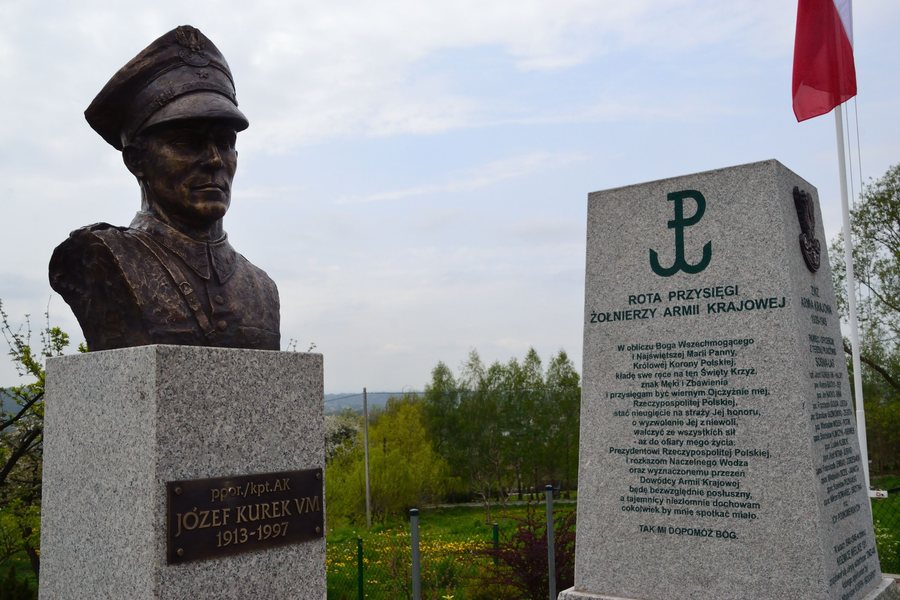
The 20th-century history of the village includes the monument unveiled in Koźmice Wielkie on 2 May 2013. It commemorates the partisans of the “Sosna-Las” ZWZ-AK unit, who fought German troops from 1940 to 1945. The village’s history thus brings together 19th-century religious landmarks and a monument to resistance during the Second World War.
Cyclists can explore the region on a 23-kilometre route through the Pogórze Wielickie. It passes through Koźmice Małe, among other places. This provides a separate route suggestion for planning your holiday, alongside Koźmice Wielkie’s landscapes and historic sites.
Wieliczka as a separate cultural focus
In the wider destination of Wieliczka, the Salt Mine is part of the UNESCO World Heritage Site “Wieliczka and Bochnia Royal Salt Mines.” The underground miners’ route passes through 7 to 14 mining chambers in the workings around the oldest preserved Regis Shaft and is up to 2 kilometres long. This gives Wieliczka its own focus on mining history, alongside the landscapes and memorial sites of Koźmice Wielkie. When looking for a holiday apartment, you can consider whether your stay should focus mainly on the local landscape, local historic sites, or also this cultural offering in the wider destination.
Discover more destinations
Discover more destinations: Sułków, Biskupice, Brzegi, Zabawa, Niepołomice, Zakrzów, Gdów, Kłaj
Back to the main travel overview: Wieliczka.

