
Discover Tarnów: History, Nature and Wine
Accommodation in Tarnów
Tarnów combines a Renaissance-influenced Old Town with regional wine and culinary culture. It also offers special places for nature and culture enthusiasts: from the linden and oak forest in the Debrza Nature Reserve to an exhibition about Roma history and culture. Which holiday apartment is right for your trip depends largely on which of these different discoveries you want to make your focus.
Combine City and Nature with Intention
The “Debrza” Nature Reserve is located within the city of Tarnów. Covering 9.5 hectares, it protects a relatively undisturbed linden and oak forest and is a partial forest reserve. If you would like to include nature in your stay, you will find a clear contrast here to the city’s historical and cultural attractions.
Cyclists can also include Tarnów in their plans: EuroVelo 4, also known as EV4 or VeloMetropolis, runs through the city. The 92-kilometre section leads from Wola Batorska via Tarnów to Jodłówka Wałki. For hikers, there is a blue trail in the Skamieniałe Miasto Nature Reserve. The area, with its unusual rock formations, can be visited year-round, preferably at a time arranged in advance.
Strzelecki Park offers another green side of the city. Its irregularly laid-out English-style garden includes a pond. The mausoleum of General J. Bem stands in the pond: a sarcophagus on six columns with Corinthian capitals. The park’s design and memorial site make a visit an opportunity to explore architecture and history as well.
Renaissance, Museums and Distinctive Details
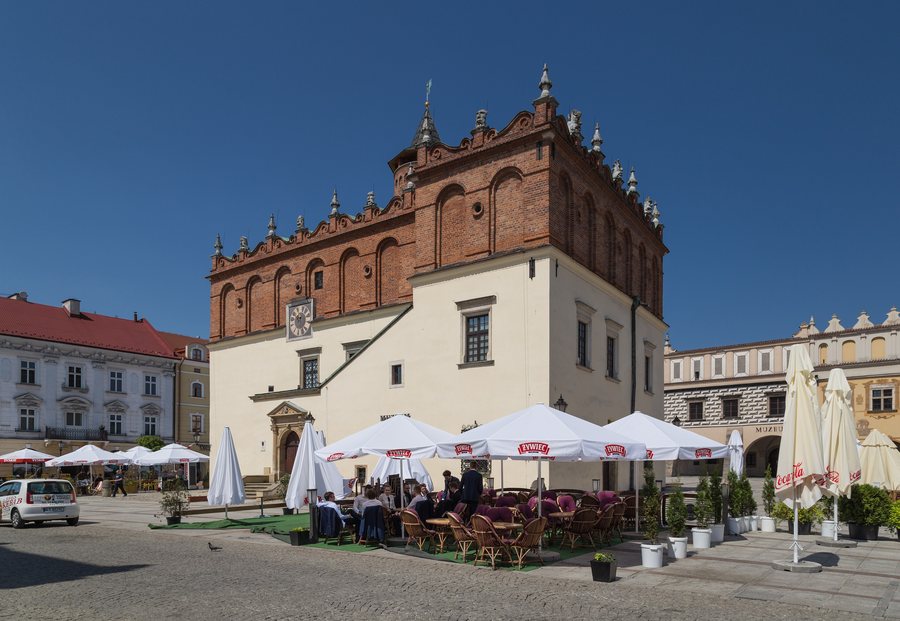
Tarnów’s Market Square is lined mainly with two-storey townhouses featuring a variety of architectural styles. The wooden Church of Our Lady of the Scapular near the Market Square was consecrated in 1440. The cathedral basilica contains Renaissance tombs of the Tarnowski family and a Mannerist tomb of the Ostrogski family. If you are interested in historic architecture and funerary art, you can add these places to your list as different themes to explore around the city.
Other notable historic sites include the Bima, the only surviving fragment of Tarnów’s oldest synagogue, dating from the 17th century, and the Stary Cmentarz in Zabłocie. This cemetery, also known as the Zabłocki Cemetery, has existed for more than 200 years and was added to the register of monuments in 1957. Cultural events are held at the Bima every year.
The Ethnographic Museum has a permanent exhibition on Roma history and culture, including original horse-drawn wagons. The Diocesan Museum was founded in 1888 and is considered Poland’s oldest church museum. Another art stop is the Panorama Gallery in Tarnów’s main railway station, which displays fragments of the Panorama held by the museum. For a different kind of discovery, visit the Discovery Passage (Pasaż Odkryć) at Rynek 4: it is housed in a restored townhouse, and its permanent exhibition features interactive stations and an exploration guided by an expert.
Wine and Regional Excursions
Tarnów is considered the heart of the enoTARNOWSKIE region. Here, wine and local cuisine invite you to discover the region’s culture, traditions and people; the region holds the title of Polish Tourism Brand. The “Wielkie Tarnowskie Dionizje” is one of the region’s regular food and wine events and is held in Tarnów.
In the wider region, you can visit family-run enoTARNOWSKIE wineries. Guests can taste wines directly from the producers, learn about the wineries’ history and see how wine is made. The EnoVelo route is another regional option: it connects the vineyards of the Pogórze region. Ciężkowice also has a spa park and a multimedia natural history museum. This means that a trip can focus on different things, from city history and wine to excursions further afield.
When planning a cultural visit, please note that Muzeum Zamek w Dębnie has been closed to visitors since 1 December 2025 for extensive modernisation. When choosing accommodation, you can first decide which places and themes matter most to you, then visit the relevant destination page.
More Places to Explore
Other destination pages include Ciezkowice, Rychwald, Tarnów, Milówka, Siedliska, Tuchów, Świebodzin, Ryglice, Janowice, Zgłobice, Zakliczyn, Skrzyszów, Ładna, Wierzchosławice, Pleśna, Komorów, Wola Radłowska, Rzuchowa, Wola Rzędzińska, Wał-Ruda, Zabawa, Zbylitowska Góra, Jamna, Ołpiny, Wojnicz, Paleśnica and Meszna Opacka.
For the overview of the wider region: Lesser Poland.

