
Łącko: Church, Hiking Trails and Święto Kwitnącej Jabłoni
Accommodation in Łącko
Łącko combines a distinctive religious heritage with plenty of ways to spend the day on foot or by bike. The parish church dates back to its consecration in 1720; a Gothic baptismal font is even older, dating from 1493. At the same time, marked routes lead over Modyń and through a number of named places. In May, the annual Święto Kwitnącej Jabłoni takes place. Depending on whether you want to focus on culture, hiking, cycling or the festival, you can plan your stay in different ways.
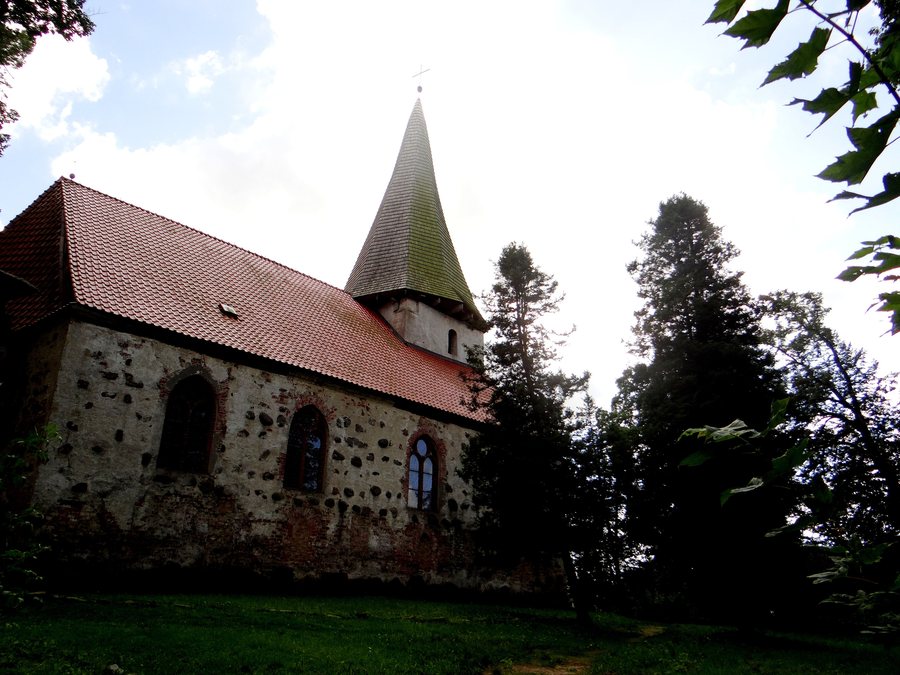
Church history and a conservation topic
The parish church of St John the Baptist and the Archangel Michael dates from the 18th century and was consecrated in 1720 by Bishop Jan Tarło. Among its distinctive features is a Gothic baptismal font from 1493. Made of stone and wood, it is chalice-shaped and measures 120 centimetres. The church therefore brings together 18th-century architectural history and a much older work of art.
Nature is also part of the church building’s story: its attic houses breeding colonies of lesser horseshoe bats and greater mouse-eared bats. Both species are threatened across Europe and need active protection. This conservation aspect adds a living dimension to the historical perspective, making Łącko interesting beyond its architecture.
Hikes for different time frames
A yellow-marked hike to Modyń starts in Łącko’s market square. The outward journey is estimated at about three hours and the return at two and a half hours; Modyń is listed at an elevation of 1,029 metres in this description. Another yellow-marked route runs via Modyń, Kicznia and Łącko to the cycling bridge over the Dunajec in Czerniec. From there, it continues via Łąckie Zawodzie and Suchy Groń (945 m) to Dzwonkówka (984 m); the stated walking time is seven hours.
The estimated times for the Modyń hike add up to around five and a half hours of walking. The longer route, at seven hours, is another option. If you are travelling with children, compare these time estimates with your own daily pace before adding the hikes to your holiday plans. Check current trail conditions and markings before setting out.
Four cycling routes, four itineraries
The cycling routes described range from 4 to 14 kilometres. The 4-kilometre black-marked route runs from Łącko via Jeżowa to Byniowa. The 10-kilometre yellow-and-green-marked route is a loop through Kiczonki, Pożogi, Czarny Potok and Wolaki, returning to Łącko.
A blue-marked route runs via Kicznia, Góra Klończyk and Wyrobiska to Modyń and is 12 kilometres long. The longest of the four routes listed is 14 kilometres: it is marked in red and runs via Zagorzyn, Wola Piskulina, Wola Kosnowa, Dudówki, Tomaszki, Zagrodniki and Pod Modyń to Modyń. The route lengths and place names provide a concrete basis for planning separate days for cycling and hiking.
A festival in May
The Święto Kwitnącej Jabłoni takes place every May at the amphitheatre on Góra Jeżowa. The festival gives spring its own place in your travel plans and adds an annual event to your stay. If you want to plan your trip around it, check the latest announcements for dates and programme details.
Find an apartment to suit your travel plans
When looking for an apartment in Łącko, it helps to decide first what you want to focus on during your stay. A trip centred on the parish church’s architectural and natural history calls for different holiday plans than one focused mainly on hiking or cycling. The stated walking times and route lengths provide concrete points of reference. Match the location of an offer to the activities you actually plan to do, and if you are staying in May, take the festival date into account too.
Discover more destinations
Discover more destinations: Binczarowa, Muszyna, Rożnów, Świdnik, Wierchomla Wielka, Barcice, Kąclowa, Nowa Wieś.
Back to the main travel guide: Nowy Sącz.

