
Trybsz between the Białka Gorge and the wooden church
Accommodation in Trybsz
Trybsz combines the striking landscape along the Białka with a remarkable cultural heritage. Near the village, the river forms a picturesque gorge between the steep rock formations of Obłazowa on the Podhale side and Kramnica on the Spisz side. There is also a long hiking route to Polana Podokólne and two churches with different works of art. Nature, outdoor activity, and sacred art thus stand side by side as distinct themes to consider when planning your trip.
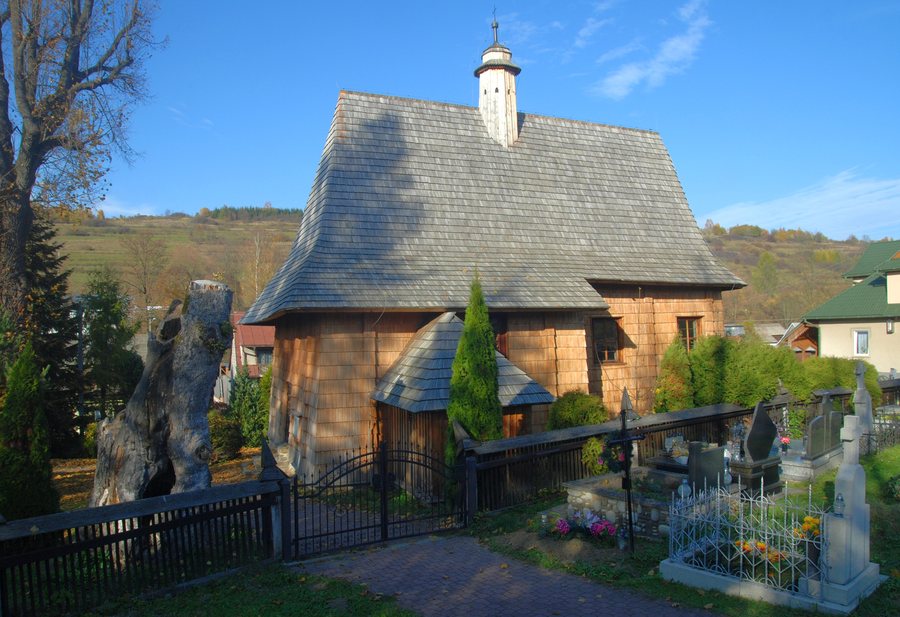 File:Trybsz, kościół św. Elżbiety Węgierskiej (HB2).jpg
Photo: Henryk Bielamowicz via Wikimedia Commons, CC BY-SA 4.0
File:Trybsz, kościół św. Elżbiety Węgierskiej (HB2).jpg
Photo: Henryk Bielamowicz via Wikimedia Commons, CC BY-SA 4.0
Landscape along the Białka
The Białka Gorge gives the surrounding area a distinctive character. At Trybsz, the river forms a picturesque gorge between the steep rock formations of Obłazowa on the Podhale side and Kramnica on the Spisz side. The two rock formations facing each other on the Podhale and Spisz sides make the landscape easy to picture: here, the river and the rocks are part of the same scene.
The Przełom Białki nature reserve is also located in the area around Trybsz. It adds a designated protected area to the natural attractions, while the gorge itself is defined by the river and rock formations. If landscape is an important part of your trip, the gorge and nature reserve offer specific landmarks to help you get your bearings.
Hike to Polana Podokólne
The green-marked hiking trail leads from Trybsz to Polana Podokólne and is 14.7 kilometres long. The stated walking time from Trybsz to the clearing is 5 hours and 15 minutes; in the opposite direction, it is 5 hours. The two times differ by 15 minutes—a difference you can take into account when planning for your chosen direction. The duration makes this hike a full activity in its own right rather than a short stop along the way. Actual walking time may vary from one hiker to another. The distance and time estimates help you compare the length of the hike with the rest of your daily itinerary in advance.
Wooden church and sacred art
The wooden Church of St. Elizabeth of Hungary dates from 1567 and is considered one of two wooden churches in Polish Spisz; the other named church is in Jurgów. Its wall polychromes depict scenes from the Old and New Testaments. The ceiling painting also features a varied composition: it shows the Assumption of Mary against a backdrop of the Pieniny, the Dunajec Valley, the castles at Czorsztyn and Niedzica, and the Belianske Tatras. The painting thus combines a religious theme with a depiction that includes several prominent landscape names.
The new church in Trybsz houses an image of Saint Elizabeth, which forms the central panel of a 16th-century triptych. It was transferred from the old church and placed above the choir. This transfer creates a concrete link between the artworks in the two churches: alongside the wooden church with its wall and ceiling paintings, the new church displays the image of Saint Elizabeth. For those interested in culture, the history of the buildings and sacred art thus form a distinct focus alongside the landscape and hiking.
Decide what matters most when looking for accommodation
When looking for a holiday apartment, you can set a clear priority: the hike starts in Trybsz and, according to the stated time, takes several hours; the churches offer a cultural highlight. A day focused on outdoor activity and an interest in sacred art are therefore different motivations to consider. Think about which one will shape your trip, and tailor your search accordingly.
Discover more destinations
Discover more destinations: Chochołów, Kacwin, Ochotnica Dolna, Obidowa, Tylka, Niedzica, Łopuszna, Maruszyna.
Go to the main travel overview: Nowotarski.

.jpg)