
Podwilk: Nature Reserve and Church Architecture
Accommodation in Podwilk
Podwilk brings together nature and culture, appealing to a range of interests. The Bembeńskie Nature Reserve is home to bog spruce stands and protected plants, while St. Martin’s Church is distinguished by its roof shapes and preserved furnishings. If you choose a destination based on your interests, Podwilk offers two distinct highlights: the plant life of a nature reserve and the architectural and furnishing history of a church.
The Bembeńskie Nature Reserve and Its Plants
The Bembeńskie Nature Reserve was established in 2001 to protect bog spruce stands, black and grey alders, and protected and rare subalpine herbaceous plant species. It covers 40.54 hectares and consists of two separate sections. The soft-haired knapweed is one of the legally protected species.
The protected stands therefore include a range of plant forms: in addition to spruce and alder, herbaceous plant species are also protected. The knapweed provides a specific example of the reserve’s botanical focus. Its division into two separate sections is also part of the description of the area, complementing the information about its size and vegetation.
St. Martin’s Church: Roofs, Furnishings and Bell
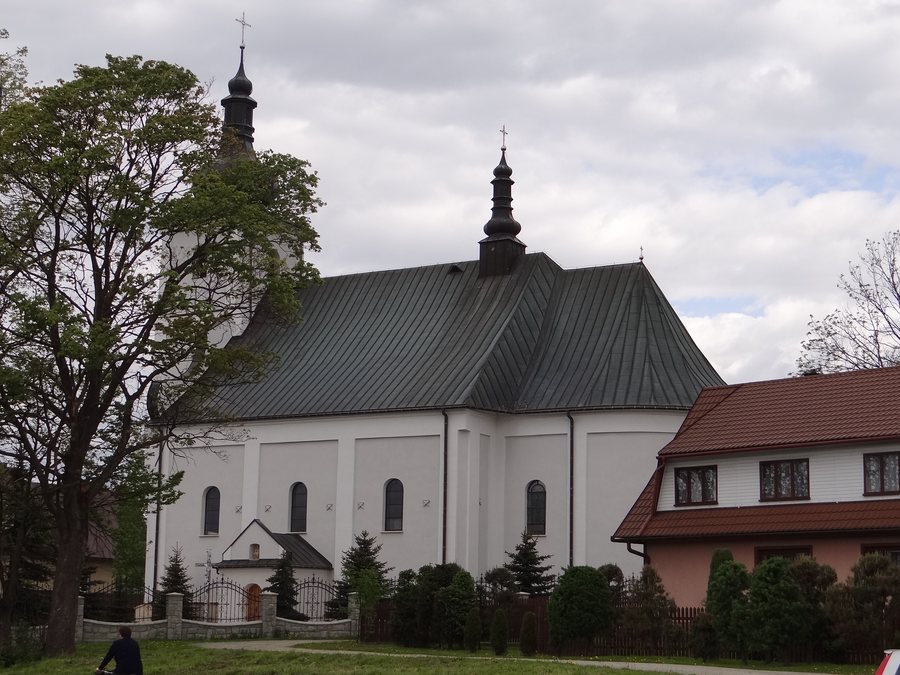
St. Martin’s Church has bulbous tent roofs on the tower and the roof turrets. “Bulbous” describes the curved shape of these roofs; the description refers to them on both the tower and the smaller rooftop structures. This allows the architecture to be understood through several building elements, rather than just one feature.
Some of the church’s former furnishings have been preserved: a pulpit with a relief of St. John the Baptist, a side altar and two Rococo confessionals. There is also a stucco relief of St. Wendelin above the door to the sacristy. The subjects and their different locations in the church give the furnishings a distinct art-historical dimension: John the Baptist appears on the pulpit, while Wendelin is above the entrance to the sacristy.
The bell tower also preserves a specific historical connection. A bell from 1702 hangs among bells from the interwar period; it measures half a metre in diameter. Bells from different periods are therefore brought together in the same setting. The measurement also helps make the historic bell tangible as an object, while its date establishes its place in time.
What Podwilk Offers for Your Trip
The two themes offer different points of focus: the nature reserve is described through its area, its division into two sections and its protected plant groups; the church, meanwhile, is presented through its roof shapes, furnishing details and bells. When planning a trip together, you can consider whether nature and plant life or architecture and church history better match your interests. This is a helpful starting point for comparing Podwilk with the kind of vacation you have in mind.
If you’re looking for a holiday apartment in Podwilk, you can also choose the area based on these interests. An interest in nature and curiosity about historical details are two different reasons for choosing the same destination, not a single shared expectation of the stay. When planning, discuss which themes matter for your trip and use them as a guide to whether Podwilk matches your vacation plans.
Discover More Destinations
Discover more destinations: Jablonka, Niedzica, Dursztyn, Szczawnica, Łapsze Niżne, Bańska Niżna, Ochotnica Dolna, Lipnica Wielka
Go to the main travel overview: Nowotarski.

