
Falsztyn – Spiš history, lake views and cycling routes
Accommodation in Falsztyn
Local history on the hillside
Falsztyn stretches above the man-made Lake Czorsztyńskie. From here, there are views of the Tatra Mountains, the Pieniny and the Gorce. When choosing a holiday apartment for your stay, you can consider whether you want to focus mainly on the scenery, historical traces or cycling trips. In Falsztyn, these different interests come together in a distinctive local character: old Spiš buildings have been preserved around a bend in the road on a hillside in the Spiš Mountains.
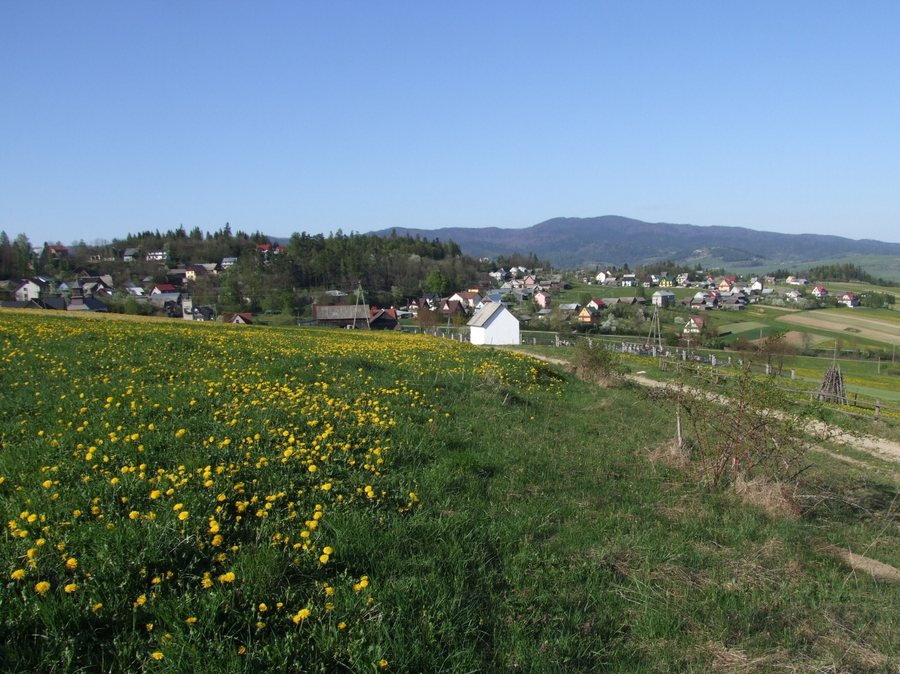
Several old wooden farmsteads and the remains of a small Spiš market settlement add to this impression. The farmsteads, preserved buildings and settlement remains represent different aspects of the area's history. Families who enjoy learning about places through their architectural styles and historical traces will find various points of interest here, without any single building having to tell the whole story of the place.
Manor house, chapel and tradition
In Falsztyn, you can visit the manor house of the Jugenfeld and Salamon families. The Chapel of Our Lady Queen of Poland also tells of a change in the village: in 1982, local residents converted a former farm building into the chapel; it had previously housed a granary. Masses at the chapel are listed for Sundays and public holidays at 9:00 a.m. This information may be useful when planning a visit to the chapel.
Another place linked to Falsztyn's history is the wooded promontory of Sokola Skała. According to local tradition, it is associated with a small medieval castle or monastery. This remains a tradition; alongside the preserved farmsteads and settlement remains, it offers another perspective on the area's past.
The lake and its natural surroundings
Zielone Skałki, near Falsztyn, lies between Falsztyn and Niedzica on a peninsula jutting into Lake Czorsztyńskie. The limestone cliffs there drop steeply 80 to 100 metres down to the lake. The area is not open to tourists. An unpaved road and a cycling path run along the southern boundary of the protected area; they follow its boundary and do not constitute access into the area.
Falsztyn's meadows and pastures also shape the natural landscape: more than thirty plant species grow across the extensive areas. With a little luck, visitors may also spot a falcon, eagle, buzzard or hawk. Views of the Tatra Mountains, the Pieniny and the Gorce add a sweeping scenic accent. When choosing a holiday apartment, you can therefore weigh up whether you would like to focus your stay more on local history, wildlife watching or outdoor activities.
Cycling through Falsztyn
A cycling route runs through Falsztyn. You can ride towards Frydman and onward via Dębno to Nowy Targ; in the other direction, it leads to Niedzica Castle. On the southern section of the Route Around Czorsztyn Lake, the Velo-Dunajec route runs from Niedzica through Falsztyn, over the side dam in Frydman and on to the bridge in Dębno. This section is about 15 kilometres long. Near Falsztyn, the Velo-Dunajec route also has a short but steep climb.
The route information offers different options for planning your trip: you can consider the route through the village towards Niedzica or Nowy Targ, or plan the roughly 15-kilometre southern section of the Route Around Czorsztyn Lake. If you are travelling with several generations, you can choose outings based on shared interests in cycling, local history or the scenery. The steep climb near Falsztyn is a specific difference to bear in mind when planning your ride.
More places to discover: Zubrzyca Górna, Szlembark, Szaflary, Piekielnik, Bańska Niżna, Zaskale, Tylmanowa and Lasek.
For the broader travel overview: Nowotarski.

