
Discover Uście Gorlickie: Wooden Church and Routes
Accommodation in Uście Gorlickie
Uście Gorlickie brings together several distinct points of interest for a trip: a West Lemko wooden church dating from 1786, a First World War cemetery, and different options for exploring on foot or by bike. Cultural history, remembrance and active pursuits are therefore separate themes. As you plan, consider what interests you most and what pace you would like for your stay. This will also help you decide whether to consider Uście Gorlickie as a destination for a holiday apartment or holiday home.
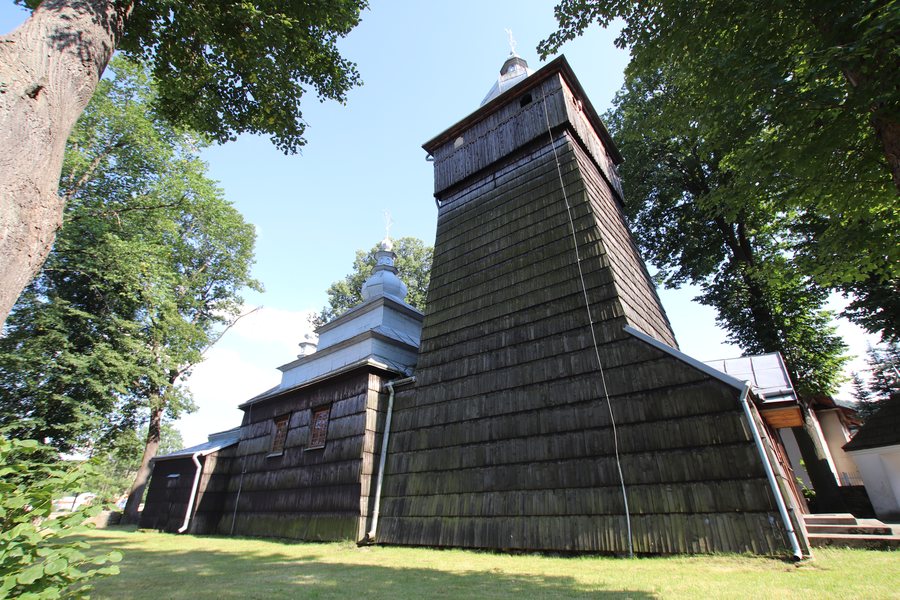 Uście Gorlickie - St. Paraskevi Greek Catholic church
Photo: Andrzej Otrębski via Wikimedia Commons, CC BY-SA 4.0
Uście Gorlickie - St. Paraskevi Greek Catholic church
Photo: Andrzej Otrębski via Wikimedia Commons, CC BY-SA 4.0
St Paraskevi Wooden Church: Construction and Fittings
The Greek Catholic parish church of St Paraskevi is a West Lemko wooden church dating from 1786. Its log construction and shingle-covered walls make both the structure and its exterior design tangible. Log construction refers to a structure made of layers of wood stacked on top of one another; shingles are thin pieces that cover a wall surface. This makes two different features of the building easy to understand, without requiring specialist knowledge of wooden architecture.
Another feature with a specific date is the figurative and ornamental polychrome decoration, which dates from 1938. Polychrome means a multicoloured design; figurative and ornamental refers to a combination of figures and ornaments. More than 150 years separate the year of construction from this decorative scheme. The construction period, building method and later decoration thus offer different points of interest for anyone interested in the history of sacred wooden architecture. The church's history of use includes Greek Catholic services held there from 1951; Roman Catholic services were held there in the second half of the 20th century.
A Place of Remembrance in Uście Gorlickie
Another historical point of interest is First World War Cemetery No. 57 in Uście Gorlickie. Fifty-nine people are buried there. This number gives the memorial site a specific context; at the same time, the cemetery offers a different way to engage with the past than the church's construction and history of use. Anyone interested in local places of remembrance can consider this alongside the sacred architecture, gaining insight into different aspects of the area's history.
Cycling Route and Circular Hike
The routes also serve different purposes. The blue-marked Transborder Cycling Route passes through Uście Gorlickie. The Uście Gorlickie–Sucha Homola–Uście Gorlickie circular hike starts in the village and returns there via Sucha Homola. This makes it easy to compare the two when planning: Uście Gorlickie lies along the cycling route, while the hike starts and ends there. If you want to combine several interests during your stay, you can consider these two kinds of active pursuits separately. Before setting out, check the local signage and current conditions on the route you plan to take.
Uście Gorlickie as a Place to Look for Accommodation
If you are looking for a holiday apartment or holiday home, choose Uście Gorlickie as your destination if the church, memorial site or one of the routes fits your travel plans. The accommodation type that suits your stay depends on your own needs and the kind of holiday you have in mind. Start by considering the interests you want to shape your stay; this will keep your search focused on specific reasons to visit Uście Gorlickie.
Discover more destinations: Korczyna, Stróżówka, Strzeszyn, Szymbark, Biecz, Wysowa-Zdrój, Hańczowa, Gorlice.
Back to the main travel overview: Gorlice.

