
Dąbrowa Tarnowska: Culture, Wooden Architecture and Castle Park
Accommodation in Dąbrowa Tarnowska
Dąbrowa Tarnowska offers a range of attractions within a relatively focused area: an exhibition can be visited in groups, with or without a guide, or independently in several languages. There is also a large synagogue, an important wooden church, classical music concerts and traces of the castle’s history. If you want to focus on culture and local history during your stay, you will find several points of interest here rather than having to choose just one theme.
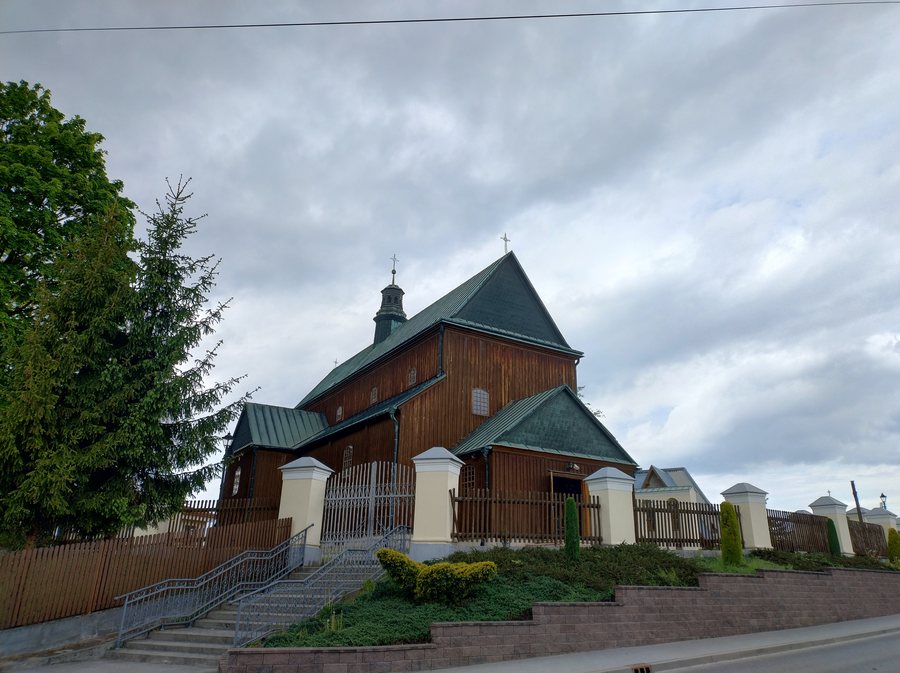 File:Dąbrowa Tarnowska (kościół Wszystkich Świętych) 01.jpg
Photo: Patryk Duszkiewicz via Wikimedia Commons, CC BY-SA 3.0
File:Dąbrowa Tarnowska (kościół Wszystkich Świętych) 01.jpg
Photo: Patryk Duszkiewicz via Wikimedia Commons, CC BY-SA 3.0
An exhibition with several ways to visit
At the Ośrodek Spotkania Kultur, groups can visit the exhibition with or without a guide. Independent visits are also possible, with several languages available. The different options give you flexibility when planning a cultural programme for your group: you can choose a guided tour or explore the exhibition on your own. Which option suits you better depends on whether you would like to hear explanations together or shape the exhibition experience independently.
Wooden architecture, the synagogue and music
All Saints’ Church is one of Poland’s largest wooden churches and is located on the Wooden Architecture Route of the Lesser Poland Voivodeship. It is therefore both one of Dąbrowa Tarnowska’s notable cultural attractions and part of a wider regional route. The church also hosts classical music concerts. If you are interested in wooden architecture, you can focus on that aspect; if you prefer music, the concerts offer another cultural way to experience the church.
The synagogue also shapes the cultural profile of the town: it is the largest surviving synagogue in Lesser Poland. Together with the wooden church, it brings two different religious buildings into focus, though they need not appeal to the same interests. When planning your trip, you can decide whether to focus primarily on the regional Wooden Architecture Route, the synagogue’s notable size or the musical events at All Saints’ Church.
Castle history and park
Another historical point of interest is the extensive remodelling and expansion of the castle, begun by its Lubomirski owners in 1697. This date marks the start of those works; it does not indicate when the castle was founded. This provides a specific change to connect with the castle’s history without conflating different phases of construction.
Large sections of the castle park have been preserved and now serve as a place of recreation for local residents. This adds the park’s present-day importance to the historical perspective. The castle’s history and the park represent two different ways of looking at the site: the historical remodelling by the Lubomirski owners on the one hand, and the use of the surviving parts of the park as a place of recreation on the other.
Jewish history as another area of interest
The Jewish cemetery was established around the turn of the 17th and 18th centuries. About 200 gravestones have survived there to this day. The approximate number and historical context offer two specific points of reference for this site. Together with the synagogue, the cemetery is one of the Jewish heritage sites you can include when exploring Dąbrowa Tarnowska. Each has its own distinctive features: the synagogue is notable as the largest surviving synagogue in Lesser Poland, while the cemetery is distinguished by its date of establishment and the approximately 200 surviving gravestones.
When choosing your holiday apartment, it may therefore be helpful to consider which topics interest you most during your stay: the exhibition and ways to visit it, wooden architecture and music, the castle’s history or Jewish heritage sites. If you would also like to include other places in your search, you can find Lipiny, Mędrzechów, Luszowice and Grądy here.
For the broader travel overview: Dąbrowa.

_01.jpg)