
Discover Łapczyca
Accommodation in Łapczyca
Several traces of history converge in Łapczyca: a Gothic brick church dating from 1340, a pilgrimage tradition passed down through the generations, and the history of ancient trade routes. The Church of the Nativity of the Blessed Virgin Mary stands on a hill among spreading lime trees. King Casimir the Great founded the church. Visitors interested in culture and history will find a starting point here for exploring Łapczyca through its architectural history, religious tradition and location on historic routes.
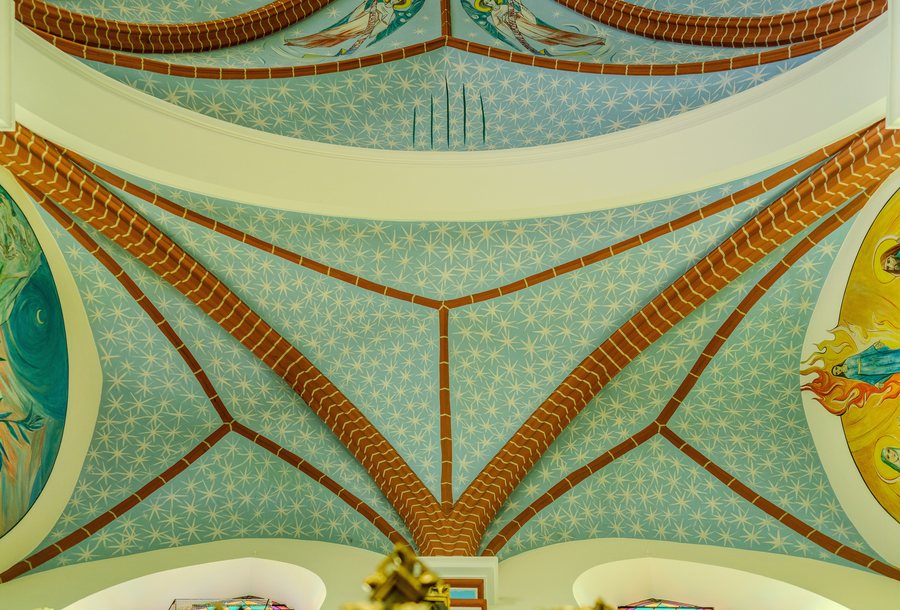
A church on historic routes
The church lies on the Via Regia Antiqua, which runs from Bochnia to Chełm. This road is also known by various historical names: it was regarded as the Amber Road, was later called the Royal Road and is now known as the Via Regia Antiqua. This sequence helps put the area in context: Łapczyca can be viewed not only through a single building, but also through the history of a named transport route. The church, dating from 1340, is one of the sites along this route.
Another historic route leads from Kraków towards Ruthenia and Hungary. The church also stands beside an earlier trade route in this direction. These two descriptions of roads offer different perspectives on Łapczyca’s past: on the one hand, the Via Regia Antiqua connects Bochnia and Chełm; on the other, the older route points to trade between Kraków and the destinations described as lying to the east or south-east. During a culture-focused stay, you can explore these traces of routes as topics in their own right, alongside the church’s architecture.
Pilgrimage and stories passed down through the generations
An annual pilgrimage from Bochnia to the church in Łapczyca has taken place since 1849. It commemorates the city’s miraculous deliverance from a cholera epidemic, as recounted in local tradition. This tradition adds another layer of meaning to the church: in addition to its Gothic design and foundation history, it is associated with a religious practice that links Bochnia and Łapczyca. If you are travelling with children, you can use the different historical stories as a starting point for conversations about buildings, trade and religious traditions, without conflating them into a single story.
A hill, lime trees and traces of the Middle Ages
The church’s position on a hill among spreading lime trees is a distinctive feature of the local landscape. Łapczyca is also home to the remains of a medieval hillfort. Its heyday lasted from the 9th to the 11th century. These are two distinct historical points of reference: the early medieval hillfort and the Gothic church built in 1340. Visitors interested in historic sites can explore both periods in Łapczyca separately, focusing on their different legacies.
Putting Łapczyca in context as a holiday destination
The Raba Route also provides a point of reference: it continues to Łapczyca, where it joins National Road 94, and runs towards Bochnia. This connection adds a present-day road designation to the historical routes without equating the different routes. If you are looking for a holiday apartment for a culture-focused stay, you can choose Łapczyca based on the interests that matter for your trip: Gothic church architecture, the history of trade routes, the pilgrimage or the medieval hillfort. This lets you choose your holiday destination based on specific topics rather than a general impression of the region.
For the broader travel overview: Winnica.

.jpg)