
Złotoria: Rafting tradition and castle ruins
Accommodation in Złotoria
Discover Złotoria through its distinctive cultural landmarks and a specific route: a Flisak sculpture recalls the work of the raftsmen, a historic meeting took place near the castle ruins in May 1411, and yellow Route 2 runs from Lubicz Dolny to this destination. You can plan your stay around local history, public art or a trip along the route.
Flisak tradition and local history
The Flisak sculpture recalls the centuries-old tradition of rafting and the difficult work of the raftsmen. The motif therefore tells a story of local working life, not just that of a single work of art. The symbol of Złotoria was ceremonially unveiled on 15 September 2013 at Plac Flisaka. As you explore the area, you can connect this reference to rafting with other signs of the town’s history.
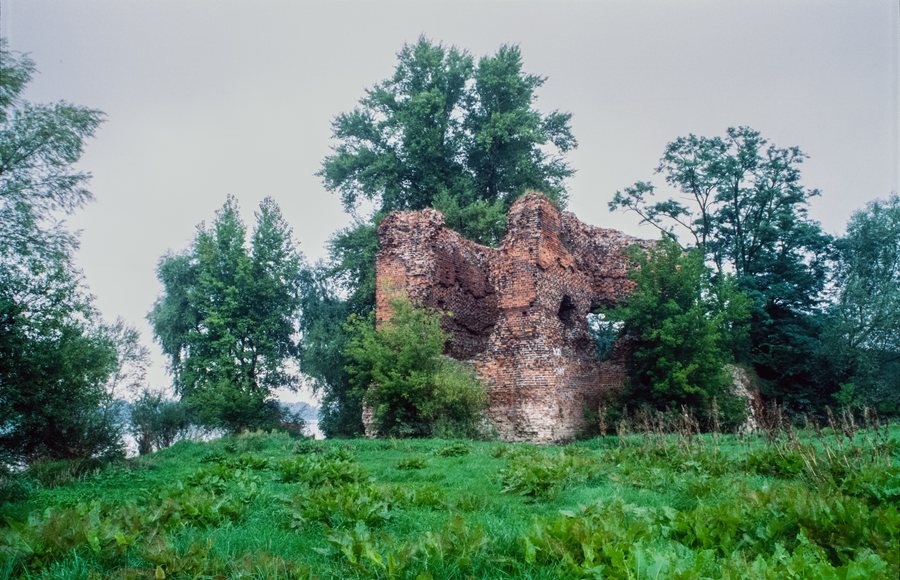
The ruins of Kazimierz Wielki’s castle are also associated with a significant historical event. Near the ruins, Jagiełło, his brother, the Grand Duke of Lithuania Vytautas, and Grand Master Heinrich von Plauen met in May 1411. They exchanged documents that had already been sealed, completing the signing of the First Peace of Thorn. The place therefore represents a specific chapter in history: the meeting and exchange of documents were what mattered, not just the surviving castle ruins.
Another local art landmark is the mural in Złotoria. It covers an area of 120 m². This precise figure makes it a distinct point of interest for a visit, alongside the sculpture and the historic castle site. If you are interested in public art, you can add different forms of remembrance to your stay: the mural is part of the townscape today, while the Flisak recalls a centuries-old tradition.
Yellow Route 2 to the castle ruins
For an active outing, yellow Route 2 describes a 7 km route from Lubicz Dolny to the ruins of Kazimierz Wielki’s castle in Złotoria. Along the way, it crosses the historic wooden bridge over the Drwęca and continues to St. Adalbert’s Church. From there, the route follows an unpaved path along the river; after about 1,000 m, you reach the castle ruins. The 7 km refers to the entire route from Lubicz Dolny to the destination, while the approximate 1,000 m refers to the section from the church. This will help you interpret the distances when planning your outing. Trail conditions may change, so take this into account when planning.
A place to arrive and linger
At Plac Flisaka, by the entrance to Złotoria, you will find an information board about the town’s history and a carved bench shaped like a fish. There is also seating for walkers and people using the cycle path. The square combines practical information with a motif that recalls the rafting tradition. It offers a clear place to stop for a break or get a first impression of the town’s history, without needing to make the longer trip to the castle.
The family recreation and leisure park in Złotoria is intended for walks, games and exercise, and also serves as a place to meet. For families planning to spend time together outdoors, this offers a different focus from the historic route to the castle. You can make the park part of a more relaxed day, while the route and local history are better suited to a focused sightseeing trip.
Choose your stay based on your interests
When looking for a holiday apartment in Złotoria, consider which aspects of the town matter most to your stay: the rafting tradition and mural, the history surrounding the castle, or a walk along yellow Route 2. The places described differ in character and in the stated distances.
Discover more destinations
Discover more destinations: Czarne Błoto, Lulkowo, Chełmża, Zębowo, Cierpice, Mała Nieszawka, Czernikowo, Browina.
Go to the main travel overview: Toruński.

.jpg)