
Discover Mała Nieszawka
Accommodation in Mała Nieszawka
Mała Nieszawka brings together routes through the village and notable landmarks from its history. A blue hiking trail and a green cycling trail pass the ruins of a Teutonic Order castle and a wooden church. There is also a historic cemetery and other stops along the routes. If you are looking for a holiday apartment in Mała Nieszawka, you can choose where to stay based on whether you mainly want to explore on foot, cycle, or include historic buildings and memorial sites in your trip.
Hiking and cycling routes through Mała Nieszawka
The blue hiking trail runs from Toruń across a bridge, past Dybów Castle and Fort X, and along the flood embankment. In Mała Nieszawka, it passes alongside the castle ruins and the wooden church. It ends in Cierpice, next to the cemetery and church. The route description thus brings together several distinct landscapes: the stretch along the embankment, the historic sites near Mała Nieszawka, and the stops at the destination in Cierpice.
The green cycling trail starts near Dybów Castle and Fort X, follows the flood embankment, and also passes alongside the castle ruins and wooden church in Mała Nieszawka. It then passes the municipal office, village houses, the Mennonite cemetery, and the castle ramparts in Wielka Nieszawka. Via Dybów and Rojewo, it continues to the black trail. An extension to Inowrocław is planned; it is therefore not part of the existing route described here. This distinction is important when planning if you would like to continue along the cycling trail.
Castle ruins, a church, and memorial sites
The ruins of a Teutonic Order castle built in the 13th century are located in Mała Nieszawka. Their position along both of the routes described makes the castle a recurring feature of the views along the way. The route description identifies the ruins as a stop along the route; it does not promise access inside the structure. For a trip focused on cultural history, you can therefore take in the castle as part of the village landscape and route.
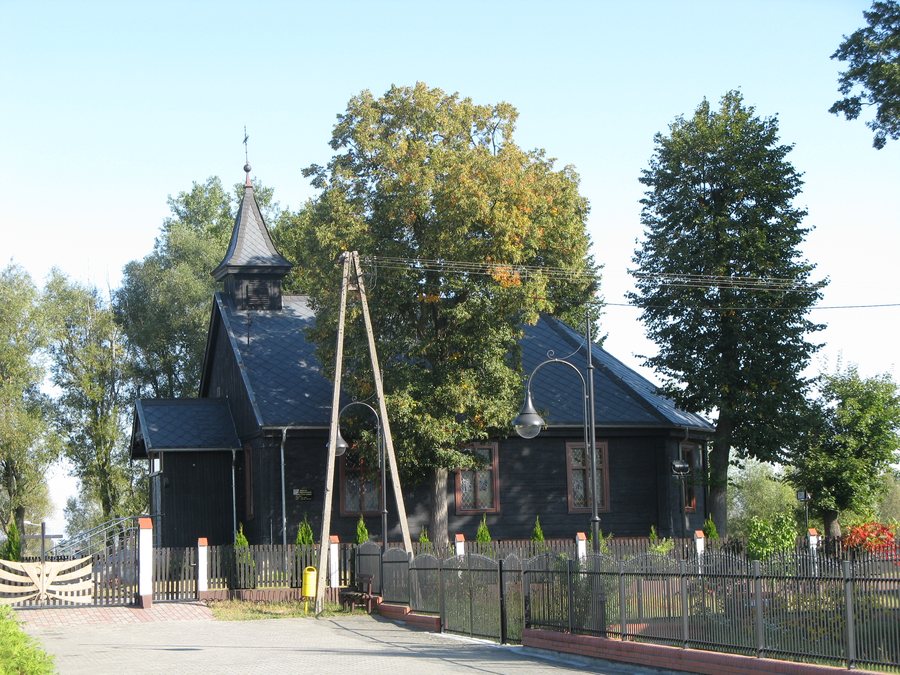
The wooden church is also named as a stop along both routes. It is a former Mennonite chapel that is now the Church of the Sacred Heart of Jesus. It is accessible during services; access is restricted. If you are considering visiting the interior, take this restriction into account when planning. Its changing use, from former Mennonite chapel to present-day church, also gives the building a distinctive place in history.
Another historic site is the war cemetery for Soviet soldiers established in Mała Nieszawka after 1945. The green cycling trail passes the Mennonite cemetery in Wielka Nieszawka; the blue hiking trail ends in Cierpice next to a cemetery and a church. Each of these places is located along the specified section of its own route. Their different names and locations help distinguish the stops along the way.
When choosing a holiday apartment in Mała Nieszawka, you can consider which historic sites you would like to include in your trip.
Other places: Turzno, Zławieś Wielka, Papowo Toruńskie, Czarne Błoto, Lubicz Dolny, Browina, Złotoria, Chełmża.
For the overall travel overview: Toruński.

