
Bzowo on the steep slope of the Vistula Valley
Accommodation in Bzowo
Bzowo lies on the steep slope of the Vistula Valley and combines this striking setting with a history of architecture and settlement spanning several centuries. The late Baroque Church of St Margaret, wooden houses dating from the mid-19th century and the memory of two once-connected settlements give the village several distinct historical layers. If you consider architecture and local history when choosing a destination, Bzowo offers specific points of interest.
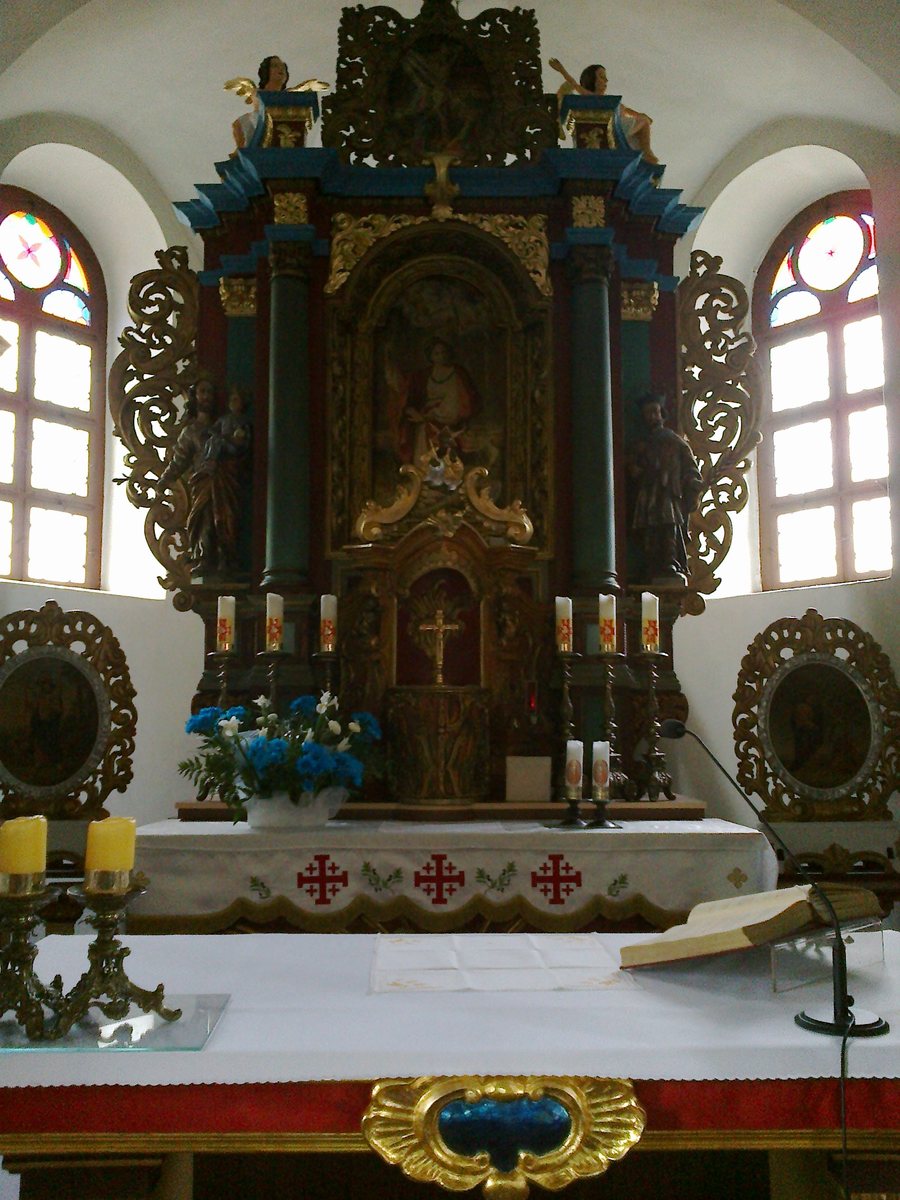 File:Widok na barokowy ołarz Kościoła parafialnego w Bzowie.jpg
Photo: Kacper z Bzowa via Wikimedia Commons, CC BY-SA 4.0
The Church of St Margaret as an architectural focal point
The present-day late Baroque Church of St Margaret was built and completed in 1768. It is made of brick and stone and has a tower; its Rococo interior furnishings also date from the 18th century. Late Baroque and Rococo represent two different aspects here: the classification of the church building and the design of its interior. This makes it possible to view the architecture from more than one perspective. The church still stands today and is a distinctive focal point in Bzowo’s architectural history.
On 24 July 1938, Bishop Konstanty Dominik consecrated the church. This date comes after its construction in 1768 and marks a different stage in its history from its construction and completion. Looking at the chronology, you can distinguish the 18th-century building phase from the later consecration in the 20th century.
Traces of several centuries
The history of the settlement can also be traced through specific dates. The parish in Głowno was first mentioned in 1325. Bzowo once consisted of the two settlements of Bzowo and Głowno; they were joined in the 16th century. The early mention of the parish and the later joining of the settlements thus represent different periods in the village’s history. The cemetery at the Roman Catholic parish Church of St Margaret was established in the early 18th century. A cemetery from the 14th century was probably already located there. This chronology runs from the early history of the parish, through the joining of the settlements, to the establishment of the cemetery.
The village’s wooden houses offer another way to explore Bzowo’s history. They date from the mid-19th century and were built using Dutch, or Olęder, log construction. These homes and their building style stand alongside the late Baroque church and its Rococo interior furnishings. The different types of buildings also highlight different periods: the church dates from the 18th century, while the wooden houses date from the mid-19th century. Bzowo’s history also includes a former horse trough from the 19th century. It shifts the focus from religious architecture and homes to the former provision of water for horses.
Historical interests as a guide to your choice
This points to a clear focus when choosing a destination: Bzowo may suit you if you want to explore religious architecture, older homes and settlement history together. The Church of St Margaret offers a way to explore architectural styles and their historical context; the wooden houses, the joining of the two settlements and the former horse trough offer other points of interest. You can consider which of these historical themes you would most like to shape your stay around, and use that to guide your search for a holiday apartment in Bzowo.
Discover more destinations: Rybno.
Return to the main travel overview: Krzewiny.
Compare hotels and holiday rentals in Bzowo by price and availability for your travel dates.
Advertisement · We may receive a commission if you book.
