
Sadki: Church Art and Remembrance
Accommodation in Sadki
Sadki appeals to travelers who want to explore cultural history across several periods. In the municipality of Sadki, cultural continuity is rooted in a preserved medieval settlement layout; historic buildings and ensembles from different eras shape it. In Sadki itself, the parish church of St. Adalbert and an obelisk represent two different approaches to the past: architectural and art history on the one hand, and remembrance of the victims of the occupation on the other. This makes it possible to focus a vacation on cultural history without conflating these distinct subjects.
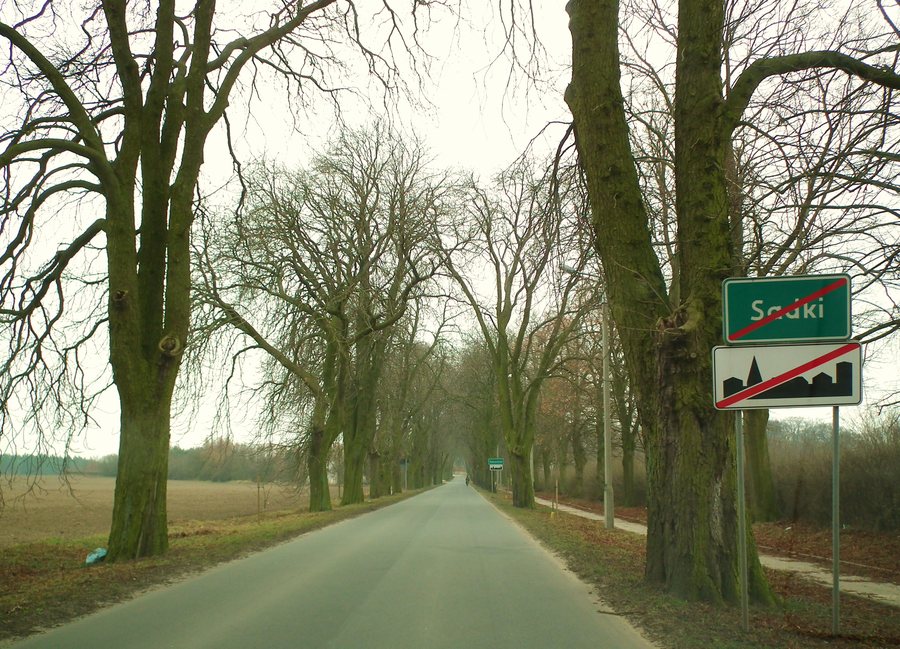 File:MOs810, WG 2015 54 Okonecczyzna (Aleja Sadki Sampstrzel).JPG
Photo: MOs810 via Wikimedia Commons, CC BY-SA 4.0
File:MOs810, WG 2015 54 Okonecczyzna (Aleja Sadki Sampstrzel).JPG
Photo: MOs810 via Wikimedia Commons, CC BY-SA 4.0
St. Adalbert: Architectural History and Tomb
The present-day masonry parish church of St. Adalbert was built between 1748 and 1767. It is an example of Baroque religious architecture; its interior is in the Rococo-Baroque style. Distinguishing between the building and its interior helps put them in context: one term describes the church as a religious building, while the other draws attention to the room’s style.
The parish church contains a Renaissance tombstone for Paweł Samostrzelski, dating from the second half of the 16th century. It is therefore older than the present-day church. The tomb also brings a specific person into focus, while the church building represents a later architectural period. The construction period, interior style, and tombstone thus offer different points of connection if you are interested in the church’s history.
The Obelisk at the Entrance to the Town
At the entrance to Sadki from the direction of Nakło Nad Notecią, an obelisk stands on National Road 10. It commemorates the victims of the Pomeranian Crime, who were murdered by the German occupying forces in the autumn of 1939. A municipal report describes the obelisk’s renovation in 2024. This memorial site sets a different, more somber tone than the church’s architectural and art history: the focus is on those who were murdered and remembrance of the crime, not architectural style or construction period. The years refer to different things: autumn 1939 marks the crime, while 2024 is the year of the renovation described in the report.
Cultural History at the Municipal Level
At the level of the municipality of Sadki, the cultural-historical perspective extends beyond individual buildings. The municipality’s cultural continuity is rooted in a preserved medieval settlement layout and shaped by historic buildings and ensembles from different eras. This is a different scale from the history of a single building: the settlement layout points to an overarching structure, while the parish church and tombstone provide specific points of connection to architectural and art history.
When considering Sadki as a vacation destination, you can choose according to your interests: if you are especially interested in religious architecture and tombs, the parish church and its interior take center stage; for remembrance of the occupation, the obelisk is the other point of reference. When looking for a holiday apartment, you can consider whether Sadki, with its connections to church and municipal history, fits your vacation plans.
Discover More Destinations
Discover more destinations: Wiele, Szubin, Ślesin, Kowalewo, Nakło Nad Notecią, Minikowo, Rajgród.
Back to the main travel overview: Nakielski.

.JPG)