
Ostromecko: Palace History, Park Paths and Special Discoveries
Accommodation in Ostromecko
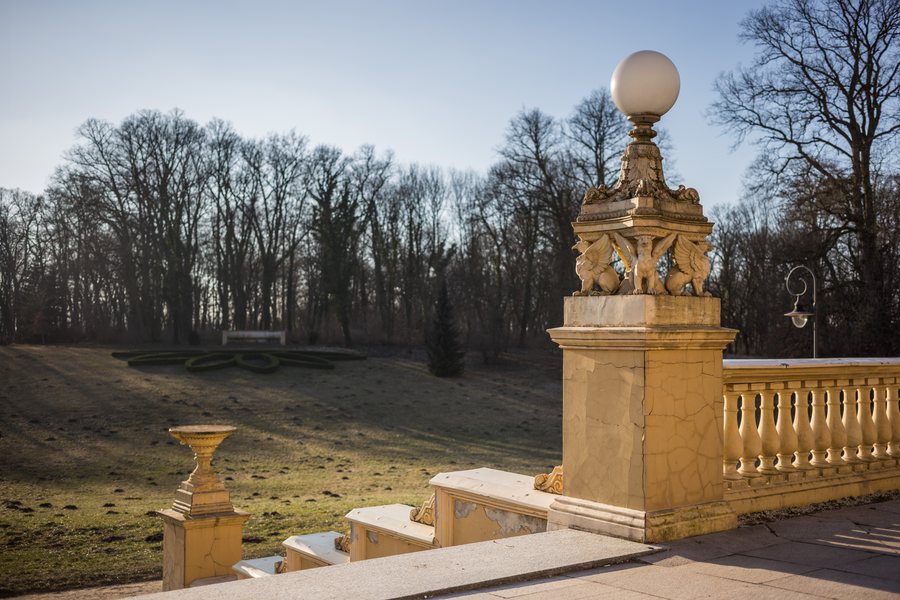
Ostromecko offers several ways to explore its history: an 18th-century palace, a brick railway station complex dating from the turn of the 20th century, surviving buildings of the mineral water factory, park paths, exhibitions and a hiking trail. Architectural history, exhibition themes and landscape sit side by side here. The Old Palace was built around 1730 by the Mostowski family. For travellers who enjoy considering different traces of a place together, this variety offers concrete starting points for planning their own outings.
Palace, Railway Station and Mineral Water Complex
The historic brick railway station complex dates from the turn of the 19th and 20th centuries. It comprises the station building, an outbuilding, two workers’ houses and a railway viaduct. The workers’ houses add residential buildings to the group, while the viaduct is another architectural element of the complex. Ostromecko’s architectural history thus extends beyond the palace: visitors interested in different architectural forms and periods can compare the palace’s history with railway station architecture.
The “Ostromecko” mineral water factory is another part of the town’s architectural heritage. A historic complex of three buildings has been preserved and is known as “Ostromecko-Zdrój.” This adds another distinct point of interest to the palace and railway station. The name links the buildings to the mineral water factory and gives this part of the town’s history a specific name.
Exhibitions, Park Paths and Landscape
The exhibition at Skład Sommerfelda is arranged like a workshop. Visitors can take a close look at components of pianos and upright pianos from instruments that have been specially dismantled. The exhibition comprises 11 exhibits, including the Carmen accordion, factory number 0001. Its distinctive approach focuses on the instruments and their components; the specific name of one exhibit also makes the display tangible.
The exhibition “Huhuczny strych,” featuring a collection of 8,000 owls, is presented in the New Palace. This puts a different subject in the spotlight from the piano and upright piano components at Skład Sommerfelda. If you would like to include both exhibitions in your plans, this difference can help you decide which ones best match your interests. Before your trip, check whether “Huhuczny strych” will be available.
The named paths in Ostromecko Palace Park include Aleja Schinkla, Aleja Lennégo, Aleja Alvenslebenów and Aleja Mostowskich. Another clearly measured hiking option is the black Szlak Orlich Gniazd trail: it runs from Ostromecko to Kamieniec and is 14.8 km long. The distance gives you a specific figure to use when planning your hike; check the current trail markings before setting out. From the area below the palace, there is also a panoramic view of the Vistula and Fordon. The paths and viewpoint thus add a landscape perspective to the historic buildings.
Plan Your Stay Around Your Interests
When looking for a holiday apartment in Ostromecko, you can first consider which aspect of the town you would like to shape your stay: the history of the palace, railway station and mineral water complex, the different exhibition themes, or the paths and hiking trail. If you are travelling together, you can compare your group’s interests and decide which stops to prioritise. The stated length of the hiking trail provides a specific planning reference. Then compare the actual features offered by the holiday apartment that matter for your trip.
Discover More Destinations
Discover more destinations: Maksymilianowo, Kruszyniec, Bydgoszcz, Sicienko, Wiskitno, Osielsko, Trzeciewiec, Januszkowo.
Go to the broader travel overview: Bydgoski.

