
Kaszczor: Churches, Windmills and Trails
Accommodation in Kaszczor
Kaszczor combines a landscape of hills and forests with remarkable historic buildings and marked trails. The village lies on the Młynówka Kaszczorska; a reconstructed observation tower offers panoramic views of Kaszczor and the surrounding area. When planning your trip, you can choose between cultural discoveries in the village and trails connecting Kaszczor with other places.
Countryside and Views
Kaszczor’s setting among hills and forests along the Młynówka Kaszczorska shapes its character. From the reconstructed observation tower, you can see Kaszczor and the surrounding area in a panoramic view. This viewpoint gives the landscape its own place alongside visits to historic buildings and the marked routes. If you like to give your days different focuses, you can shape your stay around culture or spend more time outdoors.
Churches and Historic Buildings
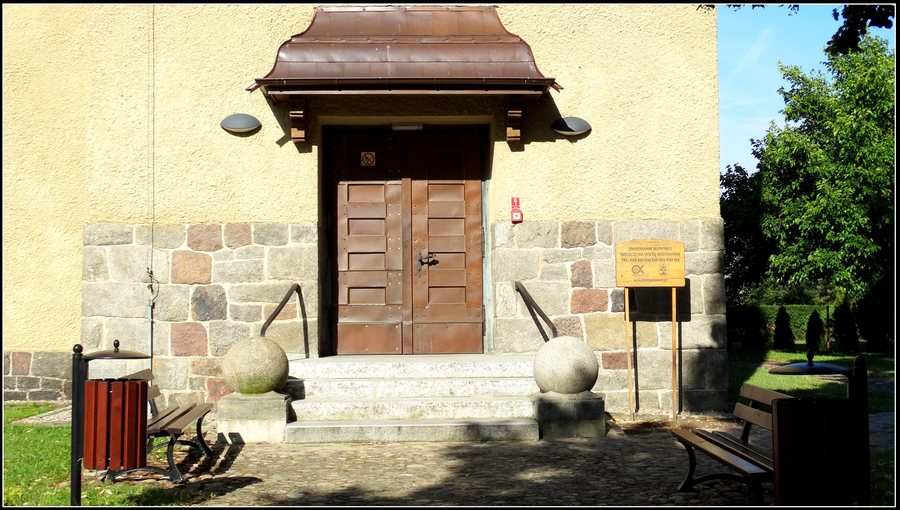
The former Protestant church now serves a different purpose: it is used as a gallery and concert hall. The building was restored in 2011. Anyone interested in the different historical layers of Kaszczor can consider this site alongside the church buildings that are still used as churches.
The late Baroque Church of St. Adalbert was built between 1764 and 1777 on the site of a wooden church dating from the late 16th century. Its furnishings include a main altar with a Renaissance crucifix from the second half of the 16th century. A Baroque sandstone statue of St. John of Nepomuk, dating from 1745, also stands by the church. The different periods can therefore be seen in specific features: the 18th-century building, the older crucifix and the statue from 1745. For a stay focused on cultural history, these details offer more than simply viewing the exterior.
In the 13th century, Kaszczor was the first seat of the Cistercian monastery. Along with the history of the churches, this early connection to the monastery adds to the picture of a place whose past spans several centuries. Two wooden post mills are also among its notable buildings; they were built in 1859 and 1761. The second mill lies one kilometre east of the first. So even if your focus is on historic buildings, you can take in different types of structures and when they were built.
Walking and Cycling Routes
The yellow-marked Wieleń–Kaszczor–Śmieszkowo–Sława walking trail is 14.4 kilometres long. In Kaszczor, it crosses the Młynówka Kaszczorska and passes the listed Church of St. Adalbert. The trail thus connects two distinct features of the village: the river and an important historic building. The stated total distance helps you factor the route into your day’s plans.
Another option is the Szlak Kaszczorski: this cycling route is 18.8 kilometres long and runs from Wieleń through Kaszczor, Mochy and Biała Góra before returning to Wieleń. This is separate from the safe, one-kilometre cycling connection between Wieleń and Kaszczor. It is a practical option if you want to reach Kaszczor by bicycle from Wieleń. When choosing your starting point, you can therefore consider whether your outing will focus on the connection between the two places or on the longer circular route.
You can also choose accommodation to suit your preferred focus: would you like to discover churches, mills and historic connections above all, or are you more interested in walking and cycling routes? The experiences described offer different emphases, without requiring any particular features or location for your holiday apartment. More places to explore: Oslonin, Wieleń.
For the broader travel overview: Solec Nowy.

