
Szamotuły: Defensive Tower, Collegiate Church and Cycling Route
Accommodation in Szamotuły
Szamotuły combines distinctive architectural history with a specific opportunity for active days: the 45-kilometre Szamotulska Pętla Zachodnia cycling route begins here. The town’s history is represented by a defensive tower, Górków Castle and the collegiate church, each associated with different periods and themes. If you are weighing up culture and outdoor activity for your trip, Szamotuły offers several possible focal points: religious art, architectural history and cycling.
Defensive Tower, Castle and the Changing History of the Town
Baszta Halszki was built as a defensive tower in the 15th century and converted for residential use around 1518. It is also known as Baszta Czarnej Księżniczki. Its history illustrates a specific change of function: it was first built as a defensive structure and later adapted for residential use. Górków Castle offers a different perspective on the town’s history. It dates from the late 15th century and is home to the Muzeum – Zamek Górków. The defensive tower and the castle are two distinct historical features that shape Szamotuły.
The Collegiate Church and Religious Art
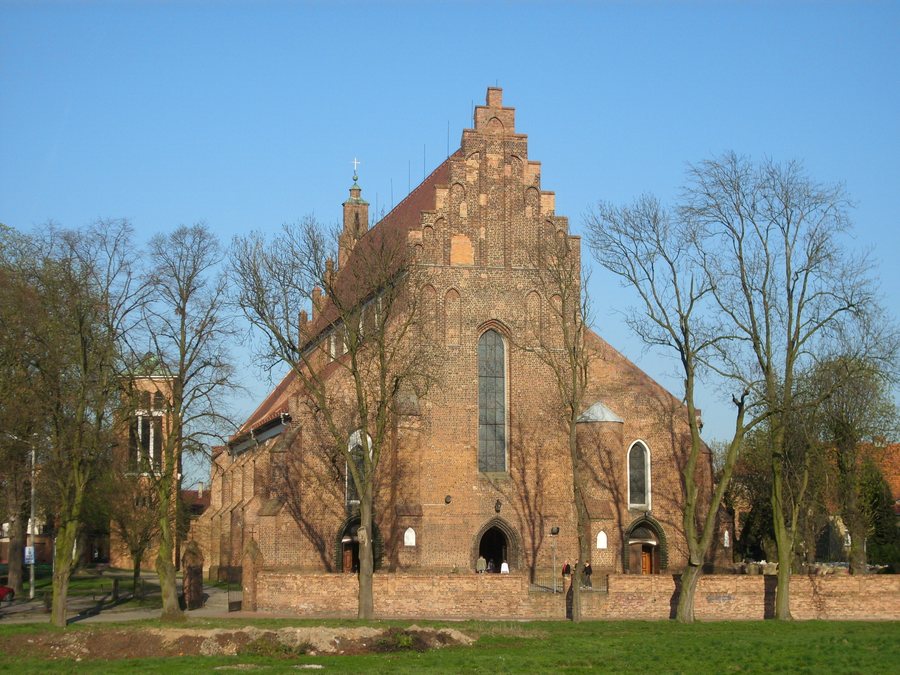
The collegiate church was built in the 14th century. Its notable features include a star vault, characteristic of German Gothic architecture. The church also has polychrome wall paintings and stained-glass windows from the 19th and 20th centuries. Its architectural form and furnishings thus bring together several different periods. The church’s history also includes a bronze tombstone for Andrzej Szamotulski, dating from around 1500 and made in the workshop of Andreas Vischer.
The image of Our Lady of Consolation of Szamotuły is a distinctive religious feature. This Ruthenian icon, from the first half of the 17th century, is located in the southern chapel of the collegiate church. It has been an object of religious veneration and a destination for numerous pilgrimages for centuries. Another historical trace leads to the Church of the Holy Cross: the Korzbok-Łącki family built it on the site of the former Świdwa castle; it was consecrated in 1699. In Szamotuły, religious art, religious tradition and the history of a former castle site thus stand side by side.
Cycling Route and Planning Your Stay
The 45-kilometre Szamotulska Pętla Zachodnia begins in Szamotuły, at the municipal and town administration office at ul. Dworcowa 26. The route leaves town via 3 Maja, Sportowa and Lipowa streets. It is not signposted, so finding your own way is part of planning the ride. The details about the starting point and streets clearly connect the route to the town, without specifying a particular duration or level of difficulty.
When looking for a holiday apartment in Szamotuły, you can use your preferred focus for the stay as a guide. The architecture and religious history offer a cultural and historical focus; the cycling route adds a distinct active element. Consider whether you want to centre your trip on the town’s history and religious art, or include cycling as well.
Discover More Destinations
Discover more destinations: Rudki-Huby, Chojno-Wieś, Podrzewie, Grzebienisko, Nojewo, Wronki, Sokolniki Wielkie and Obrzycko.
Return to the main travel overview: Szamotuły.

