
Obrzycko on the Warta: Church Art and Historic Buildings
Accommodation in Obrzycko
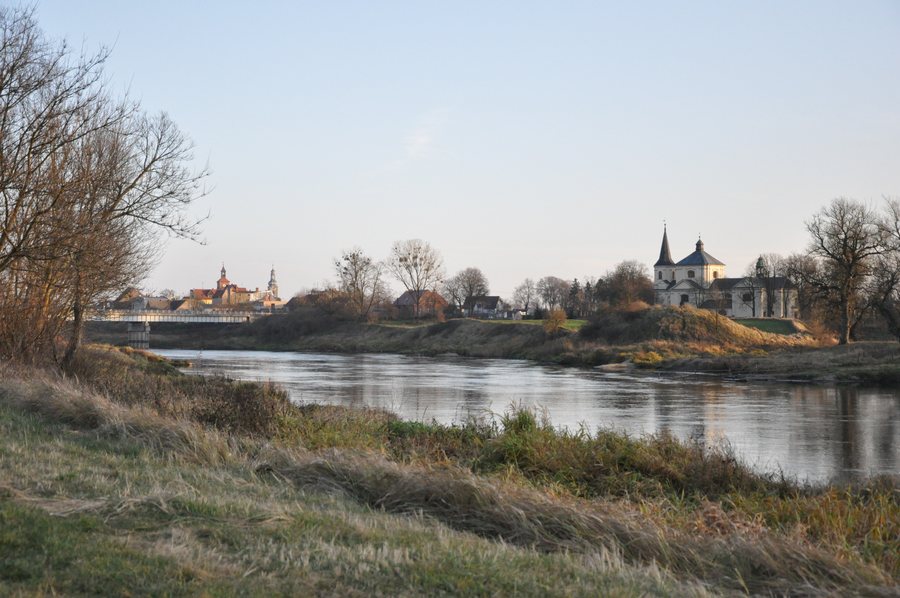
Obrzycko lies on the left bank of the Warta. Travellers who enjoy discovering architectural history and individual works of art will find different periods represented here in specific places: a Baroque parish church with Rococo furnishings, a town hall with a notable Renaissance window surround, and an early medieval fortified settlement site at the confluence of the Sama and the Warta. This mix makes Obrzycko appealing to anyone who wants their stay to include more than just one attraction.
Warta, Sama and early settlement history
The town’s location on the left bank of the Warta defines its geographical setting. An early medieval fortified settlement site lies at the confluence of the Sama and the Warta. The history to discover in Obrzycko therefore extends beyond its later buildings. Families may enjoy keeping the different periods in mind as they explore together: the early settlement site, the church’s architectural history, and the features of the town hall. The forests of the Puszcza Notecka also extend across the northern part of the municipality. They belong to the municipality of Obrzycko; this does not mean that the town itself is located there.
Baroque church with art from several centuries
The Church of Saints Peter and Paul was built between 1714 and 1756 to a design by Pompeo Ferrari. Its floor plan is in the shape of a Greek cross. In 1906, a nave designed by Roger Sławski was added to the west. The building thus reveals different stages in its history.
The Rococo interior furnishings include pieces dating from 1780, probably made to earlier designs by Pompeo Ferrari. The parish church also houses Eugenio Caxés painting “The Last Supper,” dated 1609. It came from the Spanish Jerónimos Monastery in Guadalupe. The tomb of Ignacy Raczyński, Archbishop of Gniezno, is also in the church. Visitors interested in church art can appreciate the building’s design, its later extension, and individual works of art as distinct aspects of a visit.
Town hall and the Raczyński family’s legacy
Obrzycko Town Hall was built in the mid-17th century in the Baroque style. A sandstone plaque bearing the Nałęcz-Raczyński coat of arms and the inscription “Vitam Impendere Vero” is attached to the tower. Another notable detail is a marble Renaissance window surround dating from 1527. In 1843, Atanazy Raczyński had it brought to Obrzycko from the Portuguese Monastery of Batalha. The dates refer to different events: 1527 dates the window surround, while 1843 marks its transfer to Obrzycko.
Places to visit nearby
Near Obrzycko, in Obrzycko-Zielona Góra, a palace and park complex lies in a landscape park on the Warta’s high northern bank. The complex is considered a valuable example of a residential estate and comprises an eclectic palace, built for the Raczyński family in 1856–1857, and a pheasantry built in 1910. This site offers a different focus from the buildings in Obrzycko itself: here, the emphasis is on the residence and its setting within the landscape park.
Zielonagóra also has a river landing on the Wielka Pętla Wielkopolska. Travellers who would like to include this connection to the waterway in their plans can consider it alongside the historic sights. The various destinations appeal to different interests, so choose a holiday apartment in Obrzycko according to whether your stay will focus mainly on the buildings in town or also include places nearby. For other places in the same higher-level area, see also Szamotuły, Zajączkowo, Wronki, Chojno-Wieś, Nojewo, Podrzewie, Grzebienisko and Niewierz.
For the broader travel overview: Samter.

