
Stęszew: Town History and River Landscape
Accommodation in Stęszew
Several layers of history converge in Stęszew: a regional museum is housed in an 18th-century building, churches and a Marian sanctuary tell the story of different periods of construction, and the remains of a 14th-century castle lie on Pańska Góra. The Samica Stęszewska also flows through the town. Anyone considering Stęszew as a holiday destination can choose between cultural and historical interests and a focus on the river and landscape.
Buildings and History in Stęszew
The Regional Museum is located at Rynek 8. Its building is the second-oldest in the town, after the parish church, and the last surviving arcaded house. The history of an individual house is therefore linked here to a distinctive architectural style. The building was erected in the 18th century. The collection also has a particular connection to the community: it currently comprises around 5,000 exhibits, gathered primarily through donations from former and current residents of the Stęszew municipality.
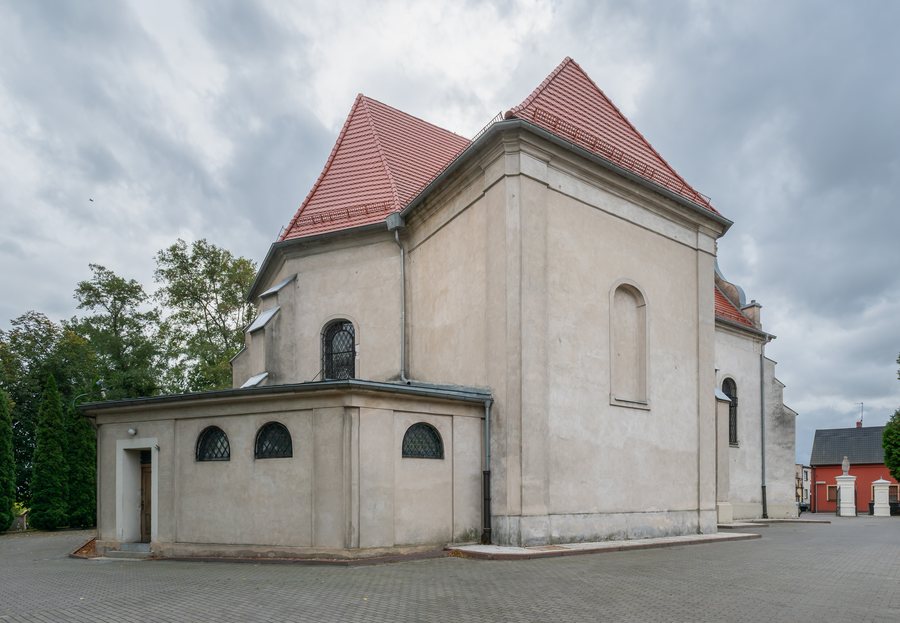
The Church of the Holy Trinity adds a different architectural history to this picture. It was originally made of wood, was later rebuilt in the Gothic style around 1468, and was subsequently remodeled in the Baroque style. This sequence differs considerably from the history of the museum building: the church is defined by its successive architectural styles, while the museum brings together the history of a house and its collection. The Marian sanctuary in Stęszew dates from 1905 and houses a late-Gothic sculpture from the 16th century. The construction date and the age of the sculpture thus refer to two different periods, each associated with a distinct part of the sanctuary.
The remains of a 14th-century castle can be found on Pańska Góra. The castle was destroyed during the Swedish Deluge. Together with the surviving buildings in town, this historical landmark shows that Stęszew’s history extends well beyond individual, more recent buildings. The Regional Museum, churches and castle ruins each offer a different focus: collections and architectural styles, changing building traditions, and the history of a destroyed castle.
Townscape and Discoveries
Those who want to get to know Stęszew through its streets can consider the quest “Stęszew z polotem.” It leads through the town’s streets and offers a glimpse of its 19th-century townscape. This is a different way to explore the town than focusing on individual buildings: the emphasis is on the town as a whole in a particular historical period. The quest can therefore be considered a cultural and historical option in its own right, alongside the buildings and the Regional Museum.
Another option is the educational nature and cultural trail “Wokół Stęszewa.” It starts in the town center at the tourist station on ul. Poznańska; a map is available for the trail. Its name alone brings together several themes, while the quest specifically offers a glimpse of the 19th-century townscape. If you would like to add this kind of exploration to your trip, you can take the starting point and available map into account when planning your day. Information about the trail’s length or duration is not part of this guide.
The River and the Town’s Location
The Samica Stęszewska flows through Stęszew and joins Lake Witobelskie near Witobel. The river is a distinct landscape feature alongside the town’s cultural and historical sites. Stęszew is also located on an old trade route from Lower Silesia.
When choosing a holiday apartment in Stęszew, the aspects you want to shape your stay may be decisive. If you want to focus more on the river, the Samica Stęszewska is another part of the townscape to consider. You can assess Stęszew according to whether you are mainly looking for historical interests, an exploration of the townscape or the river’s connection to the landscape.
More places to discover: Głęboczek, Luboń, Owińska, Trzebaw, Promienko, Poznań, Kamińsko and Bogucin.
Go to the broader travel overview: Poznań.

.jpg)