
Discover Noordwijkerhout: Floral Art, Witte Kerk and the Bollenstreek
Accommodation in Noordwijkerhout
In the garden surrounding the Witte Kerk in the center of Noordwijkerhout, thousands of hyacinth flowers are transformed into colorful works of art as part of the “Bloemenmozaïeken Noordwijkerhout.” Tulip Experience Amsterdam is part of an active flower-growing business in Noordwijkerhout and is located in the heart of the Bollenstreek. At 9:00 p.m., the “Illuminated Parade” travels through Noordwijkerhout with festively decorated floats. Thousands of lights illuminate the floats during this parade.
 File:2211 Noordwijkerhout, Netherlands - panoramio (10).jpg
Photo: Foto Fitti via Wikimedia Commons, CC BY-SA 3.0
File:2211 Noordwijkerhout, Netherlands - panoramio (10).jpg
Photo: Foto Fitti via Wikimedia Commons, CC BY-SA 3.0
These examples show how the region’s floral traditions take different forms: flowers are arranged into motifs in the church garden, the flower-growing business conveys the region’s agricultural connection, and the parade brings illuminated floats through the town in the evening. The fixed time of 9:00 p.m. clearly distinguishes this event from the daytime visiting hours mentioned for the Witte Kerk.
Culture
A wooden church is believed to have stood on the site of the Witte Kerk in the 11th century. In the first half of the 13th century, a stone church with a Romanesque choir was built there. The Witte Kerk is a monumental church in the center of Noordwijkerhout.
The “Noordwijkerhout van Toen” museum, abbreviated to NoVaTo, presents the history of Noordwijkerhout. The museum uses texts, images and sound for this purpose. Anyone wishing to visit the Witte Kerk or find a moment of reflection there can take note of the designated hours on Wednesdays and Saturdays from 11:00 a.m. to 12:00 noon. Visits and moments of reflection are also planned on special days during the summer season.
The local history is thus present both at the monumental church and in the museum. While the Witte Kerk illustrates the development of the church site from the presumed wooden structure to the stone building with a Romanesque choir, NoVaTo documents the history of the town using several media. For visits, the stated time span from 11:00 a.m. to 12:00 noon remains the specific time frame.
Nature
Oosterduinse Meer, also known as Comomeer, is a recreational lake in Noordwijkerhout. At Oosterduinse Meer, you can swim, relax and enjoy nature. Those visiting the lake for swimming will find an official bathing-water site there; the province monitors the water quality at this site.
Oosterduinse Meer was created in the 1950s and 1960s through the extraction of sand from the former Oosterduinen. The sand was extracted for a sand-lime brick factory in Hillegom. The creation of the lake as it exists today is therefore connected with the former use of the Oosterduinen for sand extraction.
Cycling and hiking routes
The “Duinen- en bollenroute” runs around Noordwijkerhout through dunes, bulb fields and the center of Noordwijkerhout. For cyclists, its route therefore includes named landscape areas as well as the town center. Along the way, the route passes the monumental Witte Kerkje dating from 1300.
The combination of dunes, bulb fields and the town center makes the cycling route varied, without limiting its course to a single type of landscape. The Witte Kerkje dating from 1300 is also one of the explicitly mentioned points along this route.
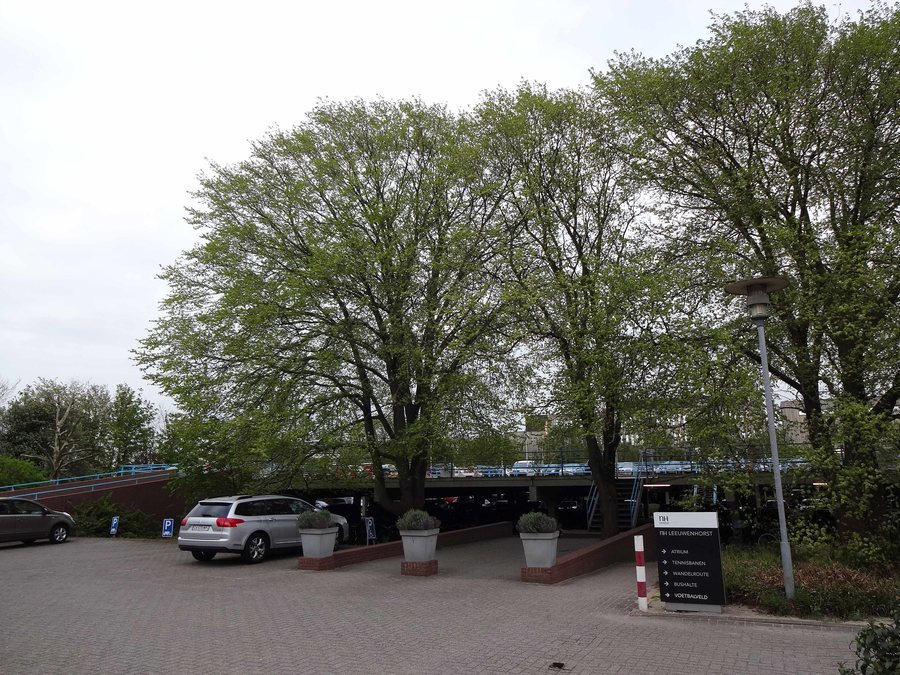
The “Langs buitenplaatsen en bollenvelden” hiking route starts at the Nieuw Leeuwenhorst parking lot on Gooweg in Noordwijkerhout. A hike on this route therefore begins at the Nieuw Leeuwenhorst parking lot, whose location on Gooweg is specified.
Other places
Another directly associated place is De Zilk.
For the main travel overview: Noordwijkerhout.

.jpg)