
Discover De Zilk: Dunes, Flowers and Culture
Accommodation in De Zilk
The route with the purple markings from the De Zilk entrance is 4.8 km long, leads through the dune landscape and returns to the De Zilk entrance. Another route starts at the same entrance and is marked in black; it is 9.1 km long. The “Verborgen Verleden – De Zilk” walking route brings the vanished past to life with the help of several information panels. The theme continues in the “Verborgen Verleden” cycling and walking routes.
The route therefore connects the landscape around De Zilk with traces of its past. The information panels give the vanished history a permanent place along the walking route, while the name “Verborgen Verleden” also recurs in the cycling and walking routes.
Walking and Landscape
The Waterleidingduinen can be accessed from De Zilk. Bus stops are within walking distance of the entrances at Zandvoortselaan, Oranjekom/Oase and De Zilk to the Amsterdamse Waterleidingduinen.
The landscape thus provides the natural setting for marked paths and the connection between nature and local history. Access via De Zilk is one of the aforementioned entrances to the Amsterdamse Waterleidingduinen; the bus stops at the three listed access points provide a clearly designated arrival situation for this dune area.
History and Sacred Architecture
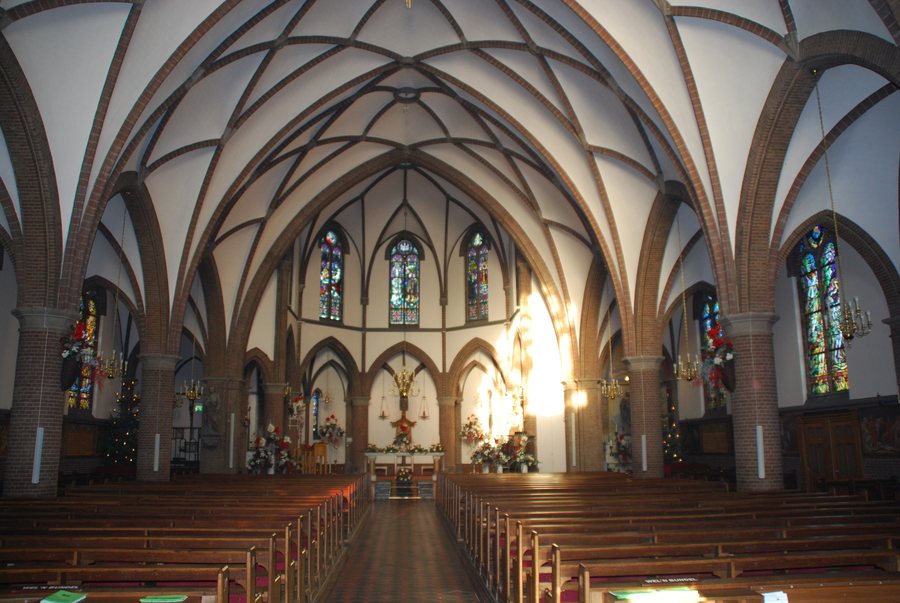
The Heilig Hart van Jezuskerk was built in 1919–1920 according to the plans of architect Jos Margry. On 30 August 1920, Bishop Callier of Haarlem consecrated the church. The Heilig Hart van Jezuskerk is open to visitors daily from 9:00 a.m. to 4:00 p.m. The church contains a Chapel of Our Lady of Fátima, which is considered unique in the diocese. Three large stained-glass windows in the choir are among the distinctive features of the Heilig Hart van Jezuskerk.
The church therefore brings together architectural history, ecclesiastical furnishings and specific visiting hours. The dates establish when it was built and consecrated, while the chapel and choir windows identify distinctive features of the interior. The daily opening hours from 9:00 a.m. to 4:00 p.m. are a practical detail directly related to public access.
Art and Local Life
The artwork “WIND, ZONLICHT & TRANSPARANTIE” is part of the “Verborgen Verleden” cycling and walking routes and consists of stainless-steel silhouettes. The silhouettes turn in the wind and sparkle in the sunlight. The popular flower mosaics return to De Zilk every year. Carnival is one of the activities for which De Zilk is known in the region.
Local life is expressed here in different ways: the artwork changes in appearance through movement and light, the flower mosaics return regularly, and carnival is one of the activities associated with De Zilk in the region. Alongside the historical traces of the routes, the recurring and contemporary side of the village is also central.
Nature and Agriculture
Hyacinths, daffodils and tulips continue to be the main crops grown in De Zilk. Colorful flower fields characterize the landscape of De Zilk.
Flower cultivation is therefore a visible part of the landscape and complements the dunes with an agricultural aspect. Colorful flower fields characterize the landscape of De Zilk, while hyacinths, daffodils and tulips remain the predominant crops grown there.
Further information about the area can be found at Noordwijkerhout.
Back to the overview of the surrounding area: Noordwijkerhout.

