
Goudriaan: Water, Polderbos and Village Church
Accommodation in Goudriaan
Nature and Water
If you would like to swim or play on the water in warm spring or summer weather, there is a swimming lake at the entrance to the Slingelandse Plassen recreation area. It is used for swimming and playing on the water.
Polderbos is a meeting place for people who appreciate outdoor life. Visitors can walk there and enjoy the peace and quiet. At Polderbos, visitors can experience a wide variety of edible crops, as well as trees and shrubs. Polderbos is easily accessible to visitors via a partly paved footpath, including people with reduced mobility.
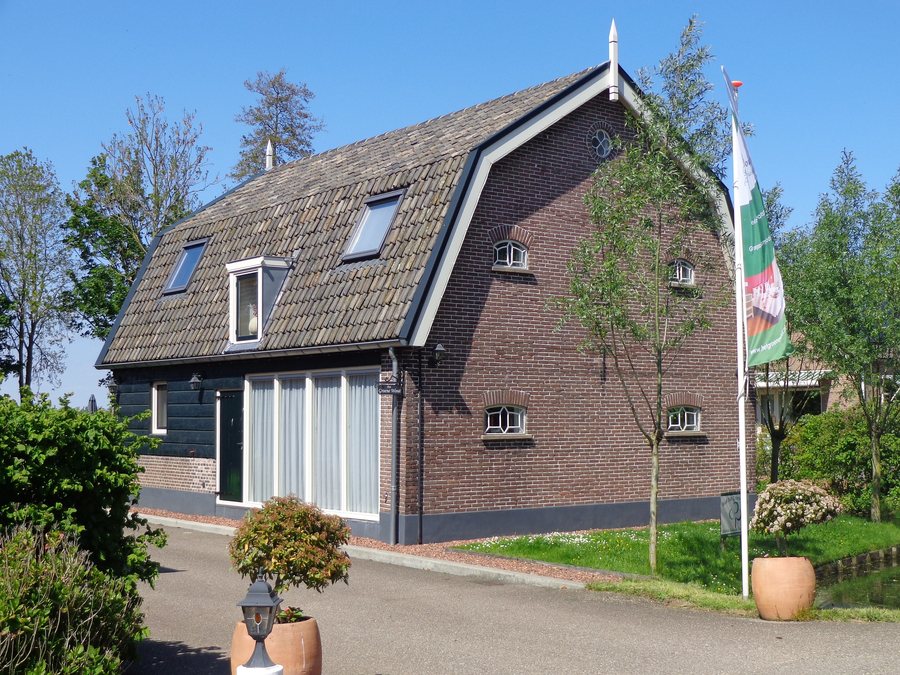
Polderbos thus combines walking, tranquillity and views of different plant communities. In addition to the wide variety of edible crops, its described plant life also includes trees and shrubs. The partly paved footpath is another specific feature of this natural area.
Culture
The Hervormde Kerk, a late Gothic village church, stands at Noordzijde 17. Its nave has a single aisle. The chancel is deep and closed on three sides.
A substantial brick tower stands on the west side of the church. Rows of narrow blind niches adorn the tower. It is topped by an octagonal, tapering spire. The furnishings of the Hervormde Kerk at Noordzijde 17 include a pulpit dating from 1642.
The church's defining architectural elements therefore include the single-aisle nave, the deep chancel and the prominent tower on the west side. The narrow blind niches and the octagonal, tapering spire complement its exterior; inside, the pulpit dates to 1642.
History
Goudriaan developed in the 13th century as a long, linear village along the Goudriaan peat stream.
The former courthouse at Noordzijde 12–14 was originally built as a farm in 1639. Settlement traces from the Late Stone Age and the Vlaardingen culture have been documented in the Polder Oud-Goudriaan area along the Goudriaanse Kade.
The history of the village thus encompasses both the development of the linear village along the Goudriaan peat stream and older settlement traces in the Polder Oud-Goudriaan area. The building at Noordzijde 12–14 preserves the historical connection to a farm dating from 1639 and its later use as a former courthouse.
For further village selection, Molenaarsgraaf is also available.
Geographical Context
Slot Loevestein, considered a castle, is located in the vicinity of Goudriaan. Steurgat, considered a fort, is also located in the vicinity of Goudriaan.
In the wider regional surroundings of Goudriaan lies Kasteel IJsselstein, considered a castle. Kasteel Batenstein, also considered a castle, lies in the wider regional surroundings of Goudriaan.
In the wider regional surroundings of Goudriaan lies IJsselmonde, considered an island. Eiland van Brienenoord, also considered an island, lies in the wider regional surroundings of Goudriaan.
In the wider regional surroundings of Goudriaan lies Kral Bos, considered a park. Rottemeren, also considered a park, lies in the wider regional surroundings of Goudriaan.
The regional destinations mentioned thus encompass different types of places and landscapes: the vicinity includes a castle and a fort, while the wider regional surroundings also include castles, islands and parks. The respective classifications remain tied to the individual places mentioned.
For the overarching travel overview: Graafstroom.

