
Holiday apartment in Boskoop: gardens, bridges and nursery culture
Accommodation in Boskoop
Gardens and nursery culture in Boskoop
Boskoop combines a characteristic polder landscape with gardens, nursery culture, historic buildings and waterways. A holiday apartment in Boskoop may therefore be of interest to you if you would like to combine nature experiences, culture and active excursions. The Rosarium Boskoop is a Rijksmonument. The Tuinen van Boskoop is a four-hectare park that originated as a nursery and was landscaped with plants and trees supplied by growers from Boskoop.
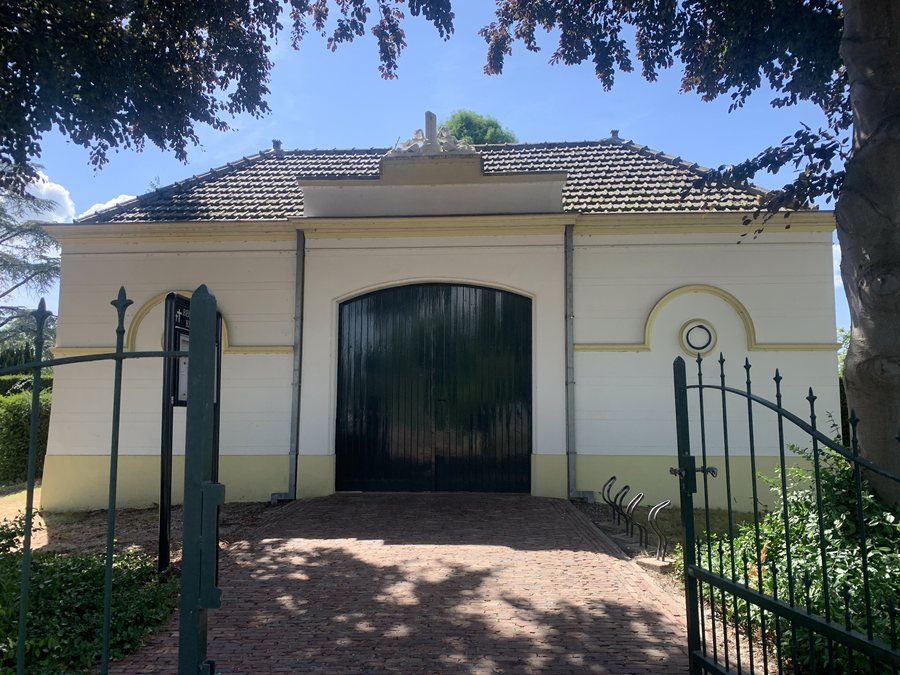 File:Boskoop GM Rijerskoop Begraafplaats 3 04072025.jpg
Photo: AcroniusZ via Wikimedia Commons, CC BY-SA 4.0
File:Boskoop GM Rijerskoop Begraafplaats 3 04072025.jpg
Photo: AcroniusZ via Wikimedia Commons, CC BY-SA 4.0
The Tuinen van Boskoop can be visited free of charge from sunrise to sunset. Visitors are free to walk along all the paths, trails and lawns. Plantentuin Esveld complements the garden scene with a Japanese maple garden covering just under one hectare, a large hydrangea collection, a nursery and collection gardens. This makes it possible to include both peaceful garden visits and walks with different thematic focuses in your daily itinerary.
History to see and experience
At the Boomkwekerijmuseum, a nursery owner's house built in 1870 is part of the museum. It illustrates the home and life of a relatively prosperous nursery family around 1910. The Boomkwekerijmuseum also offers a historical tour covering 500 years of nursery history. Anyone who would like to learn about the development of the local horticultural culture not only through collections but also in a historic building will find a tangible point of reference here.
Boskoop's buildings also tell stories of different eras. The church in Boskoop was rebuilt after the fire of 1895 in a restrained yet elegant Neo-Renaissance style. Along the Gouwe, three drawbridges, including the Hefbrug Boskoop, form a unique ensemble that is still largely in its original condition. The Hefbrug Boskoop is one of the exceptional structures among these bridges; its complex construction, size and height shape its distinctive appearance.
Polder landscape, bridges and waterways
The Boskoopse Slagenlandschap consists of narrow strips of land separated by ditches and connected by characteristic bridges. Large parts of Boskoop, particularly along and east of the Gouwe, have remained largely intact. They are considered characteristic of Boskoop during its heyday from the late 19th century to the first half of the 20th century. Boat tours are offered in the Zuidwijk and Rijneveld polders along the nurseries, allowing visitors to see the nurseries up close.
The waterways give the area another distinct character. The Rijneveldsluis allows boats to enter the polder. The Gouwe and Boskoop are part of the Staande-Mastroute between Rotterdam and Amsterdam. The Hefbrug Boskoop has a passage width of 25 metres and a maximum clearance height of 34 metres. The Boskoop bridge over the Gouwe was enlarged in 1936 because of increasing ship sizes; at the same time, access to the Gouwe was widened.
Cycling through the gardens
For cycling tours, the “Tuinen en kwekers” route provides a clear starting point: it begins at Boskoop railway station and leads to the gardens of Boskoop-Oost and Reeuwijk. The Boomkwekerijmuseum is located near bicycle junction 96, east of the drawbridge, and has six charging stations for electric bicycles. When choosing your holiday apartment, you can therefore consider whether gardens, museums, bridges or waterways should be the focus of your days.
To the main travel overview: Boskoop.

