
Holiday apartment in Barendrecht: Water, nature and history
Accommodation in Barendrecht
Barendrecht combines waterscapes, nature reserves and remarkable reminders of the town’s history. If you choose a holiday apartment in Barendrecht as your base, you can plan your days around walks, bike rides, special buildings and historical discoveries.
Water and nature around Barendrecht
The 16-kilometre-long Blauwe Verbinding runs from Zuiderpark in Rotterdam via the future Buijtenland van Rhoon landscape park to the Zuidpolder in Barendrecht. Along this water connection, you can go boating, play, walk and cycle. There are canoe jetties and signposted transfer points along the route.
The Zuidpolder covers around 170 hectares, of which approximately 110 hectares are a nature and recreation area. You can jog, walk, cycle and discover nature there. A special feature is the series of jetties that stretches across the water as a winding path. The Carnisse Grienden also offer a different landscape experience: they are part of the Oude Maas Natura 2000 area and one of the last remaining tidal meadows in the Netherlands.
Routes for active and varied days
The Rolf Route starts and ends at Barendrecht railway station. The entire route through Albrandswaard and Barendrecht is around 50 kilometres long and can be completed in sections by bicycle or on foot. It runs along the village centre, crosses dykes with characteristic buildings, and passes the Oude Maas recreation area and the Barendrechtse Waal.
The Vrijheidsroute comprises a 3-kilometre walking route in and around the old village centre and a 22-kilometre cycling route. Both start at the former town hall at Dorpsstraat 137. The route also includes the history of Jaan Jiskoot’s farmstead at Dorpsstraat 106, which served as a stronghold of the resistance from the beginning of the occupation until liberation.
In the Carnisse Grienden, there are blue, red and green routes for tours through the area. The Groene lint langs de Oude Maas route forms a 5-kilometre loop through the Carnisse Grienden; its starting point is the car park at the Carnisse Grienden in Barendrecht. The Vossenpad also runs through this area.
History in the village centre and special buildings
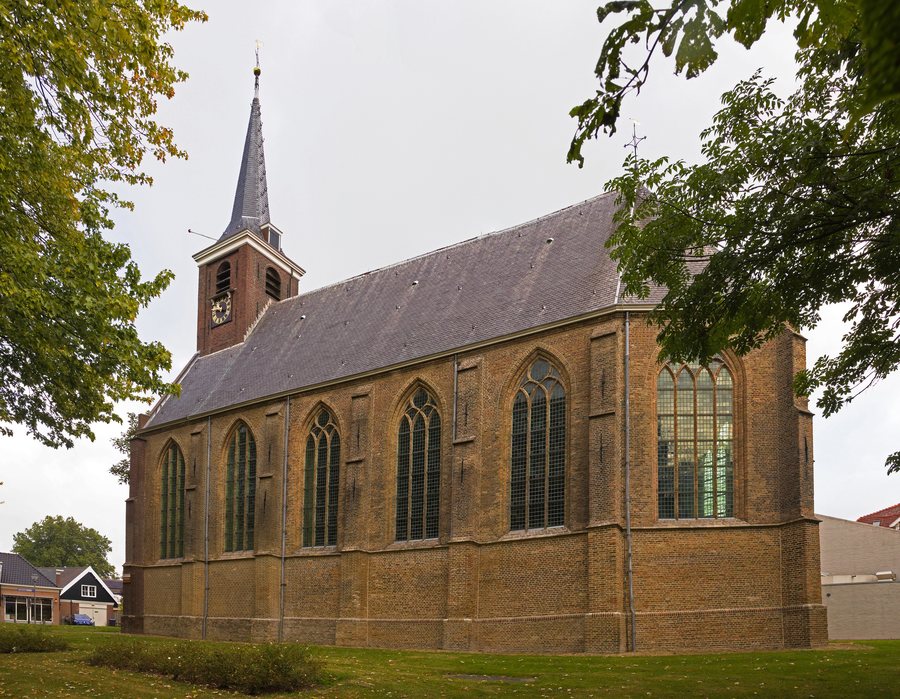
The old village centre of Barendrecht and part of the 1e Barendrechtseweg are protected townscapes. The Dorpskerk is the oldest listed national monument in Barendrecht. The single-nave building dates from the first quarter of the 16th century and has a three-sided chancel.
The Pendrechtse Molen was built in 1731 and has stood at its present location since 1993. The water tower was built in 1912 to supply drinking water, based on a design by civil engineer Roelof Kuipers. It has cultural-historical, architectural-historical and urban-planning value.
At D'Ouwe School, the permanent exhibition includes a kitchen, a living room, a general store, a hairdresser’s shop, a cigar shop, a veterinarian’s equipment, an alcove bed and a bakery. The Historical Vereniging Barendrecht is also based there and preserves historical materials for temporary exhibitions. Visits for schools and groups are possible on weekdays by appointment.
The Den Ouden Dijck cemetery also bears historical traces: its name derives from a medieval dyke, and an island called Den Ouden Dijck is also mentioned for the year 1421. The cemetery has the character of an estate; features of the surrounding area, such as polders and creeks, are reflected within it.
You can find more information about the town at Barendrecht.
To the main travel overview: Barendrecht.

