
Discover Hijum: Churches, Railway Traces and the Iisbaankeunstrûte
Accommodation in Hijum
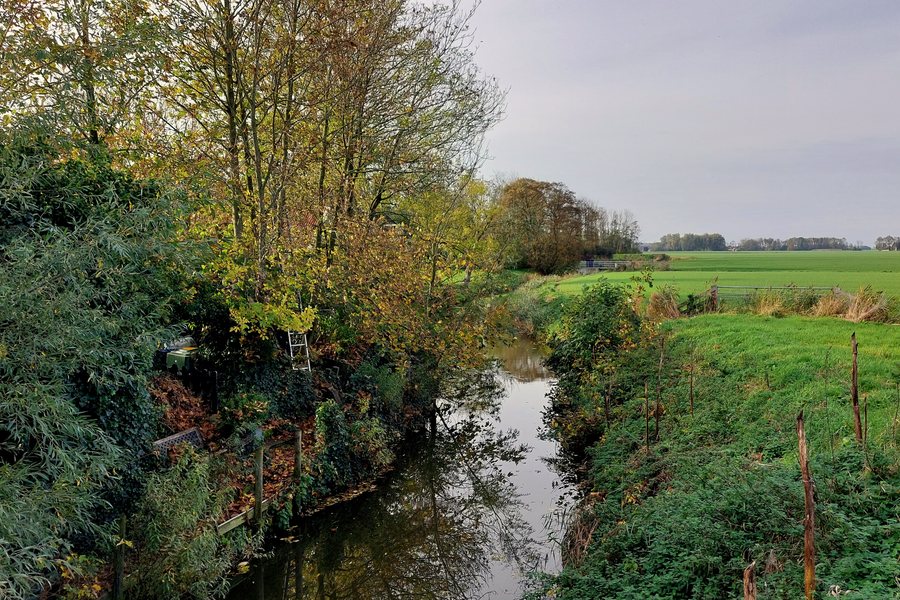
The Mariëngaarderbrug crosses the Hijumervaart. On the edge of the village, the Sint Nicolaaskerk stands on a terp that has been largely removed. This creates a holiday destination where the waterway, the location on the edge of the village and sacred architecture can be connected with specific observations. The village-edge location and the crossing of the Hijumervaart mark two different spatial settings.
Church architecture with its own character
The Sint Nicolaaskerk is a Romanesque church dating from the 12th century. Its position on the edge of Hijum and on the largely removed terp directs attention both to the building and to the special shape of the ground beneath it. The terp location is therefore just as much part of the church’s visible surroundings as its Romanesque architectural form.
Visiting the Sint Nicolaaskerk involves collecting a key from the Plaatselijke Commissie. The commission manages the church. Anyone who wants to see the Romanesque building from the inside should therefore include this key collection in their visit plan.
A second architectural facet is presented by the Bethelkerk. It is a T-shaped church dating from 1877 and features Neo-Gothic details. Particularly striking is the façade tower, which transitions into a slender wooden roof turret set at an angle. Hijum thus offers two different ecclesiastical architectural forms: Romanesque architecture from the 12th century and a 19th-century church with a Neo-Gothic character. The Bethelkerk thereby complements the Romanesque sacred building with a 19th-century architectural language.
Railway history and routes across the water
Railway history is also present in the village landscape. The former station building at De Loane 5 is still standing. Two railway barriers recall Hijum’s railway history. These features complement the view of the churches with another way of accessing the village’s past. The station building and the barriers represent different visible traces of the railway in the village.
For a cycling tour, the Iisbaankeunstrûte offers a special route connection: between Hijum and Stiens, it crosses the Wynser oerset, a bicycle ferry across the Dokkumer Ee. The Iisbaankeunstrûte also passes the Hijum ice rink, where a painting by Hendrik Elings can be seen. Cycling and observing art can therefore be combined along this route.
There is an alternative route for planning a journey between Hijum and Hegebeintum. It is intended to be used during the breeding season from 15 March to 15 July. When choosing between the two routes, this period is one of the specific details you can take into account when planning your outing. Anyone planning this route in spring should observe the time restriction from 15 March to 15 July.
Water and art along the route
The Iisbaankeunstrûte, the Wynser oerset and the painting at the ice rink add a different accent.
Discover more places
In the surrounding area, you can also discover Jelsum, Stiens and Feinsum as additional destinations.
To the higher-level travel overview: Leeuwarderadeel.

