
Sondel between Church History and Nature Experiences
Accommodation in Sondel
Sondel combines a long-standing church history with diverse natural areas. The village was established around 1300 on Gaasterland’s high sandy ridge. Those planning a trip to Sondel can therefore choose between cultural and historical discoveries, birdwatching, fishing and nature-oriented excursions. This combination also helps you choose the right location for your holiday apartment in Sondel based on your preferred itinerary.
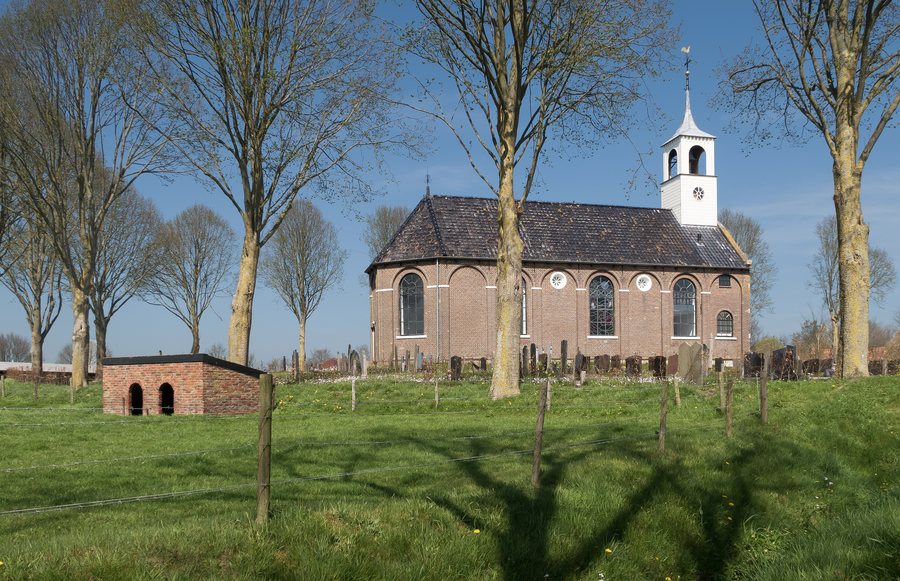 File:Sondel, de Hervormde kerk RM15935 IMG 2606 2018-04-19 13.24.jpg
Photo: Michielverbeek via Wikimedia Commons, CC BY-SA 4.0
File:Sondel, de Hervormde kerk RM15935 IMG 2606 2018-04-19 13.24.jpg
Photo: Michielverbeek via Wikimedia Commons, CC BY-SA 4.0
Church and History in Sondel
Sondel’s Hervormde Church dates from 1870 and stands on older foundations. The history of the church site began as early as the 12th century with a small chapel and a bell. The church also has a bell frame with a bell from the 14th century. Anyone interested in regional architectural and church history will find several historical layers in one place here, without the later structural elements overshadowing the site’s older history.
Recent history can also be placed in context with a specific date: Work on the Eisbär radar station was discontinued on 16 April 1945. This detail adds a connection to more recent history when looking at the past and is suitable for travellers who want to learn about historical developments alongside landscapes.
Sondeler Leien: Water, Reeds and Birdwatching
The Sondeler Leien wetland consists of willow trees, reed beds, dense scrub and woodland. The nature area is located in Gaasterland; the inland lake was probably once formed by a breach in a dike of the former Zuiderzee. The cautious qualification of its origins is just as much part of the character of the landscape as the visible connection between different habitats.
From Sondel, the birdwatching hut at the Sondeler Leien can be reached via the turn-off towards De Leijen. Various duck species can be observed there during the winter months, while various reed-dwelling birds can be heard in spring. Fishing is possible at the fishing jetty at the Sondeler Leien. This gives you a clear choice when planning your trip: you can focus your stay on observing nature or plan fishing as a separate activity, without missing out on the cultural impressions in the village.
Bremer Wildernis with Specific Access Rules
Another natural area is the Bremer Wildernis. It is a 47-hectare woodland area north of Nijemirdum and borders the Lycklamabos and the Starnumanbossen. Staatsbosbeheer has managed the nature area since 1976. The Bremer Wildernis is a habitat for roe deer and badgers, offering a different landscape experience from the open, water-dominated areas of the Sondeler Leien.
The Bremer Wildernis can only be crossed on foot, by bicycle or on horseback via the bridleways; cars are not permitted there. This difference is important when planning your day. If you would like to travel by bicycle, on foot or on horseback, you can specifically include this nature area. For excursions by car, however, the option ends at the restriction mentioned above. Especially when travelling with different interests, it is worthwhile organising your planned days in nature before choosing your accommodation.
Which Accommodation Location Suits Your Trip?
A holiday apartment in Sondel can serve as a base for a trip that combines culture and nature. If you would like to focus on church history, your planning will centre on the Hervormde Church and the historic church site. If birdwatching or fishing is the main focus, the Sondeler Leien, with its birdwatching hut, fishing jetty and seasonally varying observation opportunities, are the obvious themes for planning your days. You should also take the turn-off towards De Leijen into account, along with the access rules of the Bremer Wildernis.
For further searches for suitable destinations, you can also take a look at Balk, Oudemirdum, Harich, Rijs, Wijckel and Sleat.
For the overarching travel overview: Gaasterlân-Sleat.

