
Sacred woodcarving in Švedriškė
Accommodation in Švedriškė
Ecclesiastical woodwork in Švedriškė takes two distinct forms: the three neo-Gothic wooden altars in the Church of St John the Baptist and the chapel post at Švedriškė Lourdes. The altars form part of the wood-carved interior; the post is made of natural, knotty oak and bears sculptures depicting the Baptism of Jesus. Thus, an ensemble within the church and a single object depicting a clearly identified religious scene stand side by side. Those interested in culture and religious art can distinguish the architecture, material and subject matter here.
Church: Building history and wooden altars
The present-day church was built in 1933 at the initiative of the priest Jonas Gurauskas and fitted out in 1934. The design was created by engineer Stasys Taškūnas. The building initiative, design and fitting out are separate aspects: 1933 marks the construction, while 1934 is the year it was fitted out. This places the origins of the present-day church in their correct chronological context without treating the two years as interchangeable.
The three wooden altars are designed in the neo-Gothic style, adorned with sculptures and coordinated with the wood-carved interior. Neo-Gothic describes the style; the wood and sculptural decoration bring the specific design to life. The altars are therefore not merely three separate objects: their relationship to the carved interior is part of the church’s cultural impression. When looking at church architecture, you can consider both the style of the altars and how they are integrated into the interior.
The chapel post at Švedriškė Lourdes
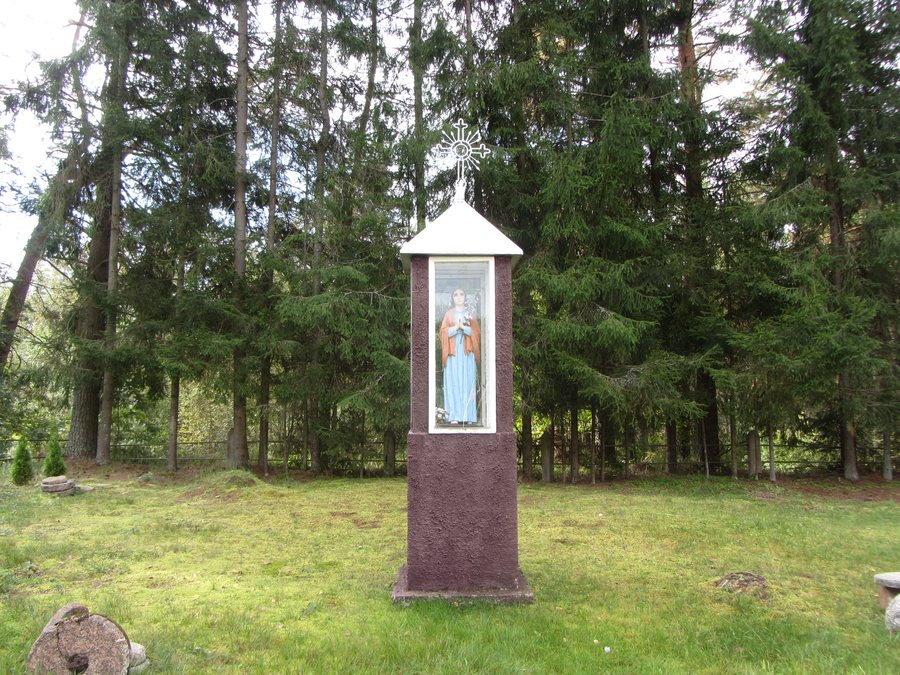
At the chapel post at Švedriškė Lourdes, the focus shifts from a group of altars to a single object. The post is made of natural, knotty oak and is surrounded by a small fence. No nails, axe or saw were used to make it. The shape of the wood, the enclosure and the method of construction are three specific details of this feature. It represents a different kind of sacred woodwork from the neo-Gothic altars in the church’s carved interior.
The post was re-erected thanks to the priest Alfredas Karišauskas. Its sculptures depict John the Baptist and Jesus; together, they represent the Baptism of Jesus. This makes the subject matter precise: it is a scene, not merely two individual figures. Its location between Lakes Ažvinčis and Ažvintaitis adds a specific geographical reference to the religious theme.
Two different approaches to wood art
In a direct comparison, the church’s three altars are part of the carved interior, while the post focuses on a single oak object and the baptism scene. The first approach combines architecture and interior design; the second brings together material, method of construction and religious subject matter. Depending on what interests you most, these offer two different perspectives on sacred art in Švedriškė.
If you would like to include sacred wood art in your travel plans, these features may be a reason to consider Švedriškė when searching for a holiday rental. The cultural focus is clearly defined, though you can choose which aspect to focus on: the building history and altars, or the oak post and its baptism scene. This gives you a specific cultural interest to include when planning your holiday in the area.
Discover more destinations
Discover more destinations: Ginučiai, Palūšė, Nastazavas, Mielagėnai, Kazitiškis.
For the regional travel overview: Ignalina District Municipality.

.jpg)