
Skiemonys: the Lukna, everyday life, and a relocated manor house
Accommodation in Skiemonys
You can explore Skiemonys through a number of specific points of reference: the Lukna flows through the settlement, a museum of everyday life is located in the courtyard of the interwar administrative centre, and nearby stands a wooden school building, the manor house of V. Čečergis. These topics raise different questions about the place: What geographical role does the river play? Which objects offer a glimpse into everyday life? And what is the story behind a building that was relocated after the war? If you enjoy bringing landscape and culture together, Skiemonys offers several clearly defined ways to do so.
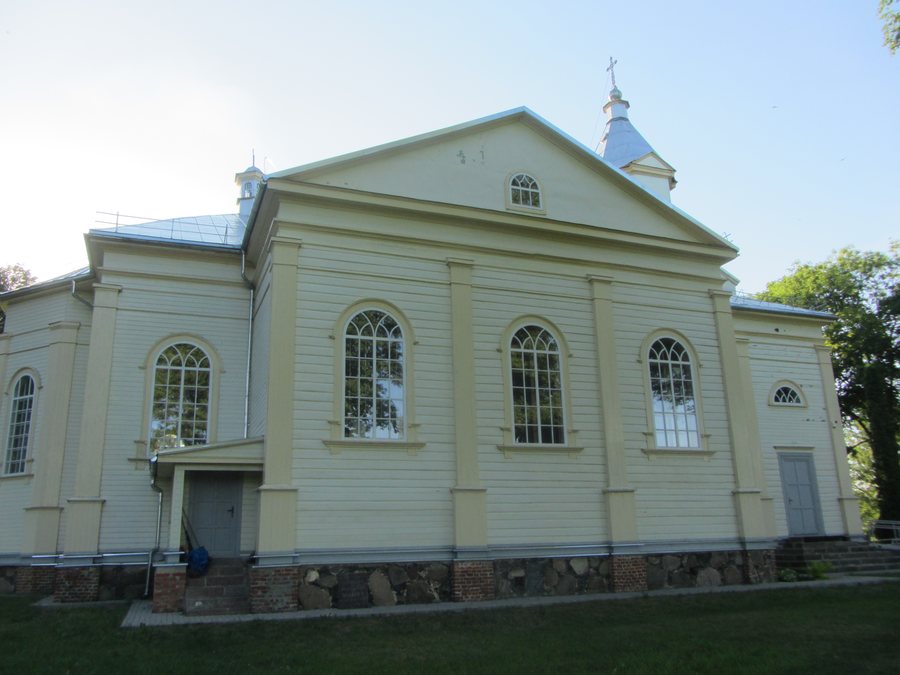 File:Skiemonys 29223, Lithuania - panoramio (1).jpg
Photo: VietovesLt via Wikimedia Commons, CC BY 3.0
File:Skiemonys 29223, Lithuania - panoramio (1).jpg
Photo: VietovesLt via Wikimedia Commons, CC BY 3.0
The Lukna and the road as points of reference
The Lukna flows through Skiemonys and empties into Lake Nevėža. This makes it possible to understand the river both as a feature of the settlement and as a course leading to a named destination. In addition, the Anykščiai–Molėtai highway runs through Skiemonys. The two features help you get your bearings in different ways: the Lukna flows through the settlement and empties into the lake, while the highway is a route that passes through Skiemonys. If you take both the natural setting and the road network into account when choosing a destination, these different points of reference can help you place the settlement geographically.
Everyday objects
A museum of everyday life is located in the courtyard of the Skiemonys interwar administrative centre. Its collection includes irons, flax combs and flax breakers, as well as pots, towel rails, kerosene lamps, mortars and harness for draught animals. The names of the objects alone open up different themes: flax combs and flax breakers draw attention to the processing of flax; pots, mortars and towel rails to household items; kerosene lamps to lighting; and the harness to draught animals. The collection thus offers a glimpse into several aspects of everyday life rather than focusing on just one type of object. If you enjoy discovering things through tangible objects, you can move from familiar-looking items to those whose purpose becomes clear only from their name. If you are travelling with children, the different names provide a starting point for conversation: What do you recognise straight away, and which objects raise questions at first?
A wooden house that changed location
Another point of cultural and historical interest lies near Skiemonys. A wooden school building stands in a small park near the interwar administrative centre: the manor house of V. Čečergis. After the war, it was moved there from the village of Smaltiškis. The combination of its name, construction and relocation makes the house’s history tangible: you can identify it as a wooden school building and also as the manor house of V. Čečergis, while its relocation links it to Smaltiškis. Its history therefore extends beyond its present location. For travellers interested in local history, the move between the two places offers a vivid point of reference—the place of origin and the time of the move are both specified: after the war.
Which side of Skiemonys interests you?
The three topics offer different perspectives: the Lukna makes the connection with the landscape geographically tangible, the collection draws attention to everyday objects, and the manor house leads to a story that also includes Smaltiškis. If you are considering whether Skiemonys is right for your holiday, you can start by thinking about which kind of discovery appeals to you most: a river’s course, tangible everyday objects, or the story of a relocated building. These interests give your search for a holiday apartment a useful starting point; you can then choose accommodation to suit your personal plans.
Discover more destinations
Discover more destinations: Kurkliai, Rubikiai, Andrioniškis, Svėdasai.
Go to the regional travel overview: Anykščiai District Municipality.

.jpg)