
Lumpėnai: Village History and Cultural Memory
Accommodation in Lumpėnai
Lumpėnai can be discovered through its local history and Lithuanian cultural history. The Lumpė stream, called Lompe in German, flows through the village and gave it its name; it is part of the Nemunas river basin. South of the village, in the territory of the Lumpėnų eldership, lies Rambyno kalnas, an important site in Lithuania’s cultural memory. The village and its surroundings therefore offer different starting points for your trip: history directly connected with Lumpėnai, and cultural topics in the nearby area.
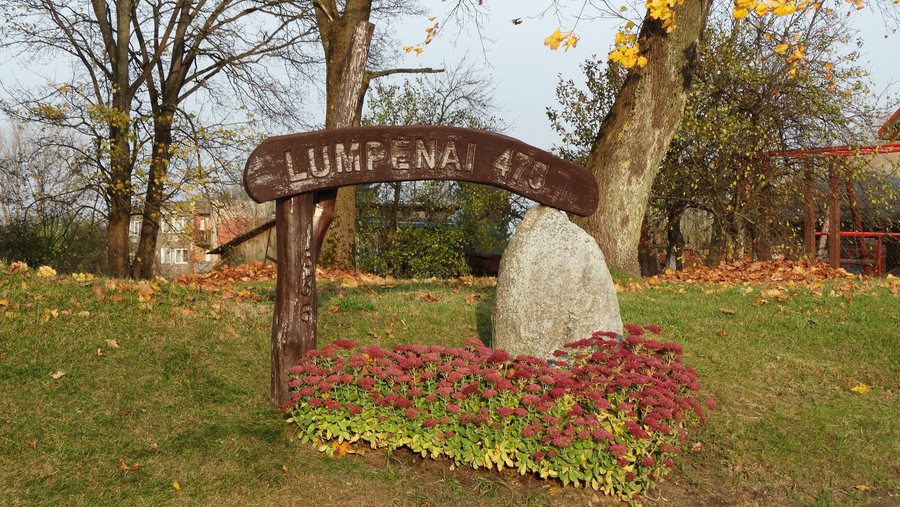
Village History and Lithuanian Culture
Lumpėnai was first mentioned in writing in 1536 and first marked on maps in 1665. The history of education in the village also has several notable dates: the first school opened in 1739 and provided primary education. In 1944, lessons in Lithuanian began there; the school remained in operation until 1983. These milestones connect the village’s early history with the importance of education and language in Lumpėnai.
With Enzys Jagomastas (1870–1947), the village’s history reaches into the history of the Lithuanian-language press in Lithuania Minor. Jagomastas was from Lumpėnai and was a publisher, editor, press contributor, and socially engaged figure. He made a substantial contribution to the development of the Lithuanian-language press in Lithuania Minor. Those interested in cultural history will find a concrete link here between a person’s place of origin and their influence beyond the village.
Another part of local commemorative culture is the old Evangelical Lutheran cemetery, which is no longer in use. Symbolic krikštai mark the resting places of those buried there. Many Lietuvininkai who lived from the late 19th to the early 20th century rest in the cemetery. A monument erected in 2008 commemorates Enzys Jagomastas’s parents. Together, these points of interest tell of burial traditions, the Lietuvininkai, and a family history also connected with Lumpėnai.
Cultural Topics in the Village and Surrounding Area
A local history museum exhibition, “Šviesos kampelis,” opened next to the library on 6 March 2020. In Bitėnai, near Lumpėnai, is the visitor centre of Rambynas Regional Park. Its exhibition covers the history of the Rambynas area, the crafts and way of life of the Lietuvininkai, and well-known figures from the region. The wildlife and plant life of the surrounding forests and meadows are also among its topics. Events and exhibitions are also held at the centre.
Different areas of interest are represented here: Lumpėnai itself offers points of connection to local, educational, and press history; the visitor centre in Bitėnai also focuses on the cultural and natural topics of the surrounding area. The Martynas Jankus Museum of Pagėgiai Municipality is also located in the wider area around Lumpėnai. These places should not be confused with the village, but they may be relevant when planning a culturally focused stay.
Location and Practical Information
Lumpėnai lies nine kilometres east of the town of Pagėgiai on the Jurbarkas–Šilutė highway. Rambyno kalnas lies south of the village, in the territory of the Lumpėnų eldership. This information can help you distinguish geographically between Lumpėnai and nearby points of interest when shaping your trip around local history or other cultural topics.
The administrative building of the Lumpėnų eldership at Rambyno g. 22 in Lumpėnai is recommended as the starting point for the historical walk. Check before planning whether this recommended starting point is still in use. The village has a library, a medical station, a forestry office, and a shop. If you expect to rely on any of these services during your stay, check their current availability in advance.
When looking for a holiday apartment in Lumpėnai, you can compare your interests with the village’s location: would you mainly like to learn about the village’s history, or should the cultural and natural topics nearby also be part of your plans? This distinction helps you place Lumpėnai in the context of your trip without treating nearby places as part of the village.
Discover More Destinations
Discover more destinations: Margiškiai, Tauragė, Veliuona, Jurbarkas, Pagėgiai, Pilis I, Smalininkai
For the broader travel overview: Tauragė County.

