
Karmėlava between the Neris Valley and cultural heritage
Accommodation in Karmėlava
Karmėlava has several sides: at Karmėlavos piliakalnis, the view opens out over the Neris Valley; a golden cepelin sculpture adds an unusual artistic accent; and cemetery gates recall the town’s history. This combination makes the place interesting if you appreciate landscapes as much as public art and traces of architecture. As you plan your trip, you can first consider which of these themes you would like to shape your stay.
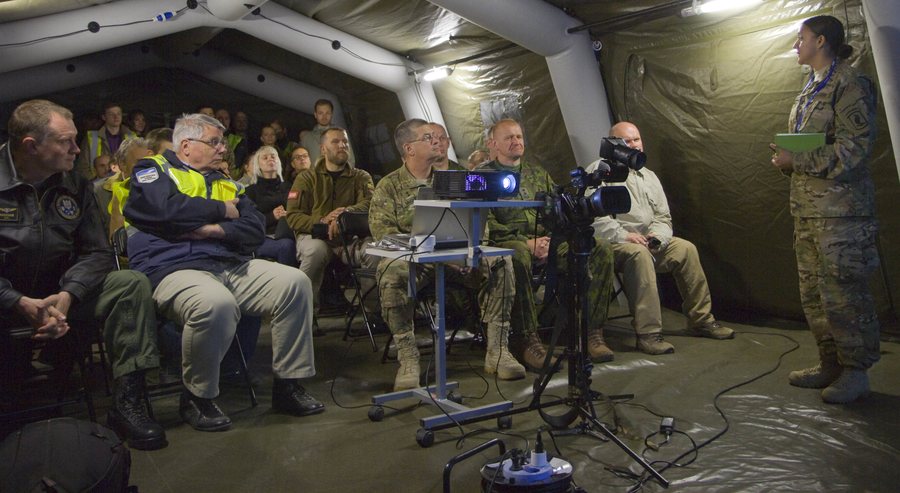 File:Saber Strike 2015 drops by Kaunas International Airport 150609-A-FJ979-001.jpg
Photo: Sgt. James Avery via Source, Public domain
File:Saber Strike 2015 drops by Kaunas International Airport 150609-A-FJ979-001.jpg
Photo: Sgt. James Avery via Source, Public domain
Landscapes along the Neris Valley
Karmėlavos piliakalnis, also known as Pilis, is located in Karmėlava at the edge of the upper terrace on the left bank of the Neris. From there, you can enjoy a view over the Neris Valley. Together, the riverbank, the edge of the terrace and the valley shape this perspective and give Karmėlava a tangible connection to the Neris.
If the panorama of a river landscape is part of what appeals to you about a trip, this view offers a distinctive connection to the landscape. It provides a different accent from the town’s artworks and historic architectural features. When planning, you can weigh up whether the landscape or the cultural traces better suit your interests.
A golden artistic motif
The golden sculpture in the shape of a flying cepelin adds a striking artistic accent to Karmėlava. Its colour and form create an appealing contrast with the landscape along the Neris Valley. The sculpture is also part of the “Smaragdo kelias” public art route in Kaunas District. You can therefore view it both as an individual artwork in Karmėlava and as part of this route.
If you like to include public art in your travel plans, the cepelin motif offers a different way to experience the place than the view over the valley. The landscape and the sculpture do not make the same impression: here you encounter a striking form, while there you find a broad river panorama. This comparison can help you decide what to focus on during your trip, without reducing the different motifs to a single attraction.
Cemetery gates and local history
The Baroque cemetery gates of the old church in Karmėlava date from the 19th century. This structure brings together an architectural classification and a specific date: the term “Baroque” describes its style, while the century places the gates in time. For anyone who wants to look more closely at historic townscapes, these provide two points of reference for the same view: the design and its historical period.
Another specific date relates to St Anne’s Church in Karmėlava: its fence and cemetery gates were entered in the Lithuanian Register of Cultural Property in 1992. This listing adds a cultural heritage context to the architectural perspective. Along with the Neris Valley and the cepelin sculpture, the gates are among the different motifs through which you can discover Karmėlava.
Choose the right focus for your trip
When looking for a holiday apartment in Karmėlava, these motifs suggest a simple question: would you like the landscape, public art or architectural history to shape your stay in particular? This is not a ranking of the attractions, but a way to organise your own travel interests. If you would like to combine several themes, you can see the Neris Valley panorama, the sculpture and the cemetery gates as different facets of the place. Keeping this picture in mind makes it easier to decide what you want from your stay and choose accommodation accordingly.
Discover more destinations
Discover more destinations: Birštonas, Kulautuva, Gabšiai, Čekiškė, Garliava, Ariogala, Pašuliai, Prienai.
For the broader travel overview: Kaunas District.

