
Discover Paviole: Po River Floodplains and Villa Martelli-Piccioli
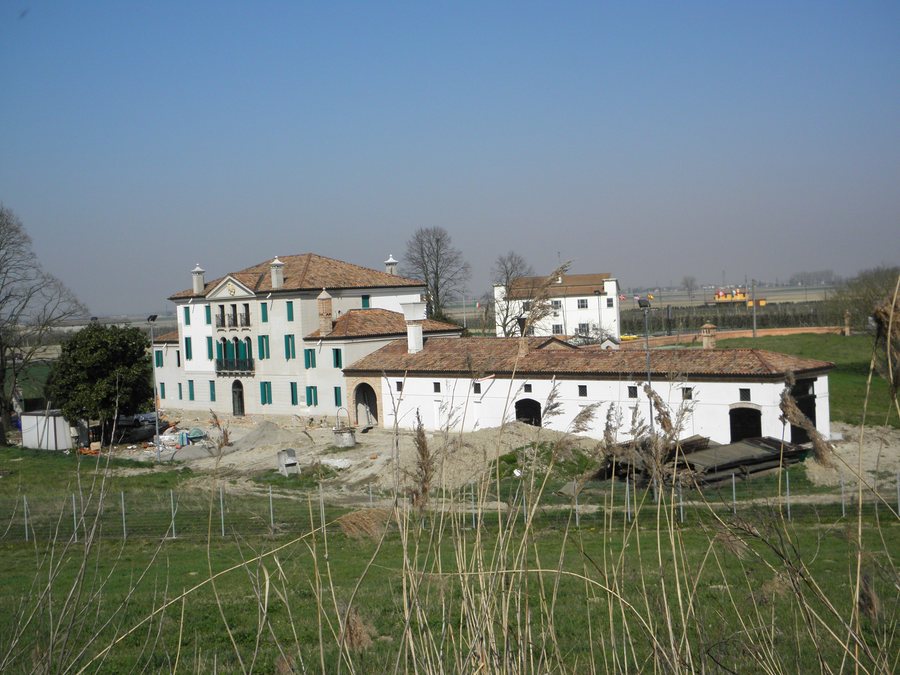 File:Villa Martelli-Piccioli (2) (Paviole).jpg
Photo: Threecharlie via Wikimedia Commons, CC BY-SA 3.0
File:Villa Martelli-Piccioli (2) (Paviole).jpg
Photo: Threecharlie via Wikimedia Commons, CC BY-SA 3.0
Paviole combines impressive architecture with the distinctive landscape along the Po. Below the Po embankment stands Villa Martelli-Piccioli, now known as Bergamini. Along the Po embankment path, floodplain vegetation opens up views of the river; local history includes the breach in the embankment on 14 November 1951 and traditional stories about floating mills sinking. Here on the Po, the embankment path and floodplain vegetation meet the architectural accent of the villa.
Villa Martelli-Piccioli and historical details
Its façade displays Venetian and Palladian stylistic features. Based on its architectural characteristics, the villa dates from the 18th century. The main building houses the stately residence. The barchesse are arranged along the east-west axis. Two rows of triforia appear on the main façade. The façade and the arrangement of the buildings offer two different perspectives: stylistic features and triforia shape the front, while the barchesse are organised along their east-west axis. These details make the site particularly interesting if, when travelling, you want to discover not only landscapes but also proportions, architectural forms, and historic architecture. Those interested in culture can examine proportions, architectural forms, and historic architecture here in a specific building.
The Po, the embankment, and stories from Paviole
The relationship between the settlement and the river landscape is also evident in a historic event: on 14 November 1951, a 240-metre-long breach formed in the Po embankment near Paviole. Traditional stories about floating mills sinking are also associated with the floodplains of Paviole along the Po. The Church of Maria Santissima Immacolata is located in the Paviole district and is designated as “worth seeing”.
Floodplain landscape and plants along the river
Along the Po embankment path near Paviole, the floodplain vegetation opens up views of the river. Near the water, white willows (Salix alba) form dense strips along the banks. Black poplars (Populus nigra) are common in the floodplain landscape along the Po, while white poplars (Populus alba) also occur there. Near Paviole, black locusts (Robinia pseudoacacia) bloom abundantly and fragrantly in spring. For those interested in nature, the dense willow strips near the water, the frequent black poplars, and the white poplars that also occur here can be the main points of interest along the embankment path. In spring, the abundant, fragrant black locust blossom adds a seasonal natural feature. Thus, along the river, trees on the banks and the flowering season become specific subjects for observation. The embankment path connects views of the river with these plant landscapes; in spring, the waterside vegetation is complemented by a clearly defined seasonal flowering aspect.
Canaro: the Po and the Poazzo
Canaro’s location is shaped by the Po and the Poazzo, a branch of the Po. The SS16 Adriatica and the Rovigo–Ferrara railway line also run through the municipality of Canaro. The Poazzo is a branch of the Po.
Further places for regional orientation
For further orientation in the region, you can also visit Crespino, Bagnolo Di Po, Piano, Castelguglielmo Rovigo, Loreo, San Martino Di Venezze, Lendinara, and Ceregnano.
For the main travel overview: Rovigo.
Check prices, availability, and amenities for your travel dates directly on Booking.com.
View accommodations and offersAdvertisement · Partner link to Booking.com
_(Paviole).jpg)