
Castelguglielmo Rovigo: History, Trails and Local Festivals
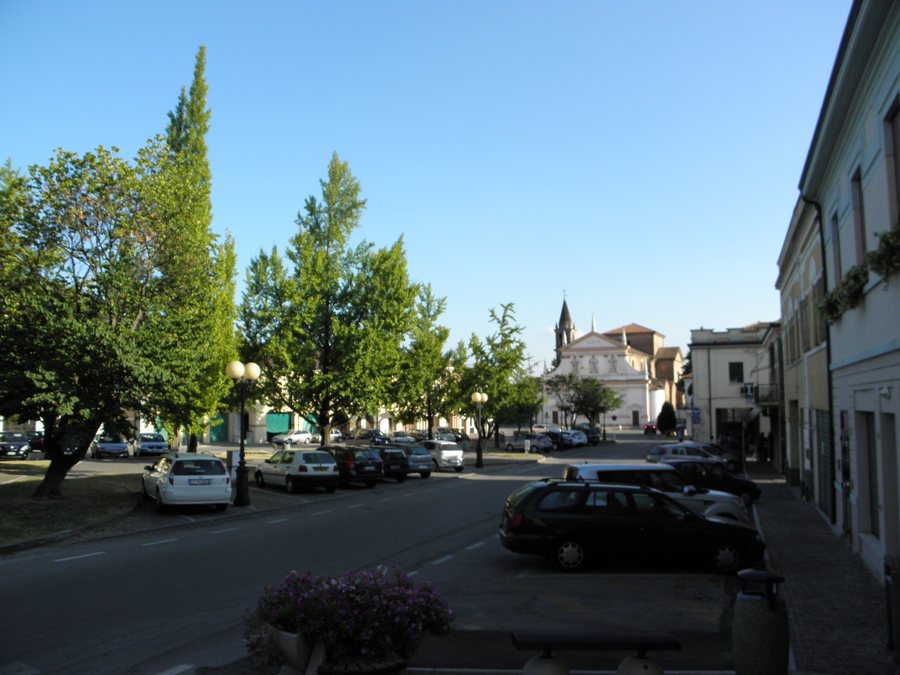 File:Piazza Vittorio Veneto (Castelguglielmo).jpg
Photo: Threecharlie via Wikimedia Commons, CC BY-SA 3.0
File:Piazza Vittorio Veneto (Castelguglielmo).jpg
Photo: Threecharlie via Wikimedia Commons, CC BY-SA 3.0
Castelguglielmo Rovigo is an appealing destination if you would like to combine historical traces, paths along the water and lively local traditions. When choosing a holiday apartment in Castelguglielmo Rovigo, it is worth first considering the themes that may shape your stay: the history of the town, cultural and historical landmarks, walking and cycling routes, and the annual festival in honour of San Gaetano.
Historical Traces in the Townscape
The former castle of Castelguglielmo was destroyed and rebuilt several times over the centuries. Only its foundations remain; today, they are covered by the buildings around the piazza. The castle’s history therefore does not survive as a fully preserved complex, but as part of the townscape that you can mentally piece together as you explore.
Marin Sanudo described what the former castle once looked like in 1483: he depicted a ring of walls with a central tower on a raised embankment. This embankment was surrounded by the waters of the Tartaro, the former name of the Canalbianco. The town’s early traces go back even further. The first reliable accounts date to the 10th century and refer to Villa Manegii, which probably also included neighbouring San Bellino. This area contained a castle and a church dedicated to Saint Nicholas, “San Nicolò”.
Villa Paiola, known as “Il Palazzon”, is also connected with the municipality of Castelguglielmo as a building of artistic, historical, architectural and landscape interest. The parish church of “S. Nicola di Bari” dates from the 11th century and adds a sacred landmark to the area’s historical points of reference.
Trails, Water and Visible History
A cycling and walking path connects Castelguglielmo with the river landing stage on the Canalbianco embankment. Those who would like to combine exercise with discovering the area can also follow a section of the old Via Napoleonica, which can be walked in Castelguglielmo. In Alberazzi, the tuff-stone bas-relief “Leone di San Marco” is still visible at the former border with the Duchy of Ferrara. These three points offer different ways of engaging with the history and landscape without turning them into one fixed route.
Local Tradition and Cultural Life
The Biblioteca Civica Comunale “MATTIA BORTOLONI” offers cultural initiatives, meetings, exhibitions and publications through which local tradition is discovered and shared. A notable annual event is the Sagra di San Gaetano, held in Castelguglielmo every year on the days around 7 August. At this festival, volunteers serve traditional dishes and local specialities. If you choose accommodation with an interest in history, regional culture and community celebrations, this event is one of the key points of reference for your planning.
Which Holiday Apartment Suits Your Plans
When searching for a holiday apartment in Castelguglielmo Rovigo, you can focus on the themes available in the area. The cycling and walking path to the river landing stage lends itself to plans involving activity along the Canalbianco, while the old Via Napoleonica and the historical landmarks suggest dedicated days of exploration. Those who particularly value local traditions can consider travelling around 7 August and include the Sagra di San Gaetano, with its traditional dishes and specialities, in their plans.
Check prices, availability and amenities for your travel dates directly on Booking.com.
View Accommodation and OffersAdvertisement · Affiliate link to Booking.comDiscover More Destinations
Discover more travel destinations via Frassinelle Polesine, Bagnolo Di Po, Pagana, San Martino Di Venezze, Arquà Polesine, Adria, Melara and Piano.
For the broader travel overview: Rovigo.

.jpg)