
Holiday apartment in Padua – Discover art, history and nature
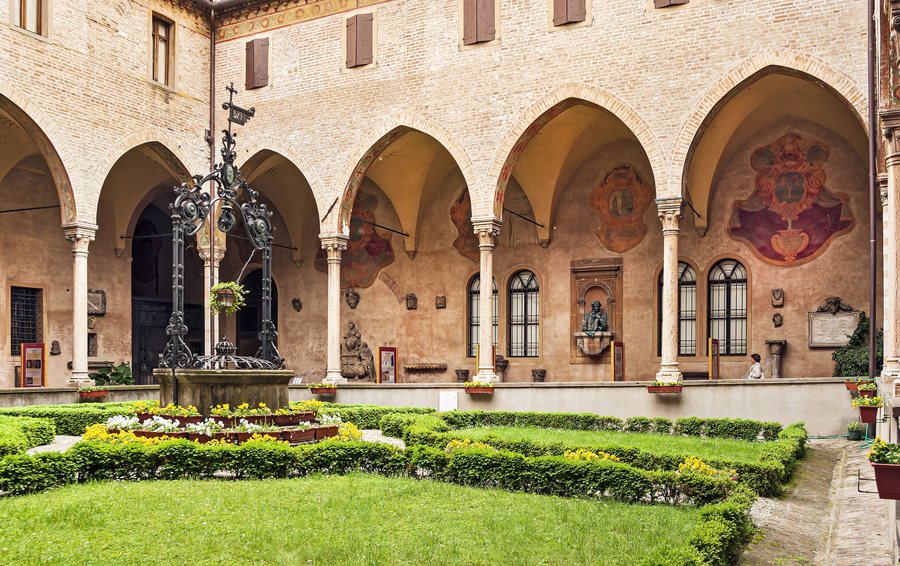 File:(Padova) Basilica di Sant'Antonio di Padova - Chiostro del noviziato - East view.jpg
Photo: Didier Descouens via Wikimedia Commons, CC BY-SA 4.0
File:(Padova) Basilica di Sant'Antonio di Padova - Chiostro del noviziato - East view.jpg
Photo: Didier Descouens via Wikimedia Commons, CC BY-SA 4.0
Art and the history of knowledge in Padua
Padua brings together important sites from the history of science, art and the city. In 1594, the first permanently established anatomical theatre was built at the Palazzo del Bo; in 1678, the world’s first woman earned a university degree there. The MUSME also presents the city’s history: it is housed in a 15th-century palazzo that accommodated the city’s first hospital. The oldest part of La Specola, the tower, was opened to the city as an astronomical museum in 1994. This gives you a varied selection if you would like to combine historic buildings, the history of research and museums.
Visual art, archaeology and distinctive buildings
The Eremitani museum complex includes the Cappella degli Scrovegni and an archaeological museum with finds from the Paleo-Venetian, Roman and Egyptian periods. Padova Urbs Picta has been a UNESCO World Heritage Site since summer 2021. Another landmark is the Palazzo della Ragione, whose construction dates back to 1218. These three destinations represent different ways of experiencing the city: you can view visual art, learn about archaeological periods and include a building with a long history.
Traces of Saint Anthony
The chapel of Saint Anthony contains the tomb of Saint Anthony. The so-called “Ultimo Cammino” follows the route taken by Sant’Antonio in June 1231 from the Santuari Antoniani di Camposampiero to the Basilica del Santo in Padua via the Santuario Antoniano dell’Arcella. Anyone interested in religious history will find a clear thematic focus here. At the same time, the route can be considered a special idea for planning a trip, without equating it with a specific length of stay or current use.
Botanical diversity and special plant worlds
The Orto Botanico was intended as a “Horto Medicinale” for studying and testing plants with natural therapeutic effects. The Giardino della biodiversità contains four greenhouses with around 1,300 plant species from tropical, subhumid, temperate and arid habitats. The botanical sites complement the museums by offering access to plants, habitats and scientific observation. This is particularly interesting if you would like to switch between art, history and nature during your time in Padua.
Market and cityscape
The Sotto Salone on the ground floor of the Palazzo della Ragione is a covered market with two corridors containing historic shops and food businesses. Alongside museums and religious sites, this also brings a place of everyday commerce into view. This contrast can be helpful when planning your trip: Padua can be discovered not only through individual attractions, but also through a historically shaped market building and its food businesses.
Choose the holiday apartment to match your interests
Most museums on Padua’s museum route are located within the restricted traffic zone (ZTL); it is therefore recommended to reach them by bus, tram or taxi. When choosing a holiday apartment in Padua, you can take this information into consideration if you would like to visit several museums. First decide whether art, religious history, botanical topics or visits to the market should shape your days, and then base your accommodation decision on this desired character of your trip.
Check prices, availability and amenities for your travel dates directly on Booking.com.
View accommodations and offersAdvertisement · Partner link to Booking.comDiscover more destinations
More places for planning your trip: Saccolongo, Grantorto, Este, Pernumia, Pelosa, Lozzo Atestino, Rovolon and Mira.
To the higher-level travel overview: Padua.

_Basilica_di_Sant%27Antonio_di_Padova_-_Chiostro_del_noviziato_-_East_view.jpg)